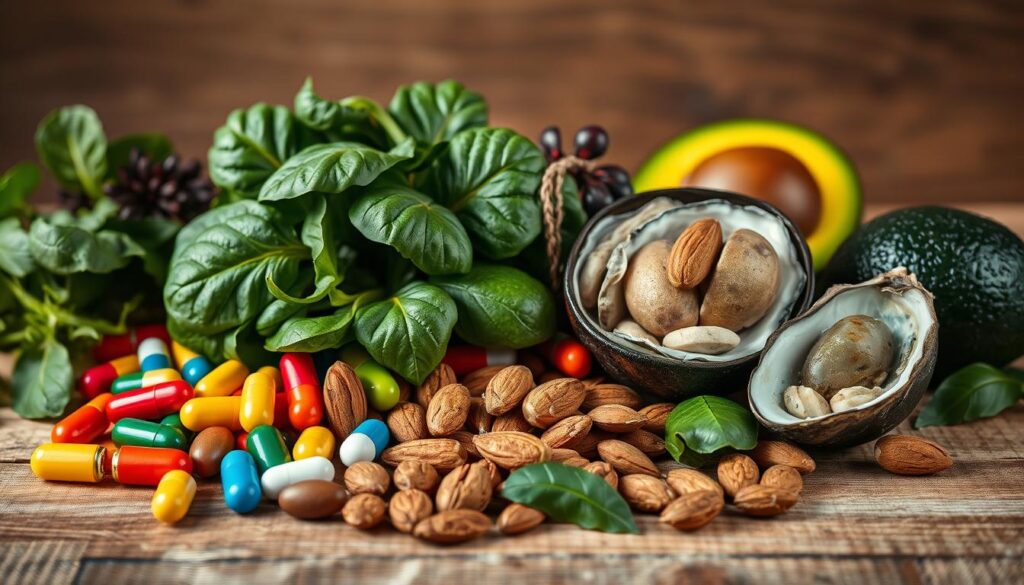
Specific nutrients are vital for natural testosterone production. These nutrients support overall male wellness and hormonal health. As we age, our testosterone levels naturally decrease, but proper nutrition can help manage this process1.
The world of testosterone boosters is tricky. Many supplements make big promises, but few deliver results. Only 24.8% of these products have data supporting their claims2.
Zinc, vitamin D, and magnesium are key players in testosterone production. They help maintain your body’s hormonal balance. Adult men need 11 mg of zinc daily for healthy testosterone levels3.
Some natural supplements show promise too. A 2010 study found that ashwagandha can boost testosterone and improve sperm quality. This is good news for men facing fertility issues3.
Key Takeaways
- Testosterone production depends on specific essential minerals and vitamins
- Only a quarter of testosterone supplements have scientific backing
- Zinc, vitamin D, and magnesium are crucial for hormonal health
- Natural supplements can potentially support testosterone levels
- Age-related testosterone decline is normal but manageable
Understanding Testosterone and Its Importance
Testosterone is a key hormone for male health and well-being. It impacts many aspects of physical and mental performance. Your body’s testosterone function affects muscle growth and emotional balance.
Testosterone levels change throughout a man’s life. They peak during adolescence and early adulthood4. After age 30 or 40, levels drop about 1% yearly4.
Knowing how this hormone works helps maintain good health. It’s important to track your levels as you age.
The Role of Testosterone in the Body
Your testosterone plays multiple critical roles:
- Muscle mass and strength development
- Bone density maintenance
- Fat distribution regulation
- Red blood cell production
- Sexual function and libido
Symptoms of Low Testosterone
Spotting low T symptoms early is key. You might notice these changes:
- Reduced sexual desire
- Erectile dysfunction
- Decreased muscle mass
- Increased body fat
- Mood changes and fatigue
How Nutrition Affects Testosterone Production
What you eat impacts your hormones and testosterone levels. Coenzyme Q10 and other nutrients support hormone production. A balanced diet rich in minerals and vitamins helps maintain optimal testosterone.
“Nutrition is a powerful tool in managing hormonal health and supporting testosterone function.”
Talk to your doctor about your hormonal needs. They can help create a plan for healthy testosterone levels5.
Key Vitamins for Boosting Testosterone Levels
Optimal testosterone levels are vital for your health and well-being. Certain vitamins and minerals play a crucial role in supporting testosterone production6.
Specific nutrients can impact your hormonal balance. Let’s explore key vitamins that can naturally boost your testosterone levels.
Vitamin D: The Sunshine Vitamin
Vitamin D is crucial for testosterone production. Men with adequate vitamin D levels have higher testosterone concentrations7.
You can boost your intake through:
- Sunlight exposure
- Fatty fish
- Fortified dairy products
- Supplements (1,000-2,000 IU daily)
Zinc: A Mineral for Hormonal Balance
Zinc is essential for testosterone synthesis. Zinc supplementation can significantly impact your hormonal balance. Low zinc levels can decrease testosterone production6.
Consider these zinc-rich foods:
- Oysters
- Red meat
- Pumpkin seeds
- Legumes
B-Complex Vitamins: Supporting Overall Health
Vitamin B6 is crucial for androgen regulation and testosterone production. This essential vitamin supports hormonal balance and metabolic functions. The recommended daily intake is 1.3-2.0 mg7.
“Nutrition is the foundation of hormonal health and testosterone production.” – Endocrinology Research
Testosterone levels naturally decline with age6. However, strategic nutritional support can help maintain optimal hormonal balance.
Ubiquinone and other supporting nutrients can further enhance your body’s testosterone production.
Lifestyle Factors That Influence Testosterone
Your lifestyle greatly affects testosterone levels. Diet directly impacts hormone production. Men’s testosterone naturally declines by 1%–2% yearly after age 308.
Exercise boosts testosterone naturally. Weightlifting twice weekly for 30-40 minutes can increase hormone levels9. Losing 15-20 pounds may also raise testosterone9.
Stress management is key for hormonal health. Chronic stress can lower testosterone production8. Try meditation, yoga, and prioritize good sleep.
Alcohol and shift work can disrupt hormones9. Focus on healthy habits for better hormone balance.
Be wary of unproven testosterone boosters. Many lack scientific evidence. DHEA, for example, hasn’t shown to increase testosterone9.
A balanced diet, regular exercise, and stress management work best. These habits effectively maintain healthy hormone levels.
FAQ
What is testosterone, and why is it important?
Testosterone is a key hormone for male health. It impacts muscle mass, bone density, fat storage, and sexual health. This hormone affects your energy levels and overall well-being.
How do testosterone levels change with age?
Testosterone levels naturally drop as men get older. Men in their 70s have about 35% less testosterone than younger men. This decline can cause lower libido, muscle loss, and increased body fat.
What are the signs of low testosterone?
Low testosterone can cause decreased libido and erectile dysfunction. It may also lead to increased body fat and muscle loss. Other signs include fatigue, mood changes, and potential cognitive issues.
If you notice multiple symptoms, talk to your doctor.
Which vitamins are most important for testosterone production?
Vitamin D, B6, and E are crucial for testosterone production. Vitamin D is especially important for higher testosterone levels. The daily recommended intake is 1,000-2,000 IU of vitamin D.
How do minerals support testosterone production?
Zinc and magnesium are vital for testosterone synthesis. Zinc is critical for hormone production, with 11 mg daily recommended for men. Magnesium supports hormonal health and muscle function, helping maintain optimal testosterone levels.
Can diet and lifestyle affect testosterone levels?
Yes! Your diet, exercise, and stress levels greatly impact testosterone production. A balanced diet rich in protein and healthy fats supports hormonal health. Regular resistance training and high-intensity intervals can boost testosterone naturally.
Stress management and good sleep help maintain hormonal balance.
Are testosterone booster supplements effective?
Be careful with testosterone booster supplements. Only 25% have scientific data supporting their claims. Many supplements contain excessive amounts of vitamins and minerals. Always consult a doctor before starting any supplement regimen.
What natural supplements might help support testosterone?
Ashwagandha, fenugreek, and D-aspartic acid may support testosterone levels. Ashwagandha might reduce stress and potentially increase testosterone. However, more research is needed, and results can vary by individual.
Source Links
- The Best Testosterone Boosters for Men Over 50 – https://www.webmd.com/healthy-aging/the-best-testosterone-boosters-for-men-over-50
- ‘Testosterone Boosting’ Supplements Composition and Claims Are not Supported by the Academic Literature – https://pmc.ncbi.nlm.nih.gov/articles/PMC6920068/
- Herbs, Vitamins, and Supplements for Low Testosterone Levels – https://www.healthline.com/health/herbs-vitamins-supplements-testosterone-levels-balance
- Testosterone therapy: Potential benefits and risks as you age – https://www.mayoclinic.org/healthy-lifestyle/sexual-health/in-depth/testosterone-therapy/art-20045728
- Understanding How Testosterone Affects Men – https://www.nih.gov/news-events/nih-research-matters/understanding-how-testosterone-affects-men
- Supplements for Increased Testosterone – https://www.verywellhealth.com/supplements-for-increased-testosterone-7971720
- VA.gov | Veterans Affairs – https://www.va.gov/WHOLEHEALTHLIBRARY/tools/improving-low-testosterone-naturally.asp
- 8 Ways to Increase Your Testosterone Levels Naturally – https://www.healthline.com/nutrition/8-ways-to-boost-testosterone
- Lifestyle Changes That Can Increase Testosterone Levels – https://healthcare.utah.edu/the-scope/all/2016/01/lifestyle-changes-can-increase-testosterone-levels