
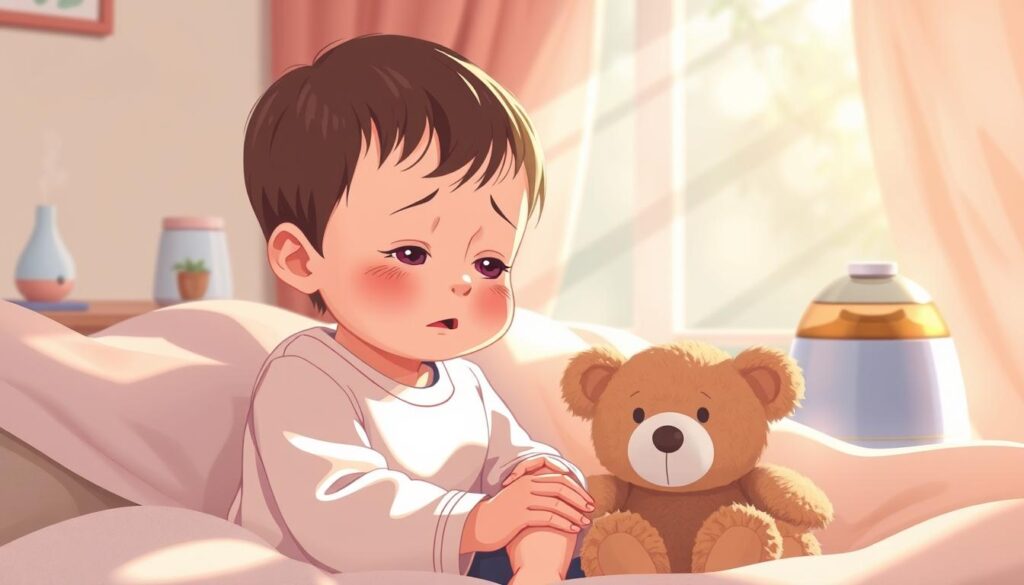
Bronchiolitis is a viral infection that affects young children’s respiratory health. It targets the small airways in a child’s lungs. Respiratory syncytial virus (RSV) is the main culprit behind this lung condition12.
Children under 2 are most at risk, especially infants younger than 3 months. Their developing immune systems make them more vulnerable. The infection often begins with cold-like symptoms1.
A runny nose and slight cough are early signs. These can worsen into more serious breathing problems. Fall and winter bring a higher risk of bronchiolitis2.
Most cases are mild and manageable at home. However, some children might need medical care. Watch for wheezing and breathing difficulties1.
Key Takeaways
- RSV is the primary cause of bronchiolitis in young children
- Symptoms often begin like a common cold
- Most cases can be treated at home
- Infants under 3 months are at highest risk
- Fall and winter months pose increased infection risks
- Good hand hygiene helps prevent virus spread
- Watch for breathing difficulties in young children
Understanding Bronchiolitis: A Brief Overview
Bronchiolitis is a common respiratory infection affecting young children’s health. It inflames tiny lung airways, causing breathing problems in infants and toddlers3.
What is Bronchiolitis?
Bronchiolitis is a viral infection attacking small breathing tubes called bronchioles. It mainly affects children under 2, with premature infants at higher risk4.
Respiratory syncytial virus (RSV) is the most common cause of this respiratory distress5.
Who is at Risk?
- Infants younger than 6 months3
- Premature babies born before 37 weeks of pregnancy3
- Children exposed to cigarette smoke3
- Those living in crowded environments3
- Babies not breastfed3
Signs and Symptoms
Bronchiolitis often starts like a cold but can quickly worsen. Keep an eye out for these warning signs:
- Runny nose
- Fever
- Cough
- Wheezing
- Rapid breathing
- Bluish skin due to oxygen lack4
Early recognition of symptoms can help manage this viral infection effectively.
Most bronchiolitis cases occur during fall and winter months, with peak infection rates in children under 2 years old5.
Diagnosis and Treatment Options for Bronchiolitis
Bronchiolitis can be tough for parents to handle. Learning about diagnosis and treatment can help you care for your sick child. Each case needs careful review for proper care.
Identifying Bronchiolitis
Doctors usually diagnose bronchiolitis through a full physical exam. Your child’s doctor may order extra tests in severe cases. These might include chest X-rays or blood tests6.
Treatment Approaches
Most bronchiolitis cases get better without special medical help. The main focus is on easing symptoms and preventing dehydration. Treatment often includes:
- Maintaining proper hydration
- Using saline nose drops
- Clearing nasal airways
- Monitoring breathing patterns
When Hospitalization is Necessary
Sometimes, oxygen therapy is crucial for kids with severe symptoms. About three percent of children with bronchiolitis need hospital care7. Most stay in the hospital for 2-8 days7.
Quick medical attention is vital if your child shows signs of respiratory distress or significant fatigue.
Critical Warning Signs
Get medical help right away if your child has:
- Difficulty breathing
- Signs of dehydration
- Persistent high fever
- Unusual lethargy
Knowing these strategies can boost your confidence in handling bronchiolitis. It helps ensure your child gets the right care8.
Preventing Bronchiolitis: Tips for Parents
Protect your child from RSV with smart prevention strategies. Bronchiolitis spreads fast among kids under 2. Learn key techniques to reduce your child’s risk of this respiratory condition.
Effective Hygiene Practices
Hand hygiene is crucial in stopping RSV spread. The virus lives on surfaces for up to six hours. Wash hands often and teach kids proper techniques.
Use hand sanitizer and avoid touching your face. This is especially important when handling infants.
Keeping Your Child Healthy During Cold Season
Breastfeeding may lower hospitalization risks for bronchiolitis. Look into RSV prevention strategies recommended by pediatric experts. Most kids get RSV before age 2, so boost their immune system.
When to Avoid Crowded Places
During viral seasons, keep kids away from crowded areas. Pre-existing conditions or premature birth increase bronchiolitis risks9.
Keep vulnerable children away from people with respiratory symptoms. Ensure a clean, smoke-free environment for their safety10.
FAQ
What is bronchiolitis?
Bronchiolitis is a lung infection affecting small airways in young children and infants. It’s caused by viruses like RSV, leading to swelling and mucus buildup. Children under 2 are most affected, with infants under 3 months being especially vulnerable.
What are the main symptoms of bronchiolitis?
Symptoms start like a cold, with a runny nose, fever, and cough. As it worsens, wheezing and breathing difficulties may occur. Severe cases show blue lips, skin, or breathing pauses.
Who is at higher risk for bronchiolitis?
Premature infants and children with heart or lung conditions face higher risks. Those with weak immune systems or exposed to smoke are also vulnerable. Infants under 3 months often experience more severe cases.
How is bronchiolitis diagnosed?
Doctors usually diagnose bronchiolitis through physical examination. Severe cases may require chest X-rays or blood tests. There’s no specific test for bronchiolitis, so symptoms guide the diagnosis.
How is bronchiolitis treated?
There’s no specific treatment for bronchiolitis. Antibiotics don’t work against viral infections. Care focuses on symptom relief, hydration, and clearing nasal airways. Severe cases may need hospital care for oxygen therapy.
When should I seek medical attention?
Get immediate help if your child shows respiratory distress, dehydration, or severe fatigue. Watch for blue lips, breathing pauses, or inability to eat. About 3% of children with bronchiolitis need hospital care.
How can I prevent bronchiolitis?
Wash hands often and limit exposure to sick people. Disinfect surfaces and avoid secondhand smoke. The AAP suggests immunization options for infants and pregnant individuals.
How long does bronchiolitis typically last?
Bronchiolitis can last 1-2 weeks or longer. Most cases improve at home. Recovery time varies based on illness severity and the child’s health.
Source Links
- Bronchiolitis – Symptoms and causes – https://www.mayoclinic.org/diseases-conditions/bronchiolitis/symptoms-causes/syc-20351565
- Bronchiolitis (for Parents) – https://kidshealth.org/en/parents/bronchiolitis.html
- Bronchiolitis: MedlinePlus Medical Encyclopedia – https://medlineplus.gov/ency/article/000975.htm
- Bronchiolitis: What Parents Should Know – https://www.healthychildren.org/English/health-issues/conditions/chest-lungs/Pages/bronchiolitis.aspx
- Bronchiolitis – https://www.mountsinai.org/health-library/diseases-conditions/bronchiolitis
- Bronchiolitis: Recommendations for diagnosis, monitoring and management of children one to 24 months of age – https://pmc.ncbi.nlm.nih.gov/articles/PMC4235450/
- Bronchiolitis Symptoms, Causes, and Risk Factors – https://www.lung.org/lung-health-diseases/lung-disease-lookup/bronchiolitis/symptoms-diagnosis-treatment
- Patient education: Bronchiolitis and RSV in infants and children (Beyond the Basics) – https://www.uptodate.com/contents/bronchiolitis-and-rsv-in-infants-and-children-beyond-the-basics
- Bronchiolitis – https://www.nhs.uk/conditions/bronchiolitis/
- RSV is the most common cause of bronchiolitis, which can make it hard for your baby to breathe. – https://nortonchildrens.com/news/rsv-bronchiolitis/

