
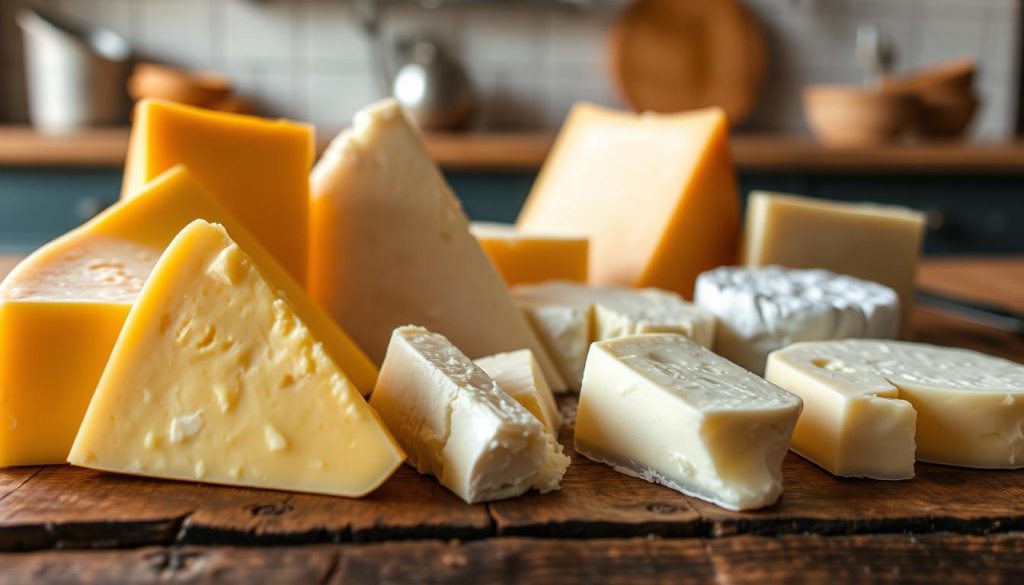
Finding the right Fontina cheese substitutes can be exciting for food lovers. Fontina is a creamy Italian cheese with a nutty flavor. It has a high fat content of 45%, making it rich and flavorful1.
Provolone is a great alternative to Fontina. It can develop a strong, tangy taste as it ages1. Gruyère is another excellent option for melting in dishes.
Gruyère has characteristic holes and melts beautifully in various recipes1. It’s perfect for those who want a cheese similar to Fontina.
Many other cheeses can replace Fontina when it’s not available. Emmental offers a nutty flavor, while Havarti provides a creamy texture. These options work well in different dishes.
These substitutes can enhance pizzas, cheese platters, and new recipes. They give cooks and chefs more choices in the kitchen.
Key Takeaways
- Fontina cheese has a rich, nutty flavor with a 45% fat content
- Provolone and Gruyère are top Fontina cheese substitutes
- Multiple cheese alternatives can replace Fontina in various dishes
- Cheese substitutes offer versatility in cooking and baking
- Understanding cheese characteristics helps in selecting the right substitute
Understanding Authentic Fontina Cheese
Fontina cheese is a culinary gem from Italy’s Aosta Valley. This exceptional cheese has a rich history dating back to the 12th century. It showcases the mastery of traditional Alpine cheese production.
Cheese Production Insights
Genuine Fontina is made from unpasteurized cow’s milk from Aosta Valley herds. The production process involves precise temperature control, reaching up to 118°F. Cheesemakers stick to strict traditional methods for top quality.
- Fat content: Approximately 45%2
- Aging process: 90-150 days2
- Distinctive features: Thin, pale orange rind2
Unique Characteristics
Fontina stands out from Gouda, mozzarella, and Emmental cheeses. Its excellent melting properties make it ideal for baked dishes and gratins. You can spot authentic Fontina by its consortium label featuring the Matterhorn.
| Storage Condition | Duration |
|---|---|
| Room Temperature | 2-3 days |
| Refrigerated (Young Fontina) | Up to 2 weeks |
| Refrigerated (Aged Fontina) | Up to 6 weeks |
To keep Fontina at its best, wrap it well. Store it in the coldest part of your fridge. This will help maintain its exceptional quality.
Fontina Cheese Varieties Around the World
Fontina cheese offers a delightful culinary adventure across various regions3. Each area brings unique qualities to this special cheese4. From Italian Alps to global traditions, Fontina shows amazing diversity.
- Italian Fontina: The original version, made in the Aosta Valley with raw milk3. It has less moisture and sticks closer to traditional methods.
- Swedish and Danish Fontina: Made with pasteurized milk and wrapped in red wax. These types have a milder, milk-forward flavor4.
- American Fontina: The mildest version, also made from pasteurized milk with a very gentle taste.
Fontina stands out as a versatile cheese with regional differences. Its rich history goes back to the 12th century4. This long-standing popularity shows Fontina’s enduring appeal.
Each regional variety brings its own character to the table, making Fontina a truly global cheese experience.
Cheese lovers will notice subtle differences between these varieties. The Italian version is nutty and robust. International types offer lighter interpretations3.
Best Fontina Cheese Substitutes
Cheese lovers have exciting options for replacing Fontina. Havarti cheese is a delightful alternative with its buttery, slightly tangy flavor5. Understanding cheese substitutes can elevate your cooking, whether for gourmet dishes or budget-friendly meals.
Alpine Cheese Alternatives
Alpine regions offer remarkable Fontina alternatives. Gruyere stands out with its dense texture and strong, nutty flavor6. Taleggio is another excellent option, boasting high-fat content and a distinctive aroma6.
Gouda provides a versatile substitute that melts beautifully. It’s known for its firm and creamy density56.
Common Substitutes for Cooking
Several cheeses can replace Fontina in cooking. Provolone offers a mild taste perfect for baked pasta and soups6. Havarti cheese is a budget-friendly alternative with a creamy texture5.
Edam cheese works wonderfully in various recipes. It has a lower fat content56. Each substitute brings unique qualities that can transform your dishes.
FAQ
What is Fontina cheese?
Fontina is a semi-soft Italian cheese from the Aosta Valley. It boasts a nutty, earthy flavor and melts exceptionally well. The authentic Italian Fontina has a rich taste that makes it a culinary favorite.
Are there different types of Fontina cheese?
Yes! Fontina variations come from Sweden, Denmark, and the United States. Each region produces its own version with unique characteristics. Italian Fontina is typically the most authentic, with a stronger and more complex flavor profile.
What are the best substitutes for Fontina cheese?
Great Fontina substitutes include Gruyère, Provolone, Gouda, and Emmental. These cheeses have similar melting qualities and nutty flavors. Havarti and Mozzarella can work well for cooking when Fontina isn’t available.
How do I choose the right Fontina cheese substitute?
Consider how you’ll use the cheese. For melting, pick cheeses with similar fat content like Gruyère or Provolone. For flavor-matching, Alpine-style cheeses like Emmental or Raclette work best. The choice depends on your dish’s needs.
Can I use Brie as a Fontina substitute?
Brie isn’t ideal for replacing Fontina. It has a softer, buttery flavor and doesn’t melt the same way. Alpine-style cheeses like Gruyère or Gouda better match Fontina’s nutty flavor and melting properties.
Is Fontina cheese vegetarian?
Traditional Fontina uses animal rennet, making it non-vegetarian. Some modern producers offer vegetarian versions with microbial or vegetable-based rennet. Always check the label to confirm the cheese’s ingredients.
How should Fontina cheese be stored?
Keep Fontina in the fridge, wrapped in wax or cheese paper. Place it in a loose plastic bag to let it breathe. Eat within 1-2 weeks of opening for the best flavor.
Bring the cheese to room temperature before serving to enhance its taste.
Source Links
- Best 18 Fontina Substitutes – Chef’s Pencil – https://www.chefspencil.com/best-18-fontina-substitutes/
- What Is Fontina Cheese? – https://www.thespruceeats.com/what-is-fontina-cheese-5183657
- 14 Fontina Cheese Substitutes – https://www.greedygourmet.com/fontina-cheese-substitutes/
- 14 Best Fontina Cheese Substitutes – https://insanelygoodrecipes.com/fontina-cheese-substitutes/
- Best Substitutes For Fontina Cheese – https://casadesante.com/blogs/wellness/best-substitutes-for-fontina-cheese?srsltid=AfmBOorE-HD7LPmFxUWYhfoNy9iFQGHQS9ot7XGqzSEr69nXdQE8F24_
- 7 Best Fontina Cheese Substitutes | Organic Facts – https://www.organicfacts.net/fontina-cheese-substitutes.html

