
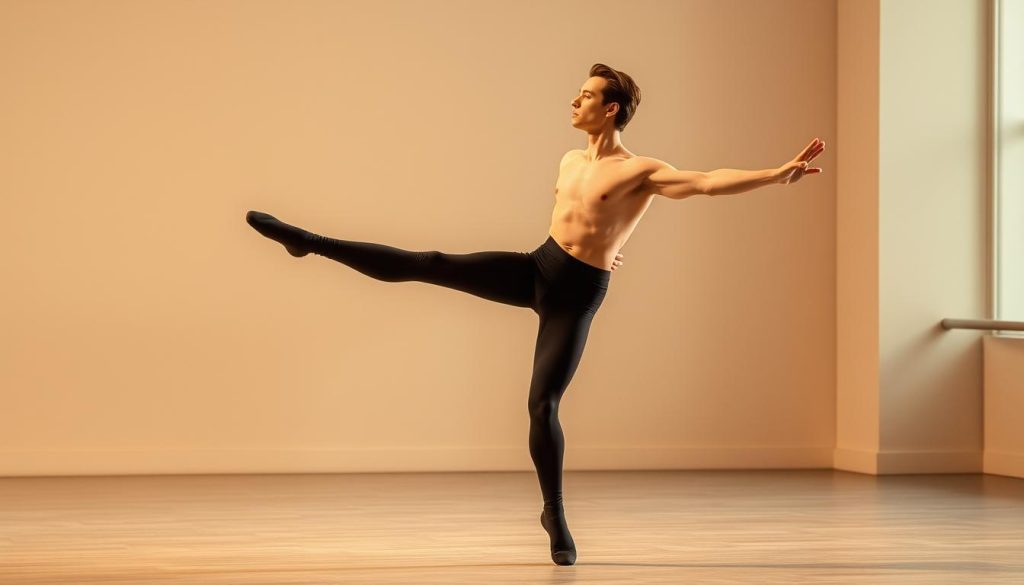
Ballet terminology can be confusing, especially for male performers. In the U.S., male ballet dancers have a simple yet specific title1. They’re called “ballet dancers” or “male ballet dancers”1.
American English takes a neutral approach to dance terms. “Ballerina” is only used for female dancers, which can puzzle dance fans1. This non-gendered language shapes how we describe American ballet performers1.
Key Takeaways
- Male ballet dancers are called “ballet dancers” in the U.S.
- The term “ballerina” specifically refers to female dancers
- American ballet terminology favors gender-neutral language
- Cultural and linguistic practices shape dance terminology
- Professional ballet uses precise, respectful language
Understanding Ballet Terminology and Gender-Specific Titles
Ballet’s rich terminology reflects its deep cultural roots. It captures the intricate language of dance. These terms distinguish male and female performers2.
Understanding ballet terms gives insight into its sophisticated culture. This culture has developed through centuries of artistic expression.
Traditional French and Italian Dance Language
In ballet, gender-specific titles are crucial. Ballet uses distinct terms for male and female dancers:
- French terminology: danseur for male dancers, danseuse for female dancers
- Italian terminology: ballerino for male dancers, ballerina for female dancers2
Evolution of Dance Terminology in America
American ballet has adapted traditional terms. The word danseur is now popular among male ballet dancers in America3.
Classical ballet styles have influenced this language evolution. Different methods contribute to the rich tapestry of dance terminology.
Modern Usage in Professional Ballet
Contemporary ballet has transformed traditional titles. “Principal dancer” has largely replaced older terms like “prima ballerina”2.
This shift shows changing dynamics in professional ballet. Individual artistic merit now outweighs rigid historical classifications.
Professional companies now focus on skill, technique, and artistic expression. Ballet terminology continues to evolve, mirroring broader cultural changes4.
Male Ballerina Term in America: Professional Rankings and Classifications
Professional male ballet dancers in America face a complex hierarchy in dance companies. Their unique talents and skills are recognized through various ranks. These ranks include Principal Dancer, Soloist, and Corps de Ballet5.
Principal Dancers are at the top of American ballet companies. They perform leading roles and show exceptional technique and artistic expression. Their performances often include iconic ballet productions. Becoming a Principal Dancer requires immense dedication, talent, and hard work5.
Soloists bridge the gap between ensemble and principal dancers. They often take on featured character parts and solo performances. The Corps de Ballet provides the foundation for productions5.
Younger male dancers in the Corps de Ballet develop their skills. They gain valuable stage experience. Apprentices mark the start of their professional careers in American ballet5.
Modern American ballet companies are shifting towards gender-neutral classifications. These focus on a dancer’s artistic merit and technical skills. This approach values the unique contributions of male ballet dancers to the art form.
FAQ
What is the correct term for a male ballet dancer?
In professional ballet, a male dancer is called a danseur. “Ballerina” only refers to female dancers. American ballet often uses “ballet dancer” or “male ballet dancer” for men.
Why can’t I use the word “ballerina” for male dancers?
“Ballerina” is Italian for “female dancer.” It’s a gender-specific term. Professional dancers and companies prefer “danseur” or “male ballet dancer” for accuracy.
What are the traditional French terms for male and female ballet dancers?
In ballet terminology, “danseur” means male dancer, while “danseuse” means female dancer. These French terms are still widely used in professional ballet circles.
They help distinguish between male and female performers with precision. The terms also show respect for the art form.
Do professional ballet rankings differ for male and female dancers?
Yes, ballet companies have specific rankings for dancers. For men, these include corps de ballet, soloist, and principal dancer. These ranks show career progression and skill level in American ballet companies.
How has ballet terminology evolved in American dance culture?
Ballet terms in the U.S. have become more inclusive and precise. Traditional French and Italian words are still respected. There’s a growing focus on using gender-neutral and respectful language.
American companies now emphasize a dancer’s skill, artistry, and professional ranking. This approach is preferred over strictly gendered descriptions.
Are there any famous male ballet dancers in the United States?
Yes! The U.S. has produced many renowned male ballet dancers. Some examples include Mikhail Baryshnikov, Edward Villella, Ethan Stiefel, and Robbie Fairchild.
These dancers have greatly boosted the status of male ballet dancers. They’ve also increased the visibility of men in American dance culture.
What training do male ballet dancers typically undergo?
Male ballet dancers often start training young, focusing on classical techniques. They do rigorous physical training, including strength conditioning and flexibility exercises. Many train at top schools like American Ballet Theatre or New York City Ballet.
Source Links
- Don’t Call Him a Ballerina. He’s a Ballerino, Goddamnit – https://melmagazine.com/en-us/story/what-is-a-male-ballerina-called
- Defining “Ballerina” – https://pointemagazine.com/who-is-a-ballerina/
- Different Types of Ballet | Styles & Ballet Terminology – The Grand – https://www.blackpoolgrand.co.uk/different-types-ballet
- A Gender Gap In Ballet, Seriously? – https://www.forbes.com/sites/kimelsesser/2019/09/12/a-gender-gap-in-ballet-seriously/
- Ballet Company Hierarchy – Everything You Need To Know – Brittany Haws – https://www.brittanyhaws.com/ballet-company-hierarchy-everything-you-need-to-know/

