
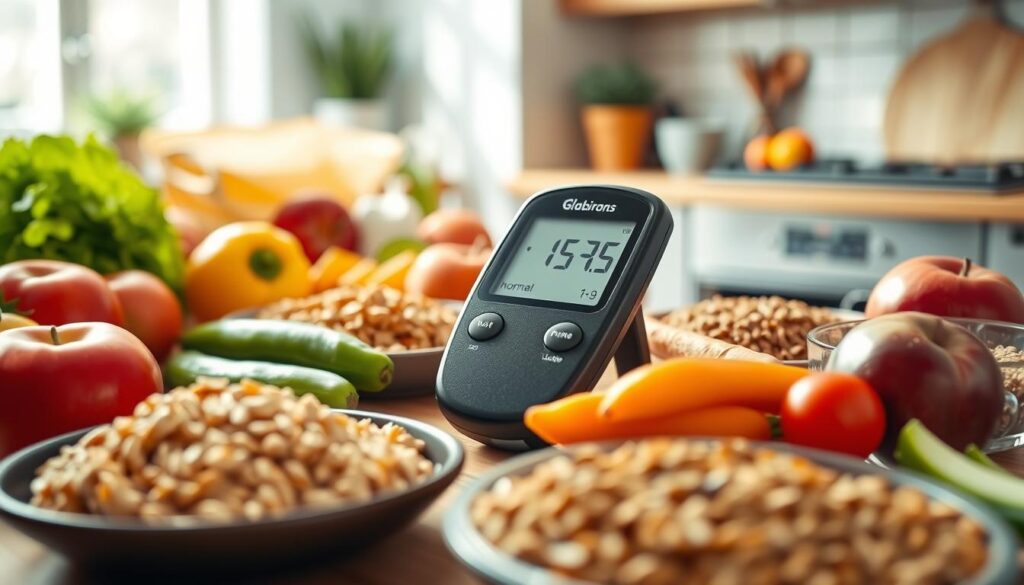
Your glucose level after eating matters for your overall health. It shows how your body handles food and manages blood sugar1. Healthy people should aim for post-meal glucose levels below 140 mg/dL2.
Blood sugar management isn’t simple. Normal levels after eating can change based on age, diet, and health. For non-diabetics, experts suggest keeping post-meal glucose at 110 mg/dL or lower1.
Your body’s food response is dynamic. Glucose levels usually peak an hour after eating. They should return to normal within two to three hours2.
Healthy people spend about 93% of their day with glucose between 70-140 mg/dL1. This range is considered normal for most individuals.
Key Takeaways
- Normal post-meal glucose levels are typically below 140 mg/dL
- Glucose levels should return to baseline within 2-3 hours after eating
- Healthy individuals maintain glucose levels between 70-140 mg/dL most of the day
- Individual factors can influence optimal blood sugar after meals
- Regular monitoring helps understand your unique glucose response
Understanding Post-Meal Blood Sugar Basics
Keeping post-meal glucose in check is key for healthy blood sugar levels. Your body works hard after eating to manage blood sugar. Learning about these processes can boost your metabolic health control.
How Food Affects Your Blood Sugar
Eating naturally raises your blood sugar. Different foods impact glucose levels in various ways. Carbs cause the biggest spike in blood sugar3.
Before meals, aim for blood sugar between 80 and 130 mg/dL. Two hours after eating, it should stay under 180 mg/dL3.
Factors Influencing Post-Meal Glucose
- Food type and quantity
- Physical activity level
- Stress conditions
- Overall health status
Many factors can lead to high blood sugar after meals. For best health, avoid foods that raise blood sugar over 100 mg/dL4.
The Role of Insulin in Blood Sugar Control
Insulin is vital for managing blood glucose. After you eat, your pancreas releases insulin. This hormone helps cells absorb glucose from the blood, keeping sugar levels normal4.
| Blood Sugar Stage | Target Range |
|---|---|
| Fasting Level | 82-88 mg/dL |
| 1 Hour After Eating | Less than 120 mg/dL |
| 2 Hours After Eating | Less than 120 mg/dL |
Tip: Exercise can help clear sugar from your blood, with different activities having varying effects on glucose levels4.
Normal Glucose Level After Eating
Postprandial glucose levels are key to your overall health. Your blood sugar after meals can tell a lot about your metabolic wellness5.
Tracking these levels helps prevent long-term health issues. It’s the first step to managing your metabolic health.
For those without diabetes, healthy blood sugar has specific targets. Two hours after eating, it should stay below 140 mg/dL6.
“Knowing your blood sugar levels is the first step to managing your metabolic health”
Different groups have varied blood sugar targets after meals:
- Adults without diabetes: Below 140 mg/dL two hours after eating6
- Adults with diabetes: Below 180 mg/dL one to two hours post-meal6
- Pregnant individuals: Below 120 mg/dL two hours after eating6
Your targets may change based on age, health, and medical conditions. The American Diabetes Association suggests specific goals.
These range from 70 to 130 mg/dL before meals. After meals, they should be less than 180 mg/dL5.
| Group | Postprandial Glucose Target |
|---|---|
| Non-Diabetic Adults | Less than 140 mg/dL |
| Diabetic Adults | Less than 180 mg/dL |
| Pregnant Individuals | Less than 120 mg/dL |
Regular monitoring helps you understand your healthy blood sugar range. This knowledge can prevent health risks linked to irregular glucose levels5.
Managing Healthy Blood Sugar After Meals
Keeping blood sugar normal after eating requires a smart approach. It combines diet, exercise, and careful monitoring. Your post-meal glucose management greatly affects your overall health.
Effective strategies for managing post-meal glucose involve several key parts. These work together to keep your blood sugar healthy7. Understanding these approaches can help you control your metabolic health.
Diet and Meal Planning Strategies
Your meal planning is crucial for healthy blood sugar. Consider these dietary approaches:
- Choose low glycemic index foods
- Balance meals with lean proteins and complex carbohydrates
- Practice portion control
- Include fiber-rich vegetables in every meal
Adults with diabetes should keep blood sugar below 180 mg/dL 1-2 hours after eating7. Consulting with a nutritionist can help you create meals for stable glucose levels.
Exercise and Physical Activity Impact
Regular physical activity helps manage post-meal glucose. Short walks after meals can help your body process sugar better8. Try for 30 minutes of moderate exercise most days of the week.
Monitoring and Testing Guidelines
Regular blood sugar checks help you understand your body’s response to meals. People with Type 1 diabetes should check blood sugar at least 4 times daily8.
Use a glucose meter or continuous monitor to track your levels. This will help you spot patterns in your blood sugar.
Your blood sugar targets may vary. Work with your doctor to set personal goals.
Conclusion
Keeping your after-meal glucose levels in check is vital for overall health. Your body’s response to food is unique. This helps create a personal plan for healthy blood sugar9. Many factors affect blood sugar, including diet and exercise10.
Success in managing post-meal glucose requires regular monitoring and smart lifestyle choices. Focus on balanced meals, exercise, and knowing how foods affect your blood sugar. Track your meals, activities, and glucose readings to understand your body’s patterns10.
Each person’s glucose response differs. General guidelines help, but working with healthcare pros is key. They can create a plan just for you. Regular check-ups, diet advice, and possible medication help maintain good blood sugar levels10.
Your efforts to manage blood sugar invest in your future health. Stay informed and listen to your body. This approach helps you navigate glucose management effectively. It leads to a healthier, more balanced life.
FAQ
What is considered a normal glucose level after eating?
For adults without diabetes, blood sugar should be below 140 mg/dL two hours after eating. People with diabetes should aim for levels under 180 mg/dL one to two hours post-meal. Pregnant individuals need stricter targets, staying below 120-140 mg/dL after eating.
How do foods impact blood sugar levels?
Food, especially carbs, raises blood sugar levels. Different foods cause varying glucose responses. Carbs have the biggest impact, breaking down into glucose that enters the bloodstream.
What factors influence post-meal glucose levels?
Several factors affect blood sugar after eating. These include food type and amount, physical activity, stress, and overall health. Medication and individual metabolic responses also play a role.
Insulin is crucial in managing these levels. It helps cells absorb glucose from the bloodstream.
How can I manage my blood sugar after meals?
To manage post-meal blood sugar, follow a balanced diet with controlled carb intake. Engage in regular exercise and monitor your blood sugar often. Work with healthcare providers to create a personalized plan.
Physical activity can boost insulin sensitivity. It also helps lower blood sugar levels.
Why is maintaining normal glucose levels important?
Keeping normal blood sugar levels prevents long-term health issues. It reduces diabetes-related problems and supports overall metabolic health. This can improve your quality of life.
Uncontrolled post-meal blood sugar may lead to health challenges over time.
How often should I check my blood sugar after eating?
Blood sugar monitoring frequency depends on your health condition. People with diabetes typically test more often. They follow guidelines from their healthcare provider.
The American Diabetes Association suggests personalized testing schedules. These are based on individual needs and health status.
Do different groups have different blood sugar targets?
Yes, blood sugar targets vary by age, health condition, and individual circumstances. Adults without diabetes, those with diabetes, and pregnant individuals have different recommended ranges.
It’s vital to work with a healthcare provider. They’ll help set personalized blood sugar goals based on your specific health needs.
Source Links
- What should your glucose levels be? The 2024 Levels Guide to healthy blood sugar ranges – https://www.levels.com/blog/what-should-my-glucose-levels-be-ultimate-guide
- What High Blood Sugar After Eating Means – https://www.verywellhealth.com/blood-sugar-levels-after-eating-5118330
- Manage Blood Sugar – https://www.cdc.gov/diabetes/treatment/index.html
- What Should Your Blood Sugar Be After Eating – Track and Learn! – https://dralexisshields.com/blood-sugar
- What High Blood Sugar Does to Your Body – https://www.webmd.com/diabetes/how-sugar-affects-diabetes
- No title found – https://www.urmc.rochester.edu/encyclopedia/content?contenttypeid=167&contentid=glucose_two_hour_postprandial
- Normal Glucose Levels After Eating – https://www.healthline.com/health/diabetes/normal-glucose-level-after-eating
- Managing your blood sugar Information | Mount Sinai – https://www.mountsinai.org/health-library/selfcare-instructions/managing-your-blood-sugar
- Blood Sugar After Eating: What Happens, Levels, and More – https://www.healthline.com/health/and-after-effect-eating-blood-sugar
- Normal Glucose Levels after Eating | CK Birla Hospital – https://www.ckbhospital.com/blogs/normal-glucose-levels-after-eating/

