
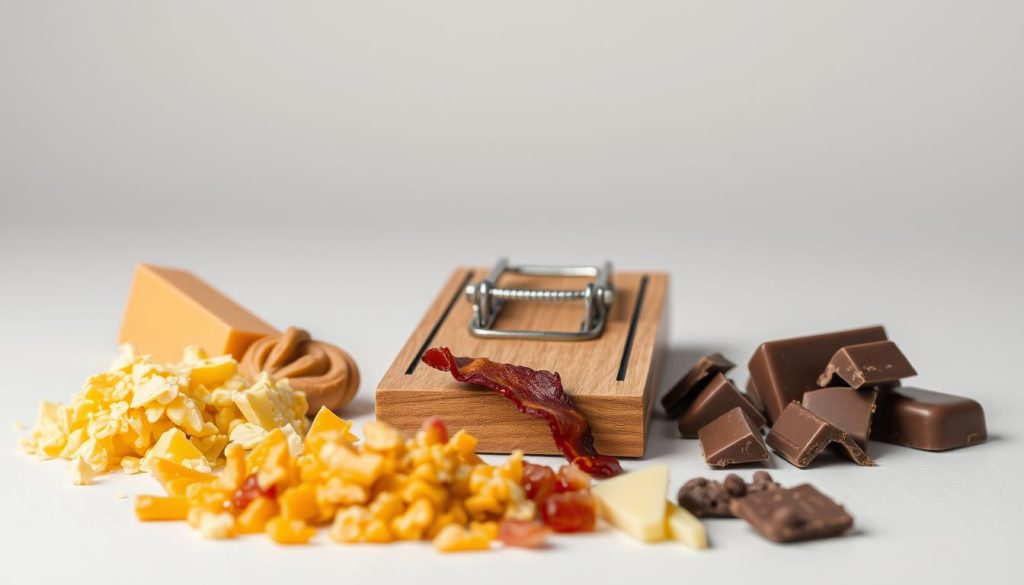
Catching mice can be a real headache for homeowners. The right bait isn’t just cheese from your fridge. Smart mouse lures need clever thinking and knowing how rodents act1.
Mice eat almost anything humans do. Your kitchen could be their dream buffet1. Surprisingly, cheese is one of the worst baits for mousetraps1.
Pest pros suggest sweet or fatty foods mice love. Peanut butter is a top pick. Mice must lick it off, making them easier to catch1.
Other great lures are marshmallows, chocolate, and small bacon bits1. Where you put traps matters too. Mice like to travel along walls and hidden paths2.
Key Takeaways
- Peanut butter is the most effective mousetrap bait
- Cheese is a myth when it comes to catching mice
- Use small amounts of fatty or sweet foods
- Place traps along walls and hidden areas
- Mice are attracted to diverse food types
Common Misconceptions About Mouse Trap Baits
Rodent trapping myths can hinder effective mouse control. Understanding how smells attract mice is key to successful pest management3.
Debunking the Cheese Myth
Cheese isn’t the best mouse bait. Mice prefer foods high in carbs and sugars3. Strong cheese odors might even scare mice away3.
Mouse Feeding Preferences Explained
Mice have fast metabolisms and crave energy-rich foods. Their favorite snacks include:
- Peanut butter (sticky and high in calories)3
- Sweet foods like gummy candies3
- Beef jerky with strong meaty scents3
- Pet food with protein-rich aromas3
The Critical Role of Scent in Rodent Attraction
Choosing the right bait involves more than just food type. Mice rely heavily on their sense of smell4. Experts suggest using small, pea-sized bait portions for best results4.
Try setting multiple traps with different baits. This helps find the most attractive option for your mouse problem5. Poor bait choice causes 90% of home mouse treatment failures5.
Pro Tip: Always wear gloves when handling traps to prevent human scent from deterring mice!
Best Mousetrap Bait Options That Actually Work
Choosing the right bait is crucial for effective mouse control. Peanut butter is a top choice for homemade mouse trap bait recipes. Its strong aroma and sticky texture make it irresistible to mice6.
High-calorie foods attract these small rodents. Sweet treats and savory options are particularly effective. Female mice prefer sweeter baits like chocolate and high-sugar cereals6.
In colder months, use nesting materials as live mouse trap baits. Cotton balls or dental floss can work well. Experts suggest rotating bait and traps every few days for maximum effectiveness6.
Soft cheeses like goat or cream cheese make great humane mouse trap lures. For chocolate, choose milk or white varieties to attract mice. Use only a pea-sized portion of bait78.
Always wear gloves when baiting traps. Place them in high-traffic areas for the best results. This approach will increase your chances of catching mice6.
FAQ
Is cheese really the best bait for mousetraps?
Cheese isn’t the best mousetrap bait. Mice prefer high-protein and high-carb foods with strong scents. Peanut butter, chocolate, and seeds work better for catching mice.
How important is scent when setting a mousetrap?
Scent is crucial for attracting mice to traps. Mice have a keen sense of smell. They’re drawn to foods with strong, rich aromas.
Always wear gloves when handling traps. This prevents transferring human scent, which might scare mice away.
What are the most effective homemade mouse trap baits?
Top homemade mouse trap baits include peanut butter, chocolate spread, and bacon bits. Seeds and dried fruit also work well. These foods are calorie-rich with strong scents mice love.
Try different options to find what works best for your situation.
Can I use humane baits for live traps?
Yes! For live traps, use sunflower seeds, nuts, dried fruits, or peanut butter. These baits attract mice without harming them. This allows for ethical capture and relocation.
How much bait should I use on a mousetrap?
Use a small amount of bait, about the size of a pea. Too much bait lets mice steal it without triggering the trap.
Place the bait carefully on the trigger mechanism. This ensures the trap will spring when the mouse tries to eat.
Are there any organic bait options for mousetraps?
Yes! Organic options include peanut butter, seeds, nuts, and dried fruits. Small pieces of organic chocolate work too. These natural baits can be just as effective as traditional ones.
How often should I replace mousetrap bait?
Replace bait every 1-2 days or when it becomes old and dry. Fresh bait is more attractive to mice and increases catch success.
Check traps regularly and refresh the bait. This helps maintain its effectiveness in catching mice.
Source Links
- Baiting Mouse Traps – Which Foods Work Best? – Colonial Pest Control – https://www.colonialpest.com/2011/03/22/baiting-mouse-traps-which-foods-work-best/
- How to Get Rid of Mice When Traps Don’t Work | Pest Czar – https://pestczar.com/how-to-get-rid-of-mice-when-traps-dont-work/
- Beyond Cheese: The Real Mouse Bait That Works – Debunking Myths and Effective Options – Modern Pest Services – https://www.modernpest.com/blog/beyond-cheese-the-real-mouse-bait-that-works-debunking-myths-and-effective-options/
- Fact or Fiction: Is Cheese the Best Bait for Mice? – https://www.familyhandyman.com/article/cheese-bait-for-mice/?srsltid=AfmBOorUFJrvs_7w6114uNlg-wBJiCux1MEjXVYab4NQ_aBLhk3N0Fct
- What is the Best Bait for Catching Mice? – https://kapturepest.com/what-is-the-best-bait-for-catching-mice/
- Expert Opinion: Whatâs the Best Bait for Mouse Traps? – https://www.nativepestmanagement.com/blog/2024/august/expert-opinion-what-s-the-best-bait-for-mouse-traps-/
- Mouse Trap Bait: The Best 4 Options! – Zunex Pest Control – https://www.zunexpestcontrol.com/post/mouse-trap-bait
- The 6 best baits for mice traps and stations – V Extermination – https://vextermination.com/en/blog/article/the-6-best-baits-for-mice-traps-and-stations.73

