Mold silently invades homes, creating health risks and structural damage. About 70% of American homes have some mold present1. Removing mold from walls requires careful planning and understanding.
Household mold removal is vital for a healthy living space. Mold spores can trigger respiratory issues like coughing and sneezing1. Safe removal methods are crucial to prevent health problems.
Knowing where mold grows helps with effective treatment. High-humidity areas like bathrooms and basements are prime breeding grounds. Mold can start growing just 24 to 48 hours after water exposure1.
Key Takeaways
- 70% of homes have mold present
- Mold can develop within 24-48 hours of water exposure
- Bathrooms and basements are high-risk areas
- Prompt removal prevents health and structural risks
- Professional help might be necessary for extensive growth
Safe DIY Mold Treatment Solutions
Mold remediation can be tricky, but homeowners can effectively clean walls and remove fungus safely. Mold spores are always in the air, waiting for ideal conditions to grow2. Improving indoor air quality is key to preventing and treating mold problems3.
Essential Safety Equipment for Mold Removal
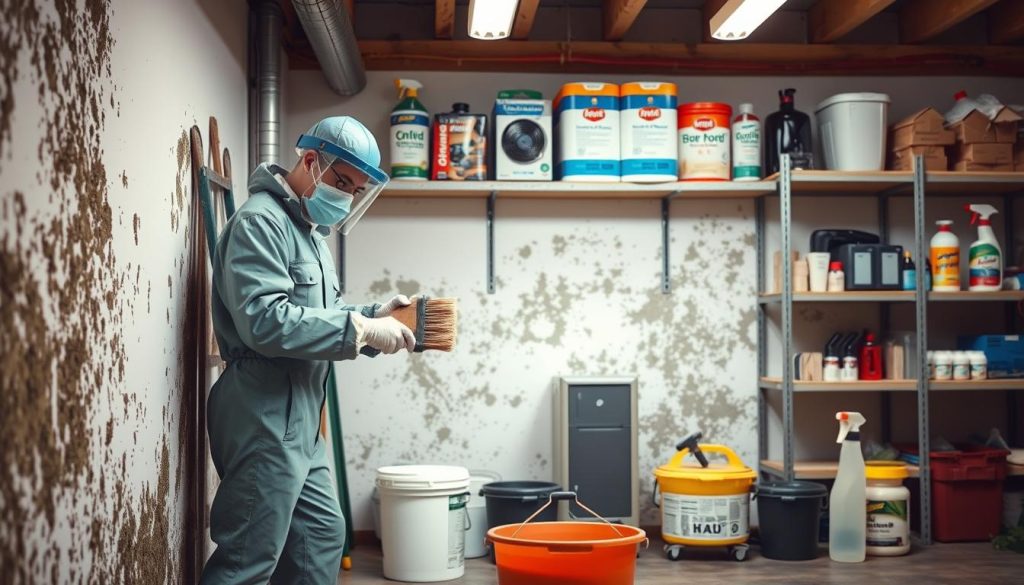
Proper protection is vital before tackling any mold removal project. The CDC suggests specific gear for safe mold cleaning:
- N95 respirator mask
- Waterproof gloves
- Protective goggles
- Long-sleeved clothing
- Waterproof boots
Natural vs. Chemical Cleaning Solutions
Natural cleaning solutions offer a safer alternative to harsh chemicals. Chemical cleaners can be effective but often contain toxic ingredients. Natural options like vinegar and baking soda are powerful mold fighters23.
Most Effective Natural Mold Fighters
Several household items excel at fungus removal:
- White Vinegar: Kills 82% of mold species with its acidic properties3
- Baking Soda: Creates a paste that effectively removes mold2
- Hydrogen Peroxide: Breaks down mold at the cellular level
- Tea Tree Oil: Natural antimicrobial agent
For mold covering more than 10 square feet, seek professional remediation3. Always put safety first when dealing with mold issues.
Thorough cleaning is crucial for effective mold removal. Prioritize both safety and cleanliness throughout the process.
Removing Mold from Walls: Step-by-Step Process
Wall cleaning needs a smart plan to get rid of mold for good. Start by checking the wall type and how to control moisture. Different walls need special care to remove mildew45.
For smooth surfaces like tile or painted walls, make a special cleaning mix. Mold experts suggest using methods that really work on mold:
- Wear protective gear including an N-95 respirator5
- Use chlorine bleach solution (1 cup bleach per gallon of water)5
- Scrub surfaces thoroughly with a stiff brush
- Ensure complete drying of the area
Soft materials like drywall are tougher to clean. Sometimes, you might need to replace the whole thing. Mold can grow twice as big in just one day5.
So, act fast! Keep indoor air dry using a dehumidifier. This helps stop new mold from growing5.
Pro tip: Clean damp areas like bathrooms and kitchens often. This can really cut down on mold risks4.
If mold keeps coming back, try mold-resistant paint in wet areas. This can protect your walls and keep your home healthy4.
Conclusion
Mold prevention requires active indoor moisture management. Homeowners must focus on regular maintenance and air quality improvement. Early detection and quick action can save time and money in addressing mold issues.
Regular home inspections are vital to catch moisture problems early. Check damp-prone areas like bathrooms, kitchens, and basements often6. Use dehumidifiers and ensure proper ventilation to reduce mold risk6.
Homeowners can safely remove small mold patches under 10 square feet76. For larger areas or health concerns, seek professional help. Black mold can pose serious risks to vulnerable groups6.
Preventing mold growth involves creating an unfavorable environment for its development. Consistent moisture control and vigilant home maintenance are key. Your efforts will create a healthier, safer home for your family.
FAQ
How dangerous is mold on my walls?
Mold can cause serious health problems. It may trigger asthma, skin irritation, and respiratory issues. People with weak immune systems are at higher risk for severe health complications.
Quick action is key to protect your health and home. Address mold growth promptly and thoroughly to avoid long-term problems.
What are the most common areas for mold growth in homes?
Mold loves damp, humid places. Common areas include bathrooms, kitchens, basements, and around windows. Look for mold under sinks, near air conditioners, and in poorly ventilated spots.
Be alert for musty smells, wall discoloration, or visible moisture. These signs often indicate mold growth in your home.
What safety equipment do I need for mold removal?
Use N-95 respirator masks, disposable gloves, and safety goggles for protection. Wear long-sleeved shirts and pants to cover your skin. For larger mold areas, consider a full-body protective suit.
This gear helps prevent contact with mold spores. It minimizes health risks during cleanup.
Can I remove mold using natural cleaning solutions?
Yes, natural solutions work well against mold. White vinegar, hydrogen peroxide, and tea tree oil are effective mold fighters. Vinegar kills up to 82% of mold species.
Hydrogen peroxide is a powerful oxidizer. It eliminates mold without harsh chemicals. Tea tree oil is another strong natural antimicrobial option.
How do I prevent mold from returning after removal?
Control moisture levels to prevent mold regrowth. Use dehumidifiers and ensure proper ventilation. Fix water leaks immediately and keep indoor humidity between 30-50%.
Clean and dry damp areas regularly. Use exhaust fans in bathrooms and kitchens. Apply mold-resistant paint in high-moisture areas for extra protection.
What surfaces can I safely remove mold from?
Mold removal methods vary by surface type. Use gentle cleaners and soft brushes on painted walls. Tile and non-porous surfaces are easier to clean.
Wallpaper and drywall need careful treatment. They might need replacement if mold goes deep. Always test cleaners on a small area first.
When should I call a professional for mold removal?
Seek professional help for large mold areas over 10 square feet. Call experts for extensive water damage or mold in HVAC systems. Professional help is crucial if you have health conditions sensitive to mold.
Professionals have specialized equipment. They can identify and fix underlying moisture problems that cause mold growth.
Are chemical mold removers better than natural solutions?
Natural solutions are often safer and just as effective as chemical cleaners. They’re more eco-friendly and don’t introduce harmful substances into your home. Vinegar and hydrogen peroxide work well without toxicity.
Chemical bleach kills mold but doesn’t prevent regrowth. It can be harmful to breathe. Natural options are typically a better choice for most situations.
Source Links
- How to Remove Mold from Inside Walls – https://discountdumpsterco.com/blog/how-to-remove-mold-from-inside-walls/
- Tips and Tricks From the Pros – https://www.servicemasterrestore.com/servicemaster-disaster-associates-stoneham/why-us/blog/2022/june/tips-to-remove-mold-from-the-walls/
- Mold on Walls? The Key to Permanent Removal Is Knowing Where It Hides – https://www.bobvila.com/articles/mold-on-the-walls/
- Kill the Mold and Get Rid of the Stains on Your Walls – https://www.thespruce.com/how-to-clean-mold-off-walls-5220421
- How to Get Rid of Mold – https://www.homedepot.com/c/ah/how-to-get-rid-of-mold/9ba683603be9fa5395fab907c52351c
- The Ultimate Guide on How To Clean and Get Rid Of Mold – https://prohousekeepers.com/blog/ultimate-mold-cleaning-guide/
- How to Remove Mold From Inside Walls – https://www.thespruce.com/how-to-remove-mold-from-inside-walls-5211668