
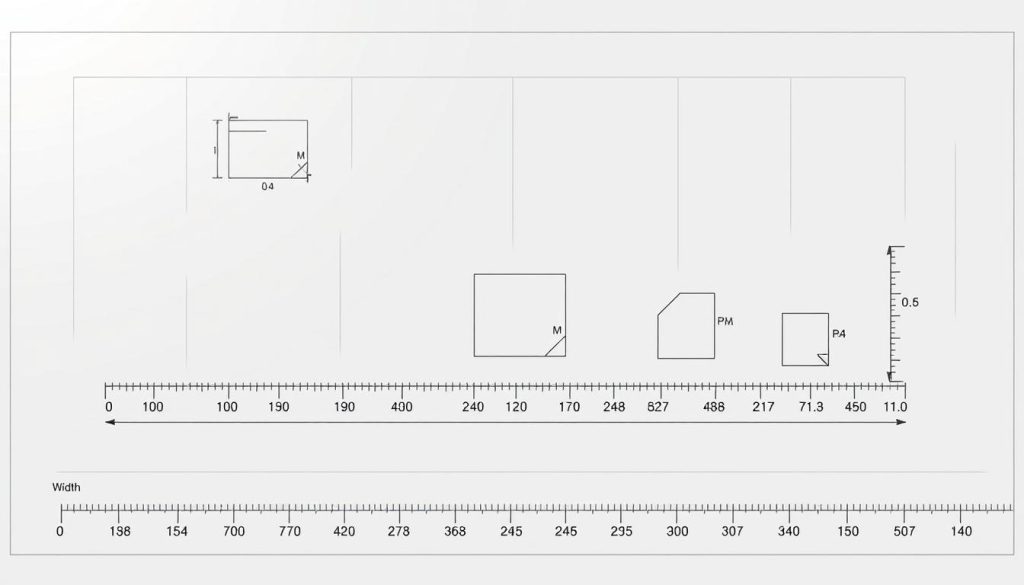
Dimensions can be confusing. The correct order of width, length, and height is vital in many fields. Professionals often struggle with specifying measurements, especially for custom orders.
The graphics industry follows a standard approach. Width comes first, then height. This method is clear and consistent for communicating dimensions.
This convention is used in engineering and mathematics too. It helps maintain clarity across different fields.
Accuracy is crucial in measurements. Professionals use visual aids and detailed purchase orders to ensure precision. Some use clever mnemonics to remember the correct order.
Different industries may have unique measurement conventions. American manufacturing often uses inches for dimensions. The international standard relies on metric measurements.
Key Takeaways
- Width is typically listed first in professional measurements
- Consistent dimension order prevents costly misunderstandings
- Visual aids can help clarify complex measurements
- Different industries may have slight variations in measurement standards
- Precision is crucial when specifying dimensions
Understanding Standard Measurement Conventions
Sizing and spatial parameters require clear understanding of measurement conventions. Professionals rely on consistent geometry standards to communicate dimensions accurately1.
The graphics industry uses specific standards for recording dimensions. These align with natural reading patterns. They help streamline communication and reduce misunderstandings in design and manufacturing2.
Graphics Industry Dimension Standards
Visual design and printing follow a specific order of measurement. The typical convention lists dimensions as width x height. This matches how we read text from left to right1.
- Width represents the horizontal dimension
- Height indicates the vertical measurement
- Length refers to the longest dimension in context
Reading Direction and Spatial Orientation
Our natural reading direction affects how we perceive spatial parameters. English speakers process information from left to right. This explains why width comes before height in most professional contexts3.
Professional Software Conventions
Layout programs use the width x height order consistently. This includes Adobe Photoshop, Illustrator, and InDesign. It ensures clarity across different design platforms2.
This approach makes communication more straightforward for professionals. It creates a uniform standard in the industry.
Precision in measurement is the foundation of effective design and communication.
Width, Length, Height Order in Different Applications
Sizing plays a crucial role in various industries. The standard dimension order impacts transportation costs and product design. Length is the longest dimension, width is horizontal spread, and height is vertical reach.
- Construction relies on precise length x width x height specifications for structural planning4
- Furniture design considers dimensional proportions for aesthetic and functional balance5
- Logistics calculates volumetric weight using comprehensive measurements5
Shipping industries show remarkable precision in dimensional tracking. Accurate box measurements can improve storage efficiency by 25%. They can also reduce potential errors.
Shipping costs might increase up to 30% with inaccurate measurements. This highlights the importance of getting dimensions right4.
Engineering and architecture recognize that width impacts structural stability. Height influences visibility and design aesthetics5.
Manufacturers standardize dimensions to ensure component compatibility. This reduces assembly complications5.
Precision in measurements is not just about numbers—it’s about understanding spatial relationships across various professional domains.
Conclusion
Grasping the right order of dimensions is vital in various industries. It ensures accuracy and reduces communication errors in manufacturing and design. Precise measurements are key, whether dealing with standard bricks or complex volumes6.
Standardized measurements are crucial in global commerce. They help professionals communicate effectively and avoid misunderstandings7. Credit cards’ exact dimensions show how important precise measurements can be7.
Different fields may have unique approaches, but core principles stay the same. Understanding length, width, and height improves work accuracy. It empowers professionals to communicate precisely across industries6.
Mastering dimensions is about clear communication and technical know-how. These skills are priceless in design, engineering, and spatial awareness fields. Regular practice and attention to detail will boost your proficiency in measurements.
FAQ
Why is the order of width, length, and height important?
The correct order of measurements is vital in many industries. It ensures clear communication and prevents costly errors. Different fields may have specific dimensional conventions.
Knowing the standard order saves time and reduces mistakes. It’s crucial for design, construction, and shipping professionals.
What is the standard measurement convention in the graphics industry?
In graphics, the standard is width x height. This follows our natural reading direction. Design software, digital displays, and print media widely use this order.
For screen sizes or poster dimensions, professionals always list width first. Height comes second in these measurements.
How does reading direction impact measurement conventions?
Our left-to-right reading pattern shapes how we interpret dimensions. In Western cultures, width comes before height. This mirrors how we process visual information.
This approach reduces confusion about spatial measurements. It creates a more standard way to communicate dimensions.
Do measurement orders change in different industries?
Yes, measurement orders can vary by industry and application. Construction might focus on length first. Shipping companies could have unique dimensional needs.
Furniture design might emphasize different spatial aspects. It’s key to know the context and follow industry-specific rules.
What’s the difference between depth and width in measurements?
Depth usually means the front-to-back measurement. Width describes the side-to-side dimension. In 3D measurements, depth adds another spatial layer.
The item being measured determines how these terms apply. Precision is crucial in professional settings.
How can I remember the correct measurement order?
Think of measurements like reading a book – left to right. Start with width, then height, and finally length or depth.
Always check the specific convention in your field. Confirm with professionals to ensure clarity in communication.
Why are standardized measurements important in global commerce?
Standardized measurements create a universal language of dimensions. They make international trade smoother and ensure precise manufacturing.
These standards help with shipping logistics worldwide. They reduce misunderstandings across cultural and language barriers.
Source Links
- Measurement: Length, width, height, depth – https://elementarymath.edc.org/resources/measurement-length-width-height-depth/
- How to Correctly Measure The Dimensions of a Box | Pakfactory Blog – https://pakfactory.com/blog/how-to-measure-a-box-dimension/?srsltid=AfmBOorVZ9roiioateQh56M3jq3_f94Khao_xMGkK58T3uhHtebGsRsh
- Understanding Office Furniture Measurements | Width, Height & Depth – https://www.chairoffice.co.uk/blog/understanding-office-furniture-measurements/
- What Are the Dimensions of a Box? How to Measure Width, Length, and Height – https://www.customproductpackaging.com/blog/what-are-the-dimensions-of-a-box-how-to-measure-width-length-and-height
- Length Width Height – Understanding Dimensions – BoxesGen – https://boxesgen.com/length-width-height-understanding-dimensions/
- Length Width Height – Definition with Examples – https://brighterly.com/math/length-width-height/
- Length Width Height Definitions and Examples – Club Z! Tutoring – http://clubztutoring.com/ed-resources/math/length-width-height/

