
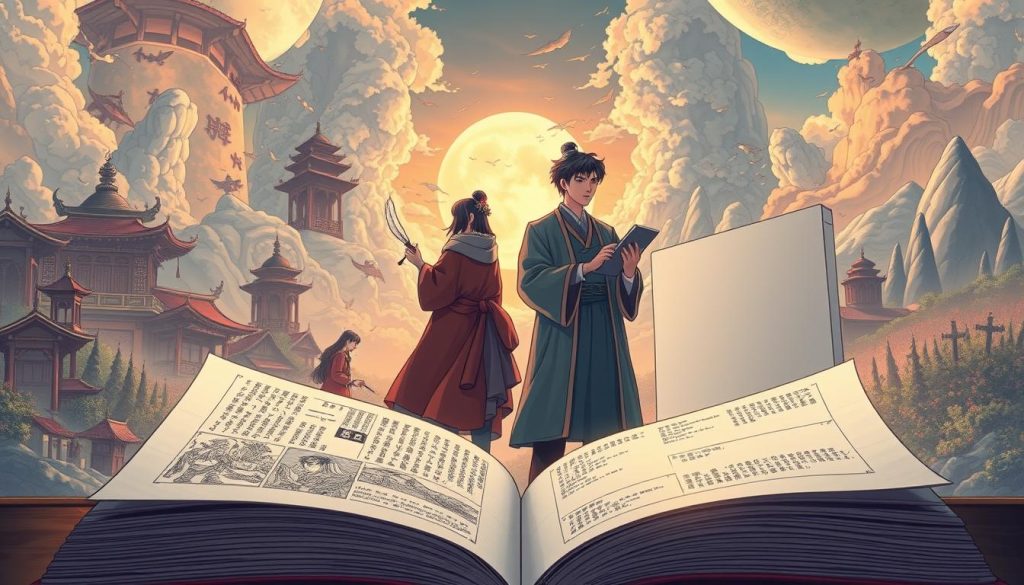
Novels and manhwa offer unique storytelling experiences. Novels use text to weave tales, while manhwa captivates with vivid illustrations. Digital platforms have transformed how we enjoy these stories, especially manhwa1.
Novels create mental images through words. Manhwa, on the other hand, brings stories to life visually. Since 2014, platforms like Naver Webtoon have greatly expanded the digital manhwa landscape1.
The novel vs manhwa debate showcases different cultural storytelling methods. Digital platforms have made manhwa more accessible worldwide2. Popular titles like “Solo Leveling” show the wide appeal of these visual narratives2.
Key Takeaways
- Novels use text, while manhwa uses visual storytelling
- Digital platforms have revolutionized graphic narrative consumption
- Manhwa offers a unique cultural storytelling perspective
- Visual narratives provide immersive reading experiences
- Global audiences are increasingly embracing manhwa
Understanding the Basic Formats: Text vs Visual Storytelling
Storytelling comes in many forms. Prose and visual storytelling offer unique experiences for readers. Western and eastern narrative styles shape how stories unfold in different ways.
Text-based and illustrated narratives differ greatly. Novels use descriptive language to paint mental pictures. Manhwa, on the other hand, uses graphics to show emotions and actions.
Exploring Narrative Structures
Novels typically employ a linear narrative structure with:
- Detailed character descriptions
- Extensive world-building through text
- Chapters that develop plot progressively
Visual Storytelling Techniques
Manhwa, in contrast, communicates through:
- Graphic panels depicting action
- Expressive character illustrations
- Dynamic visual storytelling techniques3
The global popularity of these narrative formats demonstrates the powerful ways stories can be shared across different mediums.
Cultural Origins and Development Patterns
Traditional books and comic books offer diverse cultural storytelling across generations. Graphic narratives like manga, manhwa, and manhua reflect unique artistic traditions from their home countries4.
Manga’s Japanese roots date back to the 1200s. It transformed after World War II, becoming a global phenomenon4. Series like Dragon Ball Z captured international audiences with complex themes4.
- Manga: Originated in Japan, typically black and white
- Manhwa: Developed in South Korea, known for full-color formats
- Manhua: Emerged in China, incorporating traditional cultural elements
Manhwa appeared in the 1930s and 40s in South Korea. It evolved into webtoons with vertical scrolling formats4. The Solo Leveling series showcases modern manhwa’s global appeal4.
Manhua often includes Chinese language and themes. It focuses on Wuxia and Xinxia genres, reflecting its cultural heritage4.
Reading patterns differ among these styles. Manga reads right to left, while manhwa typically follows left-to-right format5.
The evolution of these graphic narratives showcases how storytelling transcends traditional book formats, offering unique cultural perspectives.
These narratives’ global spread shows storytelling traditions becoming more connected6. Digital platforms have made manhwa, manga, and manhua more accessible worldwide6.
Novel vs Manhwa/Manga/Manhua: Key Distinctions
Visual narratives like manhwa, manga, and manhua have transformed storytelling. These formats use vibrant visuals to capture readers’ imaginations. Unlike novels, they employ dynamic panel layouts to convey emotions and action.
Cultural backgrounds shape these narrative styles. Manga features long-form serialized stories with extensive character arcs. Manhwa offers faster-paced narratives for quick online reading.
Each format has its unique approach. Manhua explores Chinese history and mythology. Manga covers multiple genres from action to romance. Manhwa focuses on contemporary themes7.
Digital platforms have changed how we consume manhwa and manga. Infinite scrolling and full-color presentations offer immersive reading experiences. These features set visual narratives apart from traditional novels8.
Webtoon platforms like Naver and Lezhin have made these stories more accessible. They’ve expanded the global readership of visual narratives7.
Knowing these differences helps readers pick their preferred storytelling format. Each medium offers unique strengths in character development and storytelling techniques9.
FAQ
What exactly is a manhwa, and how is it different from a traditional novel?
Manhwa is a Korean comic or graphic novel. It uses illustrations and panels for visual storytelling. Unlike novels, manhwa relies on art to convey the narrative.
Manhwa features a distinct art style and unique panel layouts. It’s often read digitally, making it accessible to a wide audience.
How do the storytelling methods differ between novels and manhwa?
Novels use descriptive prose to create mental images. Readers imagine characters and settings through detailed writing.
Manhwa shows characters, emotions, and action through visual art. It uses panel compositions and facial expressions to tell the story.
Are manhwa only popular in Korea, or do they have a global audience?
Manhwa have gained significant international popularity. They’ve expanded beyond Korean borders, attracting readers worldwide.
Translation apps and digital platforms make these visual narratives easily accessible globally. Webcomics have also helped spread manhwa’s reach.
Which format is better for character development – novels or manhwa?
Both formats excel in character development through different techniques. Novels use internal monologues and detailed descriptions to explore characters’ thoughts.
Manhwa leverage visual cues and expressive artwork. They reveal character personalities and emotional states through dynamic panel layouts.
How do cultural backgrounds influence the storytelling in novels and manhwa?
Cultural backgrounds shape narrative styles significantly. Western novels often reflect individualistic storytelling approaches.
Korean manhwa incorporate collective cultural values and unique artistic traditions. These influence themes, character interactions, and storytelling methods.
What are the reading experience differences between novels and manhwa?
Novels offer a traditional page-turning experience with continuous text. Readers must imagine scenes mentally as they progress through the story.
Manhwa provide a more interactive experience with visual panels. They allow immediate visual comprehension and often feature engaging digital formats.
Can manhwa be considered as serious literary works like traditional novels?
Absolutely! Manhwa have evolved into complex narrative mediums. They tackle sophisticated themes, social issues, and emotional depth.
Many manhwa are now recognized as legitimate literary works. They offer profound storytelling comparable to traditional novels.
How do digital platforms impact the consumption of novels and manhwa?
Digital platforms have transformed both formats. E-books have made novels more accessible to readers around the world.
Webtoon platforms have revolutionized manhwa distribution. They offer instant, mobile-friendly content with features like vertical scrolling and easy translation.
Source Links
- The Differences Between Manga, Manhwa, & Manhua, Explained – https://www.cbr.com/the-differences-between-manga-manhwa-manhua-explained/
- What’s The Difference Between Manga, Manhua & Manhwa? – GeeksforGeeks – https://www.geeksforgeeks.org/whats-the-difference-between-manga-manhua-manhwa/
- Re-Examining the “What is Manga” Problematic: The Tension and Interrelationship between the “Style” Versus “Made in Japan” Positions – https://www.mdpi.com/2076-0752/7/3/26
- Manhwa vs Manga Key Differences Explained – https://ebookologist.com/manhwa-vs-manga/
- The Differences Between Manga, Manhwa & Manhua, Explained – https://www.sportskeeda.com/anime/the-differences-manga-manhwa-manhua-explained
- Manhwa and Manga: Similar but Different Art Forms – https://www.animenewsnetwork.com/feature/2024-05-01/manhwa-and-manga-similar-but-different-art-forms/.210142
- Difference Between Manhua, Manga, And Manhwa – Explained – https://astralpetstore.net/understanding-the-distinctions-between-manhua-manga-and-manhwa/
- Manga vs Manhwa: Major Cultural and Artistic Differences – https://gamerant.com/manga-vs-manhwa-major-cultural-artistic-differences/
- Graphic Novels: Your questions answered | NoveList – https://www.ebsco.com/blogs/novelist/graphic-novels-your-questions-answered

