
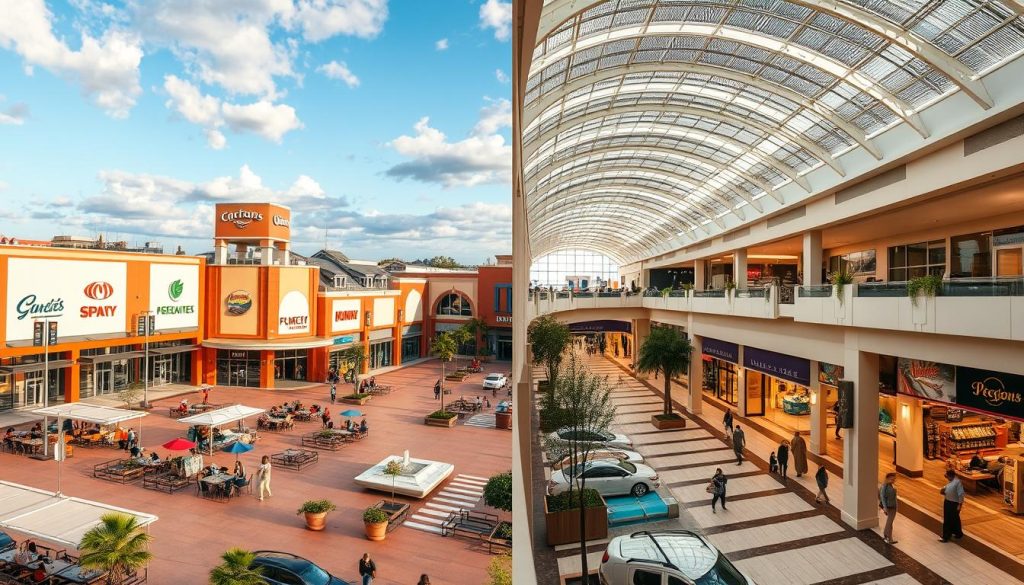
Retail spaces come in various forms, often confusing shoppers. Shopping centers and malls serve similar purposes but have unique features. These complexes differ in size, layout, and overall shopping experience1.
Shopping centers are usually smaller with open-air designs. Malls, however, are larger and enclosed, offering a more comprehensive shopping environment1.
Their structures and tenant mix set them apart. Shopping centers typically have single or grouped buildings in strip or L-shapes1.
Malls often feature multiple levels with indoor walkways connecting various stores1. They house a wider range of shops, including high-end fashion and department stores1.
Shopping centers focus on essential services like grocery stores and discount retailers1. They prioritize practical amenities such as ample parking and easy access1.
Malls offer elaborate features like food courts and movie theaters. They also boast upscale decorative elements to enhance the shopping experience1.
Key Takeaways
- Shopping centers and malls are distinct retail spaces with unique characteristics
- Malls are typically larger and enclosed, while shopping centers are often open-air
- Different tenant mixes and amenities define each retail environment
- Structural designs vary between shopping centers and malls
- Each type of shopping complex serves different consumer needs
Understanding Shopping Center and Mall Fundamentals
Retail spaces have transformed how we shop. Open-air plazas and enclosed districts offer diverse experiences. These commercial environments cater to different consumer needs2.
Shopping centers come in various shapes and sizes. Their design serves specific community needs. The layout impacts visitor experience and commercial success3.
Key Characteristics of Shopping Centers
Shopping centers range from small neighborhood spots to large complexes. These plazas can cover 3 to 830 acres3.
- Grocery-anchored centers attract visitors 2-3 times weekly
- Multiple tenants help mitigate financial risks
- Non-cyclical businesses ensure consistent foot traffic
Core Features of Shopping Malls
Enclosed malls are a big step in retail evolution. These shopping hubs typically span 300,000 to over 1,000,000 square feet. They feature climate-controlled interiors and strategically placed department stores4.
Size and Layout Considerations
Shopping centers and malls come in different sizes. Power centers usually cover 150,000 to 200,000 square feet. Neighborhood centers, focusing on local needs, are under 150,000 square feet4.
Modern retail spaces are more than just shopping venues – they’re community gathering points that reflect evolving consumer preferences.
These differences help us grasp retail real estate. Consumers and investors can better understand this complex world2.
Types of Shopping Centers and Mall Variations
The retail world offers many shopping environments for different consumer needs. From small local shops to huge regional malls, each type has its own features. These shopping center classifications show interesting differences.
Shopping centers are grouped by size, stores, and main purpose. Here are the main types:
- Neighborhood Centers: Typically small-scale commercial centers serving local communities5. Over 50% are anchored by grocery stores5, providing essential daily shopping needs6.
- Community Centers: Larger spaces ranging from 100,000 to 300,000 square feet5. These centers often include multiple specialty boutiques and service-oriented retailers.
- Regional Centers: Extensive shopping destinations offering 400,000 to 800,000 square feet of retail space5. They feature multiple anchor stores and attract shoppers from broader geographic areas.
- Power Centers: Dominated by large retail chains, these centers range from 250,000 to 600,000 square feet65. At least 75% of their space is dedicated to anchor stores5.
- Lifestyle Centers: Modern retail environments blending shopping with entertainment and dining experiences.
Each shopping center type targets a specific market group. They create unique retail spaces that fit different shopper likes.
These centers shape how we shop and spend our free time. They reflect changes in consumer habits and business trends.
Shopping Center and Mall Design Elements
Shopping centers and malls have changed to meet new customer needs. They now create immersive experiences beyond just shopping. These spaces blend entertainment, dining, and shopping into exciting destinations.
Designers focus on flexible spaces for different customer needs. They use indoor digital maps and augmented reality to engage shoppers. Accessibility is key, ensuring easy navigation and amenities for all visitors7.
New mall designs include eco-friendly features. Modern malls have rooftop gardens, natural lighting, and energy-saving tech. These elements improve shopping and attract eco-conscious customers87.
Smart tenant mix and layout are crucial for success. Understanding customer likes and adding diverse entertainment options boosts foot traffic. The aim is to create memorable experiences that make people visit more often87.
FAQ
What exactly is the difference between a shopping center and a mall?
Shopping centers are open-air retail spaces with multiple stores. Malls, however, are enclosed indoor complexes with interconnected walkways. They offer a controlled environment for shoppers.
Are shopping centers and malls the same size?
Shopping centers vary in size from small neighborhood spots to large regional centers. Malls are typically larger, with multiple levels and more stores. They often include anchor stores like department stores.
What types of shopping centers are there?
Neighborhood centers serve local communities. Community centers cater to a broader area. Regional centers attract shoppers from a large area.
Power centers feature big-box retailers. Lifestyle centers blend retail with leisure amenities for a unique shopping experience.
How do the design of shopping centers differ from malls?
Shopping centers are open-air with external store access. They focus on convenience and parking. Malls are indoor spaces with connected walkways.
Malls aim to create a complete shopping and entertainment experience. They offer climate-controlled environments for year-round comfort.
What amenities can I expect in a typical mall?
Malls offer food courts, entertainment options, and seating areas. You’ll find play zones for kids and various dining choices. Many include restrooms, information desks, and customer service centers.
How do stores get selected for shopping centers and malls?
Tenant mix strategies consider store complementarity and customer demographics. Retailers are chosen to create a balanced shopping environment. The goal is to attract customers with diverse products and services.
Are shopping centers only for retail shopping?
Modern shopping centers offer more than just retail. Many include professional services, medical offices, and restaurants. You’ll also find entertainment venues and community spaces in these versatile commercial destinations.
How do shopping centers and malls impact local communities?
These retail spaces are vital economic and social hubs. They provide jobs and generate tax revenue for local areas. Shopping centers and malls offer convenient options for residents to shop, dine, and socialize.
Source Links
- Malls vs. Shopping Centers: Retail Spaces Compared – https://crewisdoms.com/mall-vs-shopping-center/
- Understanding the Mall Market – Applied Geographic Solutions – https://appliedgeographic.com/2024/11/understanding-the-mall-market/
- Shopping Center Investing for Beginners – https://www.commercialpropertyadvisors.com/shopping-center-investing-for-beginners/
- Diversifying Your Retail Portfolio: Comparing 3 Essential Shopping Center Types – https://rockstep.com/blog/shopping-center-types
- 8 Types of Retail Shopping Centers – Property Manager Insider – https://propertymanagerinsider.com/8-types-of-retail-shopping-centers/
- 7 Types of Retail Shopping Centers – https://www.trilandproperties.com/7-types-retail-shopping-centers/
- Guide to Designing a Mall | Soft Play – https://www.softplay.com/blog/guide-to-designing-a-mall/
- Mall Interior Design Elements For the Future – https://www.dgicommunications.com/mall-interior-design/

