
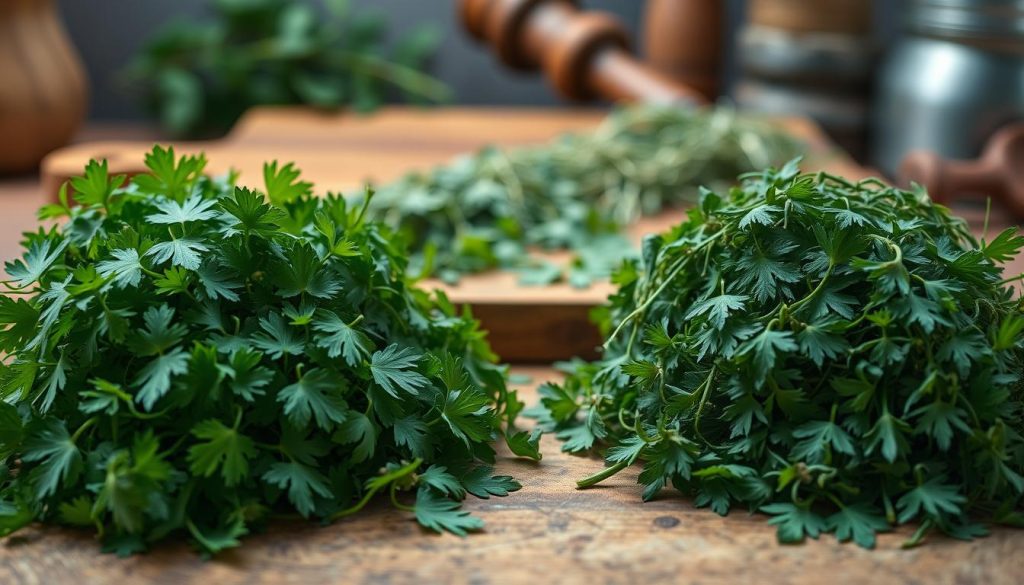
Coriander and dhania often puzzle home cooks and food lovers. These terms refer to the same plant but can mean different things1. In North America, the naming gets even more confusing2.
Cilantro is the fresh leafy part of the Coriandrum sativum plant. It has a bright, lemony taste that some love and others dislike1. The seeds, called coriander, have a warm, nutty, and citrusy flavor3.
This herb has been used for thousands of years in many cuisines. It’s a key ingredient in Indian and Mexican dishes3. Different regions use it in unique ways2.
Key Takeaways
- Coriander and dhania refer to the same plant with regional name variations
- The leaves (cilantro) and seeds have distinctly different flavor profiles
- Naming conventions vary significantly across different countries
- This herb has a rich historical culinary background
- Genetic factors can impact how individuals perceive its taste
Understanding Coriander vs Dhania: Names and Origins
Coriander is a fascinating herb with a rich global history. It has captivated cultures worldwide for thousands of years. This versatile spice serves both culinary and medicinal purposes.
The Plant’s Historical Background
Coriander’s lineage is impressive, with seeds found in ancient ruins from 5000 B.C4. Its name comes from the Greek word “koris,” meaning “stink bug.” This likely refers to its unique aroma4.
Global Naming Conventions
Naming practices for this herb vary across regions. In the Americas, “coriander” means dried seeds, while “cilantro” describes fresh leaves4. This difference highlights the herb’s cultural diversity.
- Mediterranean origin
- Widespread in European cuisines
- Integral to Asian cooking traditions
Cultural Significance Across Regions
Coriander’s genetic diversity is remarkable. Some people have a rare trait that makes cilantro taste like soap. This is due to specific aldehyde chemical detection4.
Genetic preferences vary across populations:
| Population Group | Coriander Dislike Percentage |
|---|---|
| East Asians | 21% |
| Caucasians | 17% |
| African Descent | 14% |
| South Asians | 7% |
| Hispanics | 4% |
This spice continues to intrigue herb enthusiasts worldwide. Its complex flavor profile and genetic variations make it a global culinary treasure.
Physical Characteristics and Nutritional Profiles
Coriander, a versatile herb, offers amazing nutritional benefits through its various parts. Dhania leaves and coriander seeds each bring unique qualities. A cup of raw cilantro contains only 3.68 calories, packed with essential nutrients5.
This remarkable herb boasts impressive nutritional highlights:
- Minimal fat content (0.083 grams per cup)
- Low carbohydrate profile (0.587 grams)
- Modest protein contribution (0.341 grams)
The coriander plant’s nutritional profile goes beyond basic macronutrients. Dhania leaves are rich in vitamins A, C, and K. Coriander seeds offer impressive mineral content and potential health benefits6.
Coriander contains powerful phytochemicals like flavonoids and phenolic acids. These contribute to its medicinal potential. The essential oil content in coriander fruits ranges from 0.03% to 2.6%7.
This herb variety impresses researchers with its comprehensive health benefits. It shows potential for cardiovascular support and anti-inflammatory effects7.
Culinary Applications and Flavor Differences
Coriander and dhania are versatile ingredients that elevate global cuisine. In the US, chefs value these herbs for their unique tastes. Cilantro adds a bright, citrusy flavor to Mexican, Indian, Thai, and Vietnamese dishes8.
Coriander seeds are essential in spice blends, marinades, and baking. They’re key in recipes like tandoori chicken masala and carrot soup. Their warm, spicy flavor adds depth to various dishes8.
For the best ingredients, check local farmers’ markets or specialty stores. A guide to coriander and dhania can help you explore their uses. Pro tip: store coriander seeds for up to six months8.
These herbs can take your cooking to new heights. They offer endless flavor possibilities across many cultures. From fish tacos to complex spice blends, coriander and dhania inspire creative cooking.
FAQ
Are coriander and dhania the same thing?
Yes, coriander and dhania are identical. They’re different names for the Coriandrum sativum plant. Western countries use “coriander,” while South Asian nations prefer “dhania.”
What parts of the coriander/dhania plant are used in cooking?
Both leaves and seeds are culinary staples. Fresh leaves, often called cilantro, shine in Mexican, Indian, and Southeast Asian dishes.
Dried seeds, ground into a spice, feature in many global recipes. They add unique flavors to various cuisines.
What are the health benefits of coriander?
Coriander boasts antioxidant properties and may help regulate blood sugar. It also supports digestion and provides essential nutrients.
The leaves are packed with vitamins A, C, and K. Seeds contain minerals like potassium, calcium, and magnesium.
How do I store fresh coriander leaves?
Treat coriander leaves like a bouquet for best storage. Trim stems and place in water, then cover loosely with plastic.
Refrigerate the covered leaves. They’ll stay fresh for 5-7 days using this method.
What’s the difference between cilantro and coriander?
Cilantro and coriander come from the same plant. In the U.S., “cilantro” means fresh leaves.
“Coriander” typically refers to dried seeds used as a spice. Both terms describe different parts of one plant.
Can people with food allergies eat coriander?
Coriander is generally safe, but some may have allergic reactions. Those with herb or spice allergies should consult their doctor.
It’s best to seek medical advice before consuming large amounts of coriander if you have concerns.
How do different cuisines use coriander?
Coriander adds flavor to dishes worldwide. Indian cuisine features it in curries and masalas.
Mexican dishes often include fresh cilantro leaves. Middle Eastern cooking uses both seeds and leaves.
Thai and Vietnamese cuisines also heavily incorporate this versatile herb.
What do coriander seeds taste like?
Coriander seeds have a warm, citrusy, and nutty flavor. Toasting intensifies their taste, creating a unique aroma.
Their flavor differs from fresh leaves, making them a distinct spice in global cooking.
Source Links
- What’s the Difference Between Coriander and Cilantro? – https://www.savoryspiceshop.com/blogs/news/what-s-the-difference-between-coriander-and-cilantro?srsltid=AfmBOoos77ImvleJdxDfPO24U0M1xptHExql0zz4VZkURWjbFlNuNqfa
- A Guide To Coriander | What Is Coriander? | Tilda Rice UK – https://www.tilda.com/blog/ingredient-guide/a-guide-to-coriander/
- Is Dhaniya powder the same as coriander powder? – https://www.slofoodgroup.com/blogs/recipes-stories/is-dhaniya-powder-the-same-as-coriander-powder?srsltid=AfmBOoq2y9lyswB58bnLNKV5UMpjWXrq_zVeZ0o-CAQ3fIaSS58OHPR5
- The Long History and Many Uses of Coriander – https://www.thespruceeats.com/what-is-coriander-1807009
- Cilantro (coriander): Benefits, nutrition, and preparation tips – https://www.medicalnewstoday.com/articles/277627
- Health Benefits of Coriander – https://www.webmd.com/diet/health-benefits-coriander
- Coriandrum sativum L.: A Review on Ethnopharmacology, Phytochemistry, and Cardiovascular Benefits – https://pmc.ncbi.nlm.nih.gov/articles/PMC8747064/
- Coriander vs Cilantro – https://www.webstaurantstore.com/blog/5258/coriander-vs-cilantro.html?srsltid=AfmBOorAiGVjl68wBmVfxUUR8CJ8dxw9gO0zZ6zS3cRF328kq9HMq2KF

