
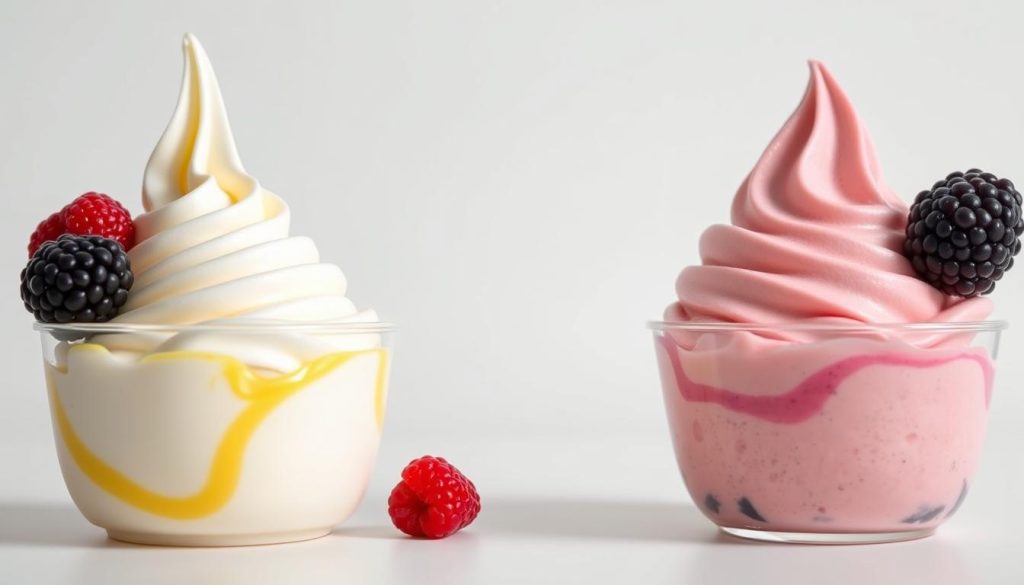
Frozen yogurt hit the scene in the 1970s, shaking up dessert options across America. It quickly became a favorite, with thousands of shops popping up nationwide1. This tangy treat sparked debates about health benefits and taste preferences.
Soft serve ice cream has been a classic American treat for years. Frozen yogurt stepped in as a potentially healthier choice. Some frozen yogurts contain good bacteria that may boost digestive health and immunity1.
The market tells an interesting story. In 2021, frozen yogurt was worth $1.69 billion. Ice cream, however, topped the charts at $71.52 billion.
People want to know more about soft serve ingredients and frozen yogurt benefits. Frozen yogurt usually has less fat and a unique tart flavor2. It typically contains 0-½ grams of fat per ounce2.
Key Takeaways
- Frozen yogurt was introduced in the 1970s as a healthier dessert alternative
- Contains potentially beneficial probiotic bacteria
- Generally lower in fat compared to traditional soft serve
- Offers a distinct tart flavor profile
- Provides potential digestive health benefits
Understanding the Basic Ingredients and Production Methods
Frozen yogurt and soft serve ice cream look alike but differ in ingredients and production. These cold treats have unique qualities that set them apart in the dessert world.
Milk Fat Content and FDA Guidelines
The FDA sets standards for dairy-based desserts. Ice cream must have at least 10 percent milkfat3. Soft serve usually has 5 percent milkfat, making it “light” ice cream3.
Fat content affects the taste and nutrition of these frozen delights.
Production Process and Temperature Dynamics
Temperature is key in making these treats. Soft serve is served at 20-25 degrees Fahrenheit3. Regular ice cream freezes to 0°F or below for scoopable texture3.
Soft serve’s churning process adds more air, possibly lowering calories per serving3.
Probiotics and Culinary Culture
Frozen yogurt has unique probiotics: Lactobacillus bulgaricus and Streptococcus thermophilus4. These cultures give it a tangy flavor and potential health benefits.
Frozen yogurt has some nutritional advantages over soft serve:
- Approximately 25 fewer calories per ounce compared to soft serve4
- About one-third of the fat and saturated fat found in soft serve ice cream4
Probiotic survival rates can vary based on production methods and added ingredients4.
Knowing these differences helps you choose your frozen desserts wisely. You can enjoy your treats while understanding what’s in them.
Frozen Yogurt vs Soft Serve: Key Differences in Taste and Texture
Frozen yogurt and soft serve offer unique taste experiences. Soft serve is light and airy, melting quickly on the tongue5. Frozen yogurt has a denser, creamier texture with a distinctive tangy flavor6.
Soft serve is sweeter with a neutral taste. Frozen yogurt has a complex flavor palette. Its tanginess comes from live cultures producing lactic acid during fermentation6.
The unique taste of frozen yogurt sets it apart from other frozen treats. It offers a range of flavors from tart to sweet.
- Soft serve calories: 222 per 100g
- Frozen yogurt calories: 127 per 100g5
- Frozen yogurt flavors range from tart to sweet
Frozen yogurt typically has less fat and fewer calories than soft serve. This makes it a potentially healthier choice5. Frozen yogurt offers more diverse flavors, from fruit to experimental combinations6.
Texture greatly impacts enjoyment. Soft serve stays smooth and creamy. Frozen yogurt can become slightly slushy if refrozen7. This affects how each dessert is enjoyed and stored.
Conclusion
Frozen yogurt and soft serve offer unique taste and nutrition profiles. Frozen yogurt has become a popular ice cream alternative. It appeals to calorie-conscious consumers with its health benefits89.
Frozen yogurt’s health perks go beyond just calories. It typically has less fat than soft-serve ice cream, ranging from 0-5%9. Many brands now offer sugar-free and low-fat options8.
Live probiotics in frozen yogurt may support digestive health9. This adds to its nutritional appeal for many consumers. However, toppings and flavors can affect the overall calorie count.
Your choice between frozen yogurt and soft-serve depends on personal taste. Exploring different options helps you make informed decisions. Understanding nutritional profiles is key to aligning with your dietary needs.
Approach these desserts mindfully, considering your health goals. Moderation is important when enjoying these frozen treats. There’s a wide variety of flavors and nutritional profiles available.
You can find a frozen treat that satisfies your taste buds. Many options cater to different dietary requirements. Enjoy your chosen dessert while keeping your health in mind.
FAQ
What’s the main difference between frozen yogurt and soft-serve ice cream?
Frozen yogurt and soft-serve ice cream differ in ingredients and production. Yogurt cultures give frozen yogurt a tangy flavor. Soft-serve ice cream is creamier and sweeter with higher milk fat.
Is frozen yogurt actually healthier than soft-serve ice cream?
The health benefits of frozen yogurt versus soft-serve ice cream aren’t clear-cut. Frozen yogurt often has less fat but may contain more sugar. It has probiotics, but processing can reduce their benefits.
Nutritional value depends on specific ingredients and toppings used. Neither option is inherently healthier without considering these factors.
Do frozen yogurt and soft-serve have different nutritional profiles?
Yes, frozen yogurt typically has less fat due to its yogurt base. Soft-serve ice cream is usually creamier and richer. However, actual nutritional content varies by brand and recipe.
What gives frozen yogurt its distinctive tangy flavor?
Live yogurt cultures create frozen yogurt’s tangy flavor. These probiotics contribute to its unique taste profile. This distinguishes frozen yogurt from traditional ice cream.
Are there different varieties of frozen yogurt flavors?
Frozen yogurt offers a wide range of flavors. You can find both tart and sweet varieties. Options include vanilla, chocolate, green tea, and fruit-infused flavors.
How does the texture of frozen yogurt differ from soft-serve?
Soft-serve has a lighter, airier texture. It’s served slightly warmer, making it smoother. Frozen yogurt is denser and creamier.
The yogurt base gives frozen yogurt a more pronounced texture. This creates a distinct mouthfeel compared to soft-serve.
Do frozen yogurt shops offer probiotic benefits?
Frozen yogurt contains probiotics, but heat processing can reduce live cultures. Some shops add probiotics after processing. However, health benefits may be limited compared to fresh yogurt.
Can people with lactose intolerance eat frozen yogurt?
Some people with mild lactose intolerance may tolerate frozen yogurt better than ice cream. Live cultures help break down lactose. However, individual tolerance varies, so consult a healthcare professional.
Source Links
- Frozen Yogurt vs. Ice Cream vs. Gelato: What Are the Differences? – 16 Handles – https://16handles.com/frozen-yogurt-vs-ice-cream-vs-gelato-what-are-the-differences/
- Is Frozen Yogurt Actually Better For You Than Soft-Serve? – Mashed – https://www.mashed.com/1379787/frozen-yogurt-vs-soft-serve/
- What Is Soft-Serve Ice Cream? | America’s Test Kitchen – https://www.americastestkitchen.com/articles/7431-what-is-soft-serve-ice-cream
- Frozen Yogurt vs. Soft Serve Ice Cream: Which is the best frozen treat? – https://guiltyeats.com/2022/06/24/frozen-yogurt-vs-soft-serve-ice-cream/
- Frozen Yogurt vs. Soft Serve — What’s the Difference? – https://foodstruct.com/compare/frozen-yogurt-vs-soft-serve
- Frozen Yogurt vs. Ice Cream: Is One Healthier? – https://www.healthline.com/nutrition/frozen-yogurt-vs-ice-cream
- I compared ice cream, soft serve, frozen yogurt, and frozen custard to see how different they actually are – https://www.businessinsider.com/ice-cream-soft-serve-frozen-yogurt-custard-differences-which-best-2024-9
- Frozen Yogurt vs. Soft Serve Ice Cream: What’s Best? | Manchester, England | Festivals.com – https://www.festivals.com/frozen-yogurt-vs-soft-serve-ice-cream-whats-best-83173
- Frozen Yogurt vs Ice Cream: The Ultimate Dessert Quest? – https://frozenbottle.com/blogs/news/frozen-yogurt-vs-ice-cream?srsltid=AfmBOoo-nJHCjWQ-lwPKqkL842dAztv5_jhl_lOr2P6_jVXzpIxjM6kV

