
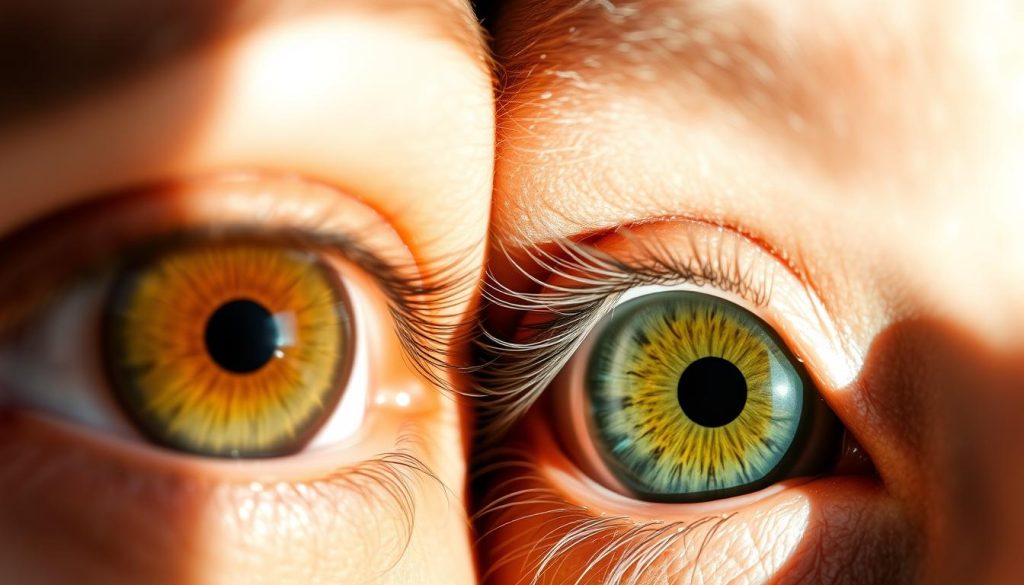
Eye color is a captivating genetic mystery. Hazel and dark green eyes are intriguing variants in human pigmentation1. Understanding these eye hues involves exploring genetic inheritance and melanin distribution.
Hazel and dark green eyes fascinate researchers and individuals. About 5% of people worldwide have hazel eyes. Green eyes are even rarer, occurring in just 2% of the global population2.
Genetics precisely determines eye color. Hazel eyes display multiple colors like brown, green, and gold within a single iris1. Dark green eyes typically have a more uniform appearance with less color variation.
Key Takeaways
- Hazel eyes represent a rare eye color variant with complex color patterns
- Genetic factors primarily determine eye color variations
- Less than 5% of global population has hazel eyes
- Eye color results from melanin distribution in the iris
- Environmental factors can subtly influence perceived eye color
Understanding Eye Color Genetics and Melanin
Eye pigmentation genetics is a captivating exploration of human diversity. Our eye color results from a complex interplay of genetic factors. These factors determine the natural eye color diversity we observe daily3.
Scientists have uncovered a vast network of genetic influences on eye color. Over 150 genes shape the unique shades of brown and green eyes. This complexity continues to intrigue researchers3.
The Genetic Blueprint of Eye Color
Two primary genes lead eye color determination:
- OCA2 gene: Produces the protein that matures melanin
- HERC2 gene: Acts as a genetic switch for OCA23
Melanin: The Color Architect
Melanin comes in two main types that create our eye’s unique palette:
| Melanin Type | Color Range | Impact on Eye Color |
|---|---|---|
| Eumelanin | Brown to Black | Darker eye shades |
| Pheomelanin | Yellow to Red | Lighter eye shades |
Inheritance Patterns
Eye color inheritance is surprisingly complex. The brown eye allele dominates over green and blue. This creates intricate genetic combinations3.
A child’s eye color can be influenced by at least three different gene pairs4. This adds to the complexity of eye color prediction.
A study of 920 twin families revealed intriguing results. 74% of eye color variability stems from a dominant genetic factor. This highlights the complex genetic mechanisms behind our eye color4.
Hazel vs Dark Green Eyes: Key Differences and Characteristics
Hazel eyes blend brown, gold, and green hues, creating a unique visual experience. About 5% of people worldwide have these captivating eyes. Their rarity makes them particularly fascinating56.
Lighting greatly affects how hazel eyes appear. Bright sunlight brings out green tones, while indoor light highlights brown undertones5. This happens because of the moderate melanin concentration in hazel eyes6.
Central heterochromia can make it hard to tell hazel and dark green eyes apart. Dark green eyes have more melanin, giving them a deeper color. Genetics play a big role in eye color variations56.
Hazel eyes are more common in European, Brazilian, Middle Eastern, and North African populations76. The mix of colors in hazel eyes continues to amaze researchers. It shows the complexity of human genetic diversity.
FAQ
What exactly are hazel eyes?
Hazel eyes blend brown, green, and gold hues. They can appear to change color based on lighting and surroundings. These unique eyes result from varying melanin levels in the iris.
Hazel eyes often have a multi-colored look. They typically feature a brown or gold center with green or amber outer rings.
How rare are dark green eyes?
Dark green eyes are quite rare. Only about 2% of people worldwide have this eye color. They’re most common in Northern and Central European populations.
Can eye color change over time?
Adult eye color rarely changes dramatically. However, subtle shifts can occur due to lighting, clothing, and emotions. Infants’ eye color may change in the first few years of life.
This happens as melanin production in their eyes stabilizes.
What genes determine eye color?
The HERC2 and OCA2 genes play key roles in eye color. They control melanin production in the iris. These genes interact to determine the eye’s final color and pigmentation.
How do hazel eyes differ from central heterochromia?
Hazel eyes have a blended appearance with smooth color transitions. Central heterochromia shows distinct color differences within the same iris. It often appears as a clear color ring around the pupil.
Are hazel or dark green eyes more genetically dominant?
Brown and dark eye colors are generally more genetically dominant. This makes lighter colors like hazel and green less common. Eye color inheritance is complex and involves multiple genes.
Can two brown-eyed parents have a child with hazel eyes?
Yes, it’s possible. Eye color inheritance involves multiple genes. Brown-eyed parents can carry recessive genes for lighter eye colors. They could have a child with hazel eyes if both contribute the right genes.
What causes the color variations in hazel eyes?
Hazel eye color variations come from different melanin concentrations. Light scattering through the iris also plays a role. Lighting, clothing color, and emotions can influence how hazel eyes appear.
Source Links
- Hazel Eyes: Separating Fact from Fiction – https://www.zennioptical.com/blog/hazel-eyes-separating-fact-from-fiction/?srsltid=AfmBOoq9ij4hkgXBHEJ45KO1WynV2a_i9ZWjQqE9HW2nac-7E2krBCkk
- Difference Between Green Eyes and Hazel Eyes – https://www.tutorialspoint.com/difference-between-green-eyes-and-hazel-eyes
- Genetics of Eye Color – https://www.news-medical.net/health/Genetics-of-Eye-Color.aspx
- What colour are your eyes? Teaching the genetics of eye colour & colour vision. Edridge Green Lecture RCOphth Annual Congress Glasgow May 2019 – Eye – https://www.nature.com/articles/s41433-021-01749-x
- Hazel Eyes: ? Facts, Tips and Styleguides – https://www.rolf-spectacles.com/hazel-eyes/
- The Science of Hazel Eyes · PrepScholar – https://blog.prepscholar.com/hazel-eyes-color
- Hazel Eyes: Separating Fact from Fiction – https://www.zennioptical.com/blog/hazel-eyes-separating-fact-from-fiction/?srsltid=AfmBOoo3whE7z93CD-O0VDyhmkamvBpi3WD9E63gpRJZ3a0s1yWYhnfa

