
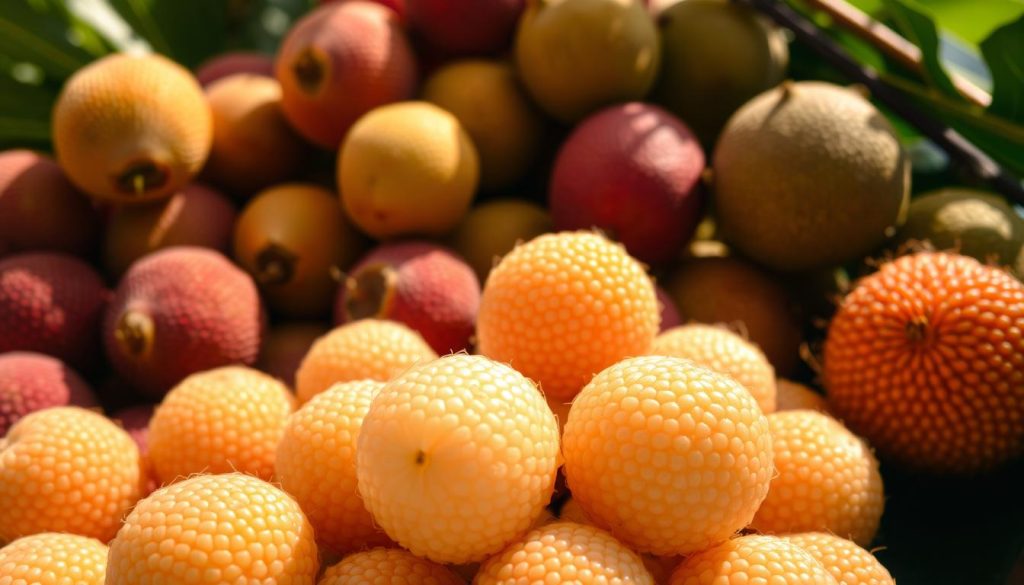
Lychee, litchi, and leechi are all names for the same exotic fruit. This tropical delight belongs to the soapberry family, scientifically called Litchi chinensis1. Its sweet flavor makes it a popular treat worldwide.
Lychee is a nutritious powerhouse with amazing benefits. It has 66 calories per 100 grams and is mostly water (82%) and carbs (16.5%)2. Each small fruit provides 9% of your daily vitamin C needs2.
This fruit has a fascinating history in China. Records show its use as early as 1059 AD, possibly even 2000 BC1. Lychees can be round or heart-shaped, growing up to 5 cm long and 4 cm wide1.
Key Takeaways
- Lychee, litchi, and leechi are different names for the same fruit
- Scientifically classified as Litchi chinensis
- Rich in vitamin C and low in calories
- Originated in China with a history over 1000 years old
- Offers unique nutritional benefits
Understanding the Origins and Naming Variations
Lychee fruit has a rich history spanning thousands of years in Asian culture. Its journey from ancient Chinese orchards to global markets is fascinating3.
Historical Roots in Ancient China
Lychee cultivation has deep historical roots in southern China. Records date back to the Han Dynasty, about 2,000 years ago3.
Genetic studies show Litchi chinensis populations split between Yunnan and Hainan around 18,000 years ago4. This reveals an intriguing evolutionary story.
Etymology and Global Name Variations
“Litchi” is the British English spelling, while “lychee” is used in American English. Both refer to the scientific classification Litchi chinensis5.
- British spelling: Litchi
- American spelling: Lychee
- Scientific name: Litchi chinensis
Cultural Significance Across Asia
Lychee is more than just a nutritious fruit in Asia. It symbolizes historical farming practices and regional identity in China and India3.
Lychee first appeared in the West in Jamaica in 17753. Today, it’s popular worldwide for its health benefits.
Physical Characteristics and Identification
Lychee is a unique tropical fruit with distinctive features. Its thin, bumpy red skin reveals its exotic origins6. The strawberry-red exterior hints at the delightful treasure within7.
Under the vibrant skin lies translucent white flesh. The fruit measures 2.0 to 3.5 cm in diameter. Its skin color ranges from pink-red to purple-red6.
Each lychee cradles a single dark seed in its center. This creates a unique internal landscape that intrigues fruit lovers.
- Fruit diameter: 2.0 – 3.5 cm
- Skin color: Pink-red to purple-red
- Average fruit weight: 15-29 grams6
Lychees are packed with essential nutrients, offering taste and health benefits. The fruit’s flesh can make up 80% of its total weight6.
Nature’s design is most evident in the lychee’s intricate structure – a perfect balance of beauty and nutrition.
The lychee harvest season lasts 5 to 10 weeks, depending on the cultivar6. This brief window makes each lychee a seasonal treasure.
Lychee vs Litchi: Common Misconceptions
Fruit lovers often get confused by different spellings of this tropical delight. Lychee, litchi, and lichee are all names for the same exotic fruit. These variations come from language translations and local preferences8.
Botanists use Litchi chinensis as the official name for this fruit species. This scientific term covers all versions of the fruit worldwide. The lychee vs litchi debate is about language, not fruit differences9.
Chinese transliteration has created multiple English spellings. Southeast Asian markets might use “litchi,” while Western stores often say “lychee.” Despite spelling changes, the fruit’s nutrition stays the same8.
Lychee and litchi taste identical, regardless of the name. You’ll enjoy the same sweet, floral flavor whether you buy “lychee” in California or “litchi” in New York8.
FAQ
What exactly is a lychee (or litchi), and where does it come from?
Lychee is a tropical fruit from southeastern China. It has a bright red skin and white flesh. The fruit belongs to the soapberry family and has been grown for over 2,000 years.
Are lychee and litchi the same fruit?
Yes, lychee and litchi are identical fruits. The different spellings are regional variations in writing the name. Scientifically, they’re both called Litchi chinensis.
What does a lychee taste like?
Lychees have a sweet and floral flavor. Their texture is juicy and refreshing, like a grape. The white flesh surrounds a dark brown seed.
How nutritious are lychees?
Lychees are packed with vitamin C and minerals. A cup of lychees provides 119% of your daily vitamin C needs. They’re rich in antioxidants and support heart health.
How do I choose and eat a ripe lychee?
Pick lychees with bright red skin that’s firm but slightly soft. Avoid brown spots or extremely soft fruits. To eat, peel off the skin and enjoy the white flesh.
Be careful of the hard seed in the center. Make sure to discard it before eating.
Can I grow lychee trees at home?
Lychee trees need tropical or subtropical conditions to grow. They thrive in warm temperatures and high humidity. They can grow in Hawaii, southern Florida, and parts of California.
For most people, buying fresh lychees from specialty markets is easier.
Are there any health risks associated with eating lychees?
Lychees are generally safe to eat. However, unripe fruits may cause health issues if eaten on an empty stomach. Always eat ripe lychees as part of a balanced diet.
If you have health concerns, talk to a doctor before eating lychees.
How are lychees typically used in cooking?
Lychees are used in many dishes. They’re great in desserts, cocktails, salads, and both sweet and savory meals. In Asian cuisine, they’re often used in jellies and ice creams.
Chefs use lychees in fruit salads, pastries, and even with meat dishes.
Source Links
- Lychee – https://en.wikipedia.org/wiki/Lychee
- Lychees 101: Nutrition Facts and Health Benefits – https://www.healthline.com/nutrition/foods/lychees
- Everything You Need To Know About Lychee Fruit – Tasting Table – https://www.tastingtable.com/811702/everything-you-need-to-know-about-lychee-fruit/
- Lychee genome tells a colorful story about a colorful tropical fruit – https://www.buffalo.edu/news/releases/2022/01/002.html
- Litchi vs. Lychee: What’s the Difference? – https://www.difference.wiki/litchi-vs-lychee/
- Lychee Biology and Biotechnology – PMC – https://pmc.ncbi.nlm.nih.gov/articles/PMC7121025/
- What Is the Difference Between the Lychee, Rambutan and Longan? – https://www.huffpost.com/entry/lychee-rambutan-and-longan_b_4690073
- Lychee fruit: Health benefits and nutritional information – https://www.medicalnewstoday.com/articles/lychee-fruit
- Is eating Litchis a risk to health? – busting the myths with facts – https://drvarsha.com/is-eating-litchis-risky-busting-the-myth-with-facts/

