
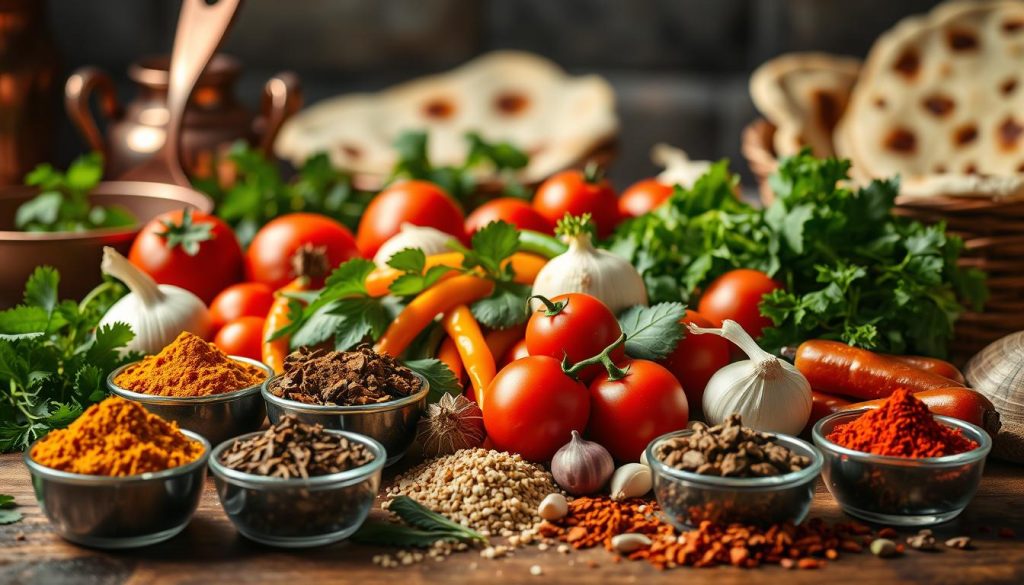
Indian cuisine is a flavorful mix of spices and traditions. It’s evolved over thousands of years. The core of Indian food lies in its variety of ingredients and cooking methods1.
Indian dishes range from chicken tikka masala to samosas. Each region adds its own flair to recipes. Local ingredients and cooking styles make Indian food unique1.
Indian cooking shines through its expert use of spices and masalas. Over 24 essential spices are commonly used. These blends turn simple ingredients into amazing meals2.
Curry powders and spice mixes tell stories of regional food heritage. They’re more than just seasonings.
Rice, lentils, chickpeas, and veggies are staples in most Indian dishes. Dairy products like yogurt and ghee add rich flavors. These create tasty layers that excite the taste buds3.
Key Takeaways
- Indian cuisine features a complex blend of spices and regional variations
- Staple ingredients include rice, lentils, and diverse vegetables
- Spices play a crucial role in creating unique flavor profiles
- Street foods and traditional dishes showcase culinary diversity
- Each region offers its distinctive cooking style and ingredients
Understanding the Foundation of Indian Cuisine
Indian cuisine is a rich tapestry of flavors and traditions. It has evolved over thousands of years. Ancient farming and cultural exchanges shaped its unique culinary landscape4.
Lentils are crucial in Indian cooking. They were introduced to the Indus Valley around 4000 B.C4. These protein-rich legumes form the basis of many dishes, especially dal.
Rice varieties became integral to Indian cooking later than other grains. Basmati rice is now synonymous with Indian cuisine. It offers distinct flavors and textures to many dishes4.
Traditional Base Ingredients
- Lentils: Chickpeas, red lentils, green peas
- Rice: Basmati, long-grain, short-grain varieties
- Dairy products: Yogurt, ghee, paneer
Core Spices and Aromatics
Indian cuisine’s magic lies in its sophisticated use of spices. These ingredients add flavor and provide health benefits5. Indian cooking features six essential taste profiles: sweet, salty, sour, bitter, spicy, and astringent5.
| Spice | Health Benefit | Flavor Profile |
|---|---|---|
| Turmeric | Antioxidant | Earthy |
| Cardamom | Digestive aid | Sweet, aromatic |
| Cumin | Improves digestion | Warm, nutty |
Spice blending is key to creating complex Indian flavors. Chefs roast and combine spices to unlock their full potential. This process releases aromatic oils and intensifies taste5.
Spices are not just ingredients, they are the soul of Indian cooking.
Dairy products enhance Indian dishes’ depth and richness. Yogurt and ghee provide creamy textures and nuanced flavors. These have been perfected over generations.
Indian Food Components and Regional Variations
Indian regional cuisines form a colorful mix of cooking traditions. They show the country’s diverse cultural landscape6. Over 20 official languages contribute to India’s rich food heritage. Each region has its own cooking styles and ingredients6.
The vegetarian population, between 23% and 37%, shapes many plant-based dishes. This influence is seen across different areas of India6.
North and South Indian cuisines differ greatly. Northern regions use wheat-based breads like naan and chapatti. Southern regions focus on rice-based dishes7.
Spices are key in setting regional cuisines apart. Each area has its own flavor blend. Cumin is big in Rajasthan’s cooking. Curry leaves are must-haves in Southern Indian dishes6.
Various protein sources and cooking methods add to the mix. Paneer is a top protein for vegetarians. It’s often used in tandoor and curry dishes6.
Meat eaters can try regional specialties too. These include Tandoori Chicken from Punjab and Vindaloo from Goa7. Street foods like Vada Pav and Chaat offer more insights into regional cuisines7.
Chefs are on the rise, and global interest is growing. This shows more people appreciate India’s complex food traditions6. From Kerala’s coconut-rich dishes to Andhra Pradesh’s spicy recipes, each region tells a unique story through food8.
FAQ
What makes Indian cuisine so unique and flavorful?
Indian cuisine boasts a complex blend of spices and herbs. Its unique flavor comes from combining ingredients like cumin, turmeric, and cardamom. These spices create depth and richness in every dish.
Are all Indian dishes spicy?
Not all Indian dishes are spicy. “Spicy” often refers to the complex blend of spices, not just heat. Many dishes can be mild, medium, or hot, depending on the recipe.
What are some staple ingredients in Indian cooking?
Core ingredients include rice, lentils, and vegetables like tomatoes and onions. Dairy products such as yogurt and paneer are also common. A wide range of spices and herbs form the foundation of most Indian dishes.
How different are North and South Indian cuisines?
North and South Indian cuisines differ significantly. Northern cuisine features wheat-based breads like naan and roti. Southern cuisine is more rice-based and uses more coconut.
The North shows strong Mughal influences, using more dairy and meat. The South incorporates more seafood and vegetarian dishes.
Is Indian food typically vegetarian?
Indian cuisine is incredibly diverse, with both vegetarian and non-vegetarian options. Many regions have robust meat and seafood dishes. Vegetarian options are widespread, but meat and fish are also prominent in many traditional recipes.
What role do spices play in Indian cooking?
Spices are the heart of Indian cuisine, used for flavor and medicinal properties. Spice blends called masalas create complex, layered flavors. Turmeric, cumin, coriander, and ginger are used for taste and potential health benefits.
How important are dairy products in Indian cuisine?
Dairy products are crucial in Indian cooking. Ghee is used for cooking, while yogurt appears in marinades and sides. Paneer is a popular protein in vegetarian meals.
These dairy ingredients add richness, tanginess, and nutritional value to many traditional recipes.
What makes Indian cuisine so nutritionally diverse?
Indian cuisine offers nutritional diversity through lentils, vegetables, whole grains, and spices. It combines plant-based proteins, complex carbohydrates, and nutrient-rich spices. This creates meals that are flavorful, nutritious, and balanced.
Source Links
- Indian Food 101: Your Guide to an Indian Restaurant Menu – Sukhi’s – https://sukhis.com/indian-food-101-guide/
- 24 Top Indian Spices and How to Use Them – https://www.masterindian.com/blogs/master-indian-spice-blog/24-top-indian-spices-and-how-to-use-them?srsltid=AfmBOop0z-P-Ng9RaerbaEf4PnTrgjRF-8eM-KROTPbBSE-Pez41JMpf
- Indian Cooking: Pantry Essentials – https://www.foodandwine.com/comfort-food/indian-cooking-pantry-essentials
- Evolution of Indian cuisine: a socio-historical review – Journal of Ethnic Foods – https://journalofethnicfoods.biomedcentral.com/articles/10.1186/s42779-022-00129-4
- The Science Of Indian Food: Understanding The Balancing Of Flavours | Aromas – https://aromasrestaurant.co.uk/the-science-of-indian-food-understanding-the-balancing-of-flavours/
- Introduction to the Main Ingredients of Indian Food – https://www.usfoods.com/great-food/food-trends/intro-to-india.html
- India Food: 25 Most Popular Traditional Dishes To Eat In India – Rainforest Cruises – https://www.rainforestcruises.com/guides/india-food
- Indian cuisine – https://en.wikipedia.org/wiki/Indian_cuisine

