
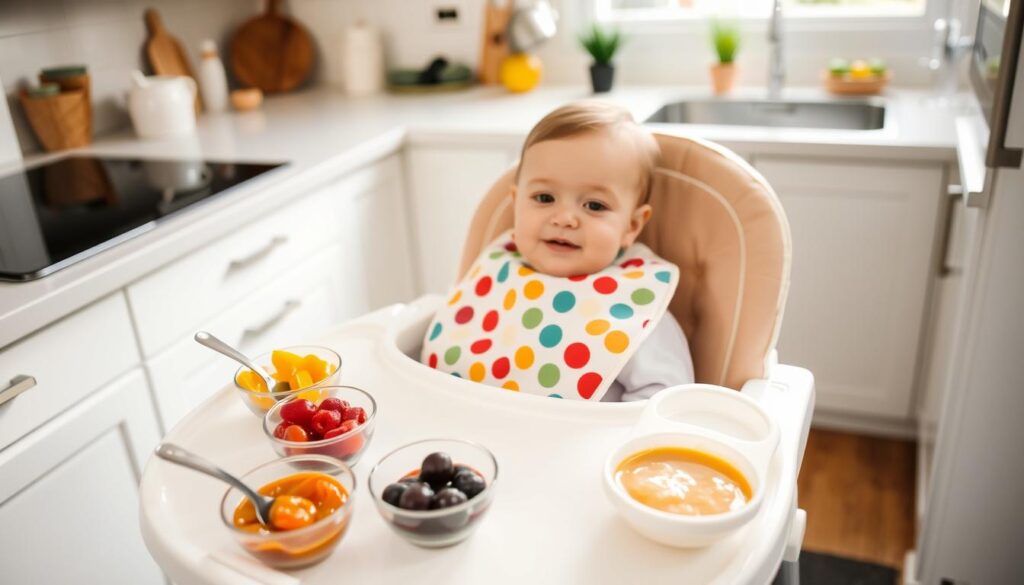
Introducing solid foods to babies marks an exciting milestone. It’s a crucial step in your infant’s nutritional development. Most experts suggest starting solids when your baby is about 6 months old12.
Breast milk or formula should remain the main source of nutrients early on. Babies are usually ready for solids when they’ve doubled their birth weight1. This typically happens around 13 pounds3.
Watch for signs that your baby is ready for solid foods. These include better head control and sitting up with support. Also, look for interest in what you’re eating2.
Key Takeaways
- Wait until baby is around 6 months old for solid foods
- Breast milk remains primary nutrition source
- Watch for developmental readiness signs
- Introduce new foods gradually
- Consult pediatrician for personalized guidance
Signs Your Baby is Ready for Solid Foods
Starting solid foods is a big step in your baby’s growth. Watch for signs that show your little one is ready for this new adventure.
Most babies are ready for solids around 6 months old. But each child grows at their own pace. The American Academy of Pediatrics and World Health Organization agree on this timing.
Physical Development Indicators
Your baby’s body needs to be ready for solid foods. Look for these key signs:
- Head control: Can hold head steady and upright
- Sitting support: Sits with minimal assistance
- Body weight: Approximately 13 pounds
- Loss of tongue-thrust reflex: Ability to move food from front to back of mouth4
Behavioral Readiness Signs
Your baby’s actions can show they’re ready for solids. Keep an eye out for these clues:
- Shows curiosity about food
- Reaches for food during family meals
- Opens mouth when food approaches
- Demonstrates hunger and fullness signals4
Pediatric experts stress the need for iron-rich foods at 6 months. These foods help meet your baby’s nutritional needs.
Important note: Every baby grows differently. Talk to your pediatrician about the best time to start solid foods.
| Age Milestone | Feeding Readiness |
|---|---|
| 4-6 Months | Emerging interest in food |
| 6 Months | Recommended start of solids |
| 9 Months | Improved chewing skills |
| 12 Months | Solids become primary nutrition4 |
Solid Foods for Babies: Essential First Foods and Nutrition
Introducing solid foods marks an exciting milestone in your baby’s growth. The American Academy of Pediatrics suggests starting purees around 6 months. This is when babies typically show signs of readiness5.
At this stage, focus on nutrient-rich, single-ingredient foods. These support your baby’s development and provide essential nutrients6.
- Iron-fortified cereals
- Pureed meats
- Soft vegetables
- Mashed fruits
Early exposure to potential allergens may reduce allergy risks5. Carefully introduce foods like:
- Eggs
- Peanut products
- Fish
- Dairy
Important nutrition tip: Babies need extra iron and zinc after 6 months. Choose nutrient-dense foods to support their rapid growth7.
| Age Range | Recommended Meal Size | Feeding Frequency |
|---|---|---|
| 4-6 months | 2-4 tablespoons | 2 meals per day |
| 7-12 months | Approximately fist-sized portion | 3 meals per day |
Remember, every baby is unique. Watch your child’s cues and talk to your pediatrician about their needs.
Always avoid honey, unpasteurized products, and choking hazards. Introduce one food at a time. Wait a few days to check for any reactions7.
Safe Feeding Practices and Methods
Introducing high-nutrient baby foods needs careful attention to safety. Your baby’s nutritional journey involves more than just picking the right foods. Safe feeding practices help nurture your child’s growth and development.
When starting baby food, follow these essential guidelines. They ensure your infant’s health and comfort during feeding time.
Proper Feeding Techniques
Feeding your baby involves several critical considerations:
- Use a small, soft spoon when introducing solids8
- Begin with tiny amounts of food
- Mix cereals with breast milk or formula for familiarity
- Watch carefully for potential allergic reactions
“Introducing foods gradually helps babies develop healthy eating habits.”
Food Safety Guidelines
Ensuring food safety protects your baby’s health during nutritional transitions:
- Introduce new foods one at a time
- Wait 3-5 days between new food introductions
- Avoid potential choking hazards
| Food Type | Safety Recommendations |
|---|---|
| Homemade Baby Food | Prepare carefully, refrigerate immediately |
| Open Food Jars | Refrigerate and use within 1-2 days |
| Feeding Environment | Always wash hands before preparation |
These practices create a safe feeding experience for your baby. Patience and observation are key during this exciting stage.
Your baby’s growth will flourish with these nurturing techniques9. Enjoy this special bonding time as you introduce new foods.
Conclusion
Introducing solid foods is a big step in your baby’s growth. Each child’s journey is unique, so be patient and attentive. Your guidance will help during this exciting phase as your baby develops10.
Planning and watching are key when starting solids. Babies often need about 10 tries to like new tastes and textures. Start around 6 months if your baby shows readiness signs10.
Slowly add different healthy foods to your baby’s diet. Your pediatrician can offer personalized advice for introducing solids11.
Choose foods rich in nutrients for your baby. Avoid too much salt and sugar in their diet. Ask about daily vitamins that suit your baby’s age and eating habits10.
Trust your gut feelings as you guide your little one. Enjoy watching them discover new flavors and textures. Baby food isn’t just about nutrition.
It’s also about making meals fun. These positive experiences will shape how your child views food in the future.
FAQ
When should I start introducing solid foods to my baby?
Introduce solid foods around 6 months, as recommended by the American Academy of Pediatrics. Your baby should weigh about 13 pounds and have good head control. Breast milk or formula should remain the main nutrition source until then.
What are the signs that my baby is ready for solid foods?
Look for physical signs like head control, sitting with little support, and weighing about 13 pounds. Behavioral signs include interest in food and reaching for it.
Watch for your baby opening their mouth when food approaches. They should also be able to move food from front to back for swallowing.
What are the best first foods for my baby?
Begin with single-ingredient foods without added sugar or salt. Iron-fortified cereals, pureed meats, vegetables, and fruits are great options.
Experts now suggest introducing potential allergens like peanuts, eggs, and fish early. Avoid honey and cow’s milk before 12 months.
How should I introduce new foods safely?
Use a small spoon and start with tiny amounts. Mix cereals with breast milk or formula. Introduce new foods one at a time.
Watch carefully for any allergic reactions. Avoid choking hazards like whole grapes, nuts, and hard candies.
How often should I feed my baby solid foods?
Starting solids is a gradual process that complements breast milk or formula. Follow your baby’s hunger and fullness cues.
Begin with small amounts once a day. Gradually increase frequency and variety. Be patient, as babies may need multiple exposures to accept new foods.
Do I need to give my baby any supplements?
Vitamin D and iron supplements may be necessary during the first year. Your pediatrician can provide personalized advice about your baby’s specific nutritional needs.
Continue breastfeeding along with solid foods up to 2 years or beyond, as recommended by health experts.
How can I prevent allergic reactions when introducing new foods?
Introduce potential allergens early and one at a time. Watch for signs of allergic reactions like rash, breathing difficulties, or digestive issues.
If you have a family history of allergies, consult your pediatrician. Offer small amounts and wait a few days between new food introductions.
When should I introduce water to my baby’s diet?
Offer small amounts of water with meals when you start solid foods. Use a soft-spouted sippy cup or a small spoon.
Remember that breast milk or formula should still be the main source of hydration during the first year.
Source Links
- Starting Solid Foods – https://www.healthychildren.org/English/ages-stages/baby/feeding-nutrition/Pages/Starting-Solid-Foods.aspx
- Solid foods: How to get your baby started – https://www.mayoclinic.org/healthy-lifestyle/infant-and-toddler-health/in-depth/healthy-baby/art-20046200
- First Bites—Why, When, and What Solid Foods to Feed Infants – https://pmc.ncbi.nlm.nih.gov/articles/PMC8032951/
- Introducing solids: why, when, what and how – https://raisingchildren.net.au/babies/breastfeeding-bottle-feeding-solids/solids-drinks/introducing-solids
- How to Introduce Solid Foods to Your Baby – https://www.parents.com/baby/feeding/solid-foods/starting-solids-guide/
- Do’s and Don’ts for Baby’s First Foods – https://www.eatright.org/health/pregnancy/babys-first-foods/dos-and-donts-for-babys-first-foods
- Feeding Your 4- to 7-Month-Old & Introducing Solids (for Parents) – https://kidshealth.org/en/parents/feed47m.html
- Ages 0-2 Feeding Recommendations | Healthy Eating Research – https://healthyeatingresearch.org/tips-for-families/ages-0-2-feeding-recommendations/
- Methods of Introducing Solids to Babies – Solid Starts – https://solidstarts.com/methods/
- Your baby’s first solid foods – https://www.nhs.uk/conditions/baby/weaning-and-feeding/babys-first-solid-foods/
- Introducing Solids to a Baby: A Guide for Parents. – https://littlebellies.com/learn-play/how-to-introduce-solids-to-a-baby-a-guide-for-parents/

