
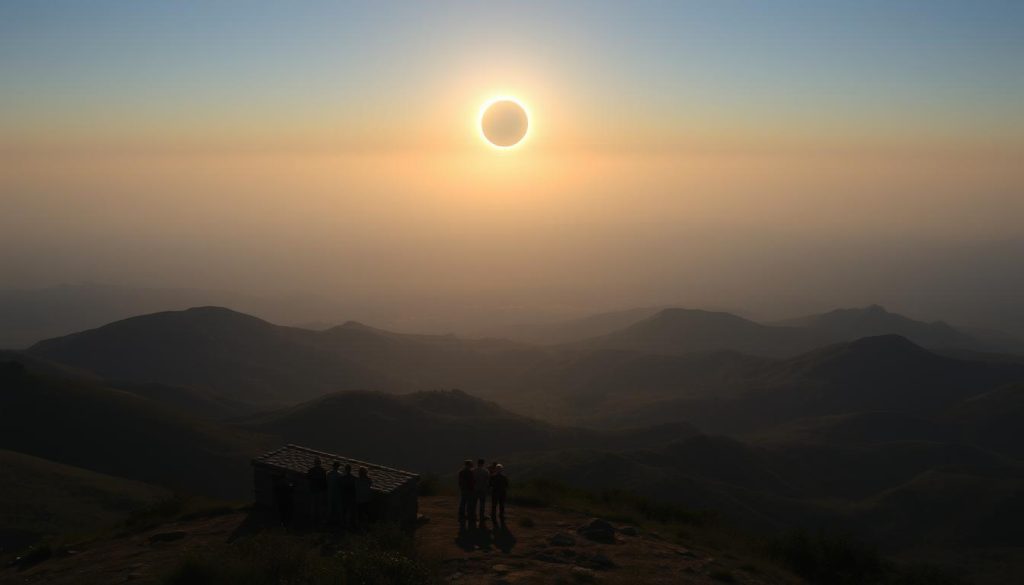
On April 8, 2024, a total solar eclipse will dazzle millions across America. This rare celestial event will cross 14 states from Texas to Maine1. Sky watchers are eager to find the perfect viewing spot for this extraordinary sight.
Picking the ideal location requires careful planning. Some areas offer longer periods of total darkness. The eclipse path will be 122 miles wide1, giving viewers many options to choose from.
This event is drawing both astronomy buffs and casual observers. About 31.6 million people will be directly in the path of totality2. Millions more are expected to travel for this amazing experience.
Cities like Dallas, Austin, and Little Rock are becoming popular eclipse destinations2. These spots offer great viewing opportunities for sky enthusiasts.
Key Takeaways
- The 2024 solar eclipse will cross 14 U.S. states
- Viewing locations vary in eclipse duration and visibility
- Millions of people are expected to witness the event
- Advance planning is crucial for the best viewing experience
- The next similar eclipse won’t occur until 20452
Understanding Solar Eclipse Viewing Fundamentals
Solar eclipses are rare celestial events that require careful planning. To capture their beauty, you need to find optimal vantage points. Several factors can impact your viewing experience3.
Key Factors for Ideal Eclipse Observation
When looking for top eclipse observation spots, consider these crucial elements:
- Clear Sky Conditions: Unobstructed views are paramount
- Geographic Location within Path of Totality
- Accessibility and Terrain
- Potential for Photographic Opportunities
Weather’s Critical Role in Visibility
Weather patterns greatly affect eclipse viewing. Cities along the eclipse path have different cloud probabilities. Mazatlán, Mexico, offers a 72% chance of clear skies during the April 8 eclipse3.
Understanding the Path of Totality
The path of totality is a narrow band where you can see the full solar eclipse. During this brief time, you can safely watch without special eye protection4.
Total solar eclipses happen about every 18 months worldwide. This makes each viewing chance unique3.
To find ideal solar eclipse spots, do thorough research. Plan carefully to make the most of this amazing astronomical event.
Best Place to Watch a Solar Eclipse: Top Destinations
The 2024 total solar eclipse offers a rare chance to see an amazing sky event. Prime viewing spots across North America promise unforgettable experiences5.
Several cities stand out for watching this celestial show. Here are the top spots to see a total solar eclipse:
- Mazatlán, Mexico: Offers an impressive 4 minutes 18 seconds of totality with a sun altitude of 69.1°6.
- Kerrville, Texas: Provides 4 minutes 25 seconds of darkness with a unique viewing experience6.
- Indianapolis, Indiana: Features 3 minutes 49 seconds of total eclipse visibility6.
- Cleveland, Ohio: Presents multiple urban viewing opportunities7.
- Niagara Falls, New York: Offers a stunning 3 minutes 31 seconds of totality6.
The path of totality will stretch 115 miles wide, passing through areas inhabited by approximately 31 million people5.
Eclipse chasers should plan ahead for this rare event. Total solar eclipses happen only once every 360 years in one place5.
Choose your spot wisely. Think about weather, how to get there, and where to stay7.
Get to your chosen spot early to grab the best view. Don’t forget to wear certified solar glasses to protect your eyes7.
Natural Settings and National Parks for Eclipse Viewing
Solar eclipse travel destinations offer amazing chances to see this sky event in stunning natural settings. The upcoming total solar eclipse lets you witness astronomical magic across diverse landscapes8. National parks provide great spots for eclipse fans seeking nature-filled experiences8.
The path of totality will cross many incredible national parks. Niagara Falls, Hot Springs, and Cuyahoga Valley parks will offer prime viewing with beautiful backdrops8. During the April 8, 2024 eclipse, you can explore 27 national park units along the eclipse path8.
Eclipse watchers should expect interesting environmental changes during totality. People have reported shifts in wind, temperature drops, and changes in animal behavior9. These experiences make natural settings perfect for viewing the eclipse.
National parks offer great scenic spots for photographers to capture this rare sky event. Good planning, proper gear, and knowing local conditions will improve your eclipse experience. With preparation, you can create lasting memories of this extraordinary celestial show.
FAQ
What makes a solar eclipse viewing location special?
A perfect eclipse spot needs clear skies and totality path access. Unique scenery and easy reach are also key. Good weather is crucial to avoid missing this amazing event.
How important is being in the path of totality?
Being in the totality path is crucial. Here, the moon fully blocks the sun, creating a stunning sky show. Outside this path, you’ll only see a partial eclipse, which is less impressive.
What should I look for when choosing an eclipse viewing location?
Check weather history, height, and ease of access. Look for open views and low light pollution. Consider nearby amenities and possible crowd sizes.
Use weather data to find spots with clear sky chances. Seek places that support your eclipse-watching needs.
Are national parks good places to watch a solar eclipse?
Yes! Parks offer great natural settings for eclipse viewing. They have wide spaces, dark skies, and unique landscapes. Just check if the park is in the totality path.
How far in advance should I plan my eclipse viewing trip?
Start planning at least a year ahead for popular spots. Prime locations fill up fast. Early planning helps secure an ideal place for this rare sky event.
What equipment do I need for eclipse viewing?
You need certified solar glasses or filters to protect your eyes. A telescope or good camera with solar filters can help. Always put eye safety first.
How long does a total solar eclipse last?
The total eclipse phase lasts 2-5 minutes, depending on where you are. The whole event, including partial phases, can take hours. The full coverage moment is brief but special.
What unique environmental changes occur during a total solar eclipse?
During totality, temps drop fast and animals may go quiet. An eerie twilight darkness falls. It’s a deep sensory experience beyond just seeing.
Are there any special considerations for photographing a solar eclipse?
Use a solar filter and sturdy tripod for your camera. Try a telephoto lens and bring extra batteries. Practice beforehand, but don’t forget to enjoy the moment.
What’s unique about the 2024 solar eclipse?
The 2024 eclipse will be visible across much of North America. Its path crosses several major cities. This makes it easy for millions to see this rare sky show.
Source Links
- The 2024 total eclipse on April 8 – where to watch – https://www.nsf.gov/science-matters/2024-total-eclipse-april-8-where-watch
- How to Find the Best Cities to Watch the Solar Eclipse – https://www.bloomberg.com/graphics/2024-solar-eclipse-path-map-cities/
- How to safely watch and photograph the total solar eclipse – https://www.technologyreview.com/2024/04/05/1090813/how-to-safely-watch-and-photograph-the-total-solar-eclipse/
- Solar Eclipse 2024: Here are safe yet creative ways to view the celestial event without glasses – https://m.economictimes.com/news/international/us/solar-eclipse-2024-here-are-safe-yet-creative-ways-to-view-the-celestial-event-without-glasses/articleshow/109108835.cms
- The Best Places to View the Total Solar Eclipse – https://earthobservatory.nasa.gov/images/152590/the-best-places-to-view-the-total-solar-eclipse
- 20 of the best places to view the 2024 total solar eclipse – https://www.astronomy.com/observing/20-of-the-best-places-to-view-the-2024-great-north-american-eclipse/
- Witness the Breathtaking Solar Eclipse in the US: Best Places to View — Pack Up + Go – https://www.packupgo.com/packupgo-blog/solar-eclipse-2024
- 2023 & 2024 Solar Eclipses – Natural Phenomena (U.S. National Park Service) – https://www.nps.gov/subjects/naturalphenomena/upcoming-solar-eclipses.htm
- Total Eclipse of the Parks – https://www.npca.org/articles/1702-total-eclipse-of-the-parks

