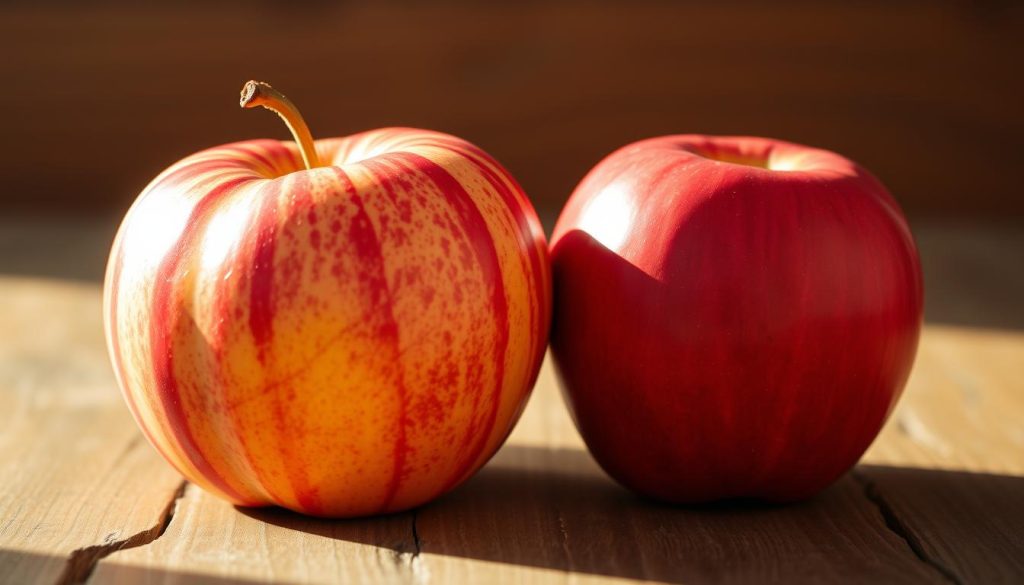
Gala and Fuji apples are two beloved fruit choices worldwide. These apples have unique traits and many uses in cooking. Both have won over consumers with their distinct qualities12.
Fuji apples hail from Japan, while Gala apples originate from New Zealand. Now, they’re grown globally and available all year. Their popularity has spread far beyond their birthplaces12.
These apples offer more than just tasty snacks. They bring unique flavors and health perks to your plate. Knowing their differences can boost your cooking and nutrition choices.
Key Takeaways
- Fuji and Gala apples are popular global apple varieties
- Both apples offer unique flavor profiles and nutritional benefits
- These apples are available year-round in multiple countries
- Each variety has distinct characteristics for cooking and eating
- Apples provide essential vitamins and potential health advantages
Origins and Characteristics of Gala vs Fuji Apples
Gala and Fuji apples are two remarkable cultivars with fascinating histories. They bring unique taste profiles and colors to the table. These apples stand out among many varieties, delighting apple enthusiasts worldwide31.
Roots of Innovation
Both apple varieties emerged from groundbreaking agricultural research in the mid-20th century. Fuji apples originated in Japan as a hybrid of Red Delicious and Ralls Janet4.
Gala apples trace their roots to New Zealand. They were first cultivated there in 19341.
Physical Characteristics
When examining apple colors and textures, these varieties offer distinct experiences:
- Fuji apples: Striated yellow and red, typically larger with an average diameter of 75 millimeters41
- Gala apples: Mottled red and yellow, slightly smaller with a softer texture1
Seasonal Availability
Fruit lovers can enjoy these apples at different times throughout the year. Fuji apples peak from September to December. Gala apples offer year-round availability with optimal freshness from May to September1.
https://www.youtube.com/watch?v=uUmp5W1wzgo
These apples have gained significant market presence. Fuji apples represent nearly 70% of apple production in China4.
Gala apples account for 29% of fruit consumption among children in the United States3.
Taste Profile and Culinary Applications
Fuji and Gala apples offer unique culinary experiences. Fuji apples are incredibly sweet with high sugar content. They’re exceptional for baking and maintain their shape during cooking.
Fuji apples create perfect pies, crisps, and cobblers5. Their firm texture makes them ideal for these desserts.
Gala apples are versatile and slightly less sweet. They excel in many culinary applications. Chefs love their adaptable nature for various dishes.
- Fresh salads
- Fruit tarts
- Muffin recipes
- Quick dessert preparations
Cooking tip: Choose apples based on their unique traits. Fuji apples bring intense sweetness and structure to dishes. Gala apples offer lighter flavors for diverse recipes65.
The magic of cooking lies in understanding each ingredient’s unique qualities!
Conclusion
Gala and Fuji apples are two exceptional varieties with unique traits. Fuji apples offer a robust flavor with higher sweetness and crisp texture78. Gala apples provide a delightful sweet-tart experience that many apple lovers enjoy7.
Both apple varieties offer remarkable nutritional benefits. Fuji apples provide 17% of daily dietary fiber and are rich in vitamin C79. Gala apples are packed with vitamins A, B, and C, making them great for health-conscious folks9.
These apples can be enjoyed fresh, baked, or used in various recipes. Fuji apples are great for baking due to their firmer texture8. Gala apples have a delicate flavor profile, perfect for snacking.
Both apple varieties are available year-round, so you can enjoy them anytime9. Your choice between Gala and Fuji apples depends on your personal taste. These fruits showcase the amazing diversity and deliciousness of apples.
FAQ
What are the main differences between Gala and Fuji apples?
Gala and Fuji apples have distinct features. Gala apples are yellow-orange with red stripes, sweeter, and softer. Fuji apples are pinkish-red, crunchier, and have a complex flavor.
Which apple is better for baking?
Fuji apples excel in baking due to their firm texture. They keep their shape well in pies and tarts. Gala apples can be used but may become softer when cooked.
Are Gala or Fuji apples healthier?
Both Gala and Fuji apples offer similar health benefits. They’re packed with fiber, vitamin C, and antioxidants. Fuji apples have slightly more sugar, while Gala apples are a bit lower in calories.
Where do Gala and Fuji apples originally come from?
Gala apples were created in New Zealand in the 1930s. They’re a mix of Golden Delicious and Kidd’s Orange Red apples.
Fuji apples were developed in Japan around the same time. They’re a blend of Red Delicious and Ralls Janet varieties.
Which apple is better for eating fresh?
Gala apples are popular for fresh eating. Their sweet flavor and soft texture make them great for snacking and salads.
Fuji apples are also enjoyed fresh. They offer a crunchy texture and a complex sweet-tart flavor that many people love.
How long do Gala and Fuji apples stay fresh?
Both Gala and Fuji apples can last 4-6 weeks in the fridge. Fuji apples may stay fresh slightly longer due to their denser texture.
For best results, store them in the crisper drawer. Keep them away from other produce that gives off ethylene gas.
Can I substitute Gala for Fuji apples in recipes?
You can swap these apples in most recipes. For baking, Fuji apples work better. For fresh dishes, Gala apples are a good substitute.
Consider the recipe and desired outcome when making substitutions. The texture and sweetness may vary slightly between the two.
Source Links
- Fuji Apples vs. Gala Apples (+ Recipes!) – https://urbanfarmie.com/fuji-apples-vs-gala-apples/
- Fuji vs Gala Apples – https://mysweetprecision.com/fuji-vs-gala-apples/
- Gala Apples: History, Cultivation, Nutrition and Culinary Uses » Selina Wamucii – https://www.selinawamucii.com/guides/gala-apples-history-cultivation-nutrition-and-culinary-uses/
- Fuji (apple) – https://en.wikipedia.org/wiki/Fuji_(apple)
- Types of Apples: Flavours, Textures, and Culinary Applications Explored – Calgary Co-op – https://www.calgarycoop.com/blog/types-of-apples-flavours-textures-and-culinary-applications-explored/
- Apple Varieties Guide for Taste and Cooking – https://www.johnson.k-state.edu/programs/health-food-safety/newsletter-articles/agents-articles/apple-varieties-guide-for-taste-and-cooking.html
- Fuji Vs Gala Apples: How Are They Different? – Tidbits Of Experience – https://www.tidbitsofexperience.com/fuji-vs-gala-apples/
- Which Apple Is Better For Apple Pie: Fuji Or Gala? – Tidbits Of Experience – https://www.tidbitsofexperience.com/which-apple-is-better-for-apple-pie-fuji-or-gala/
- No title found – https://optimisticmommy.com/gala-vs-fuji-apples-whats-the-difference/