
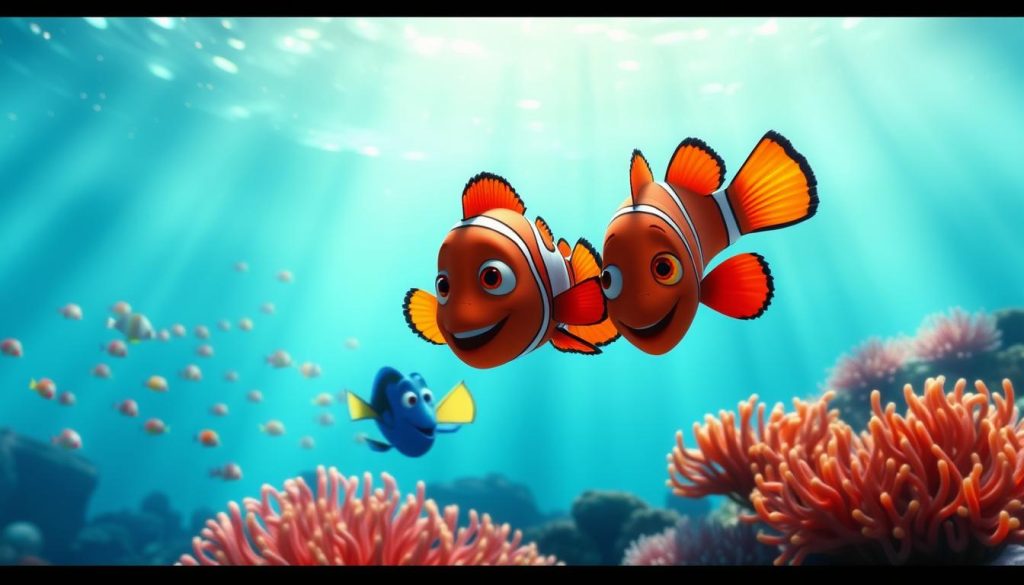
Pixar’s Finding Nemo changed how we see marine life. The 2003 animated comedy dived into the colorful world of tropical fish. It showed the amazing variety of sea creatures and their unique personalities1.
The movie’s fish characters bring the ocean to life. Clownfish, like Nemo, live in coral reefs with sea anemones2. The film’s attention to detail sparked interest in underwater ecosystems.
Finding Nemo features a range of memorable marine characters. From forgetful Dory to misunderstood Bruce the shark, these fish captivated viewers. The film’s success showed how stories can highlight marine life1.
Key Takeaways
- Finding Nemo introduced audiences to the diverse world of marine life
- The film blended entertainment with marine education
- Pixar created memorable fish characters with unique personalities
- The animated comedy highlighted the beauty of underwater ecosystems
- The movie increased public awareness about marine species
Main Characters and Their Real-Life Species
The ocean’s amazing creatures come to life in Finding Nemo. Let’s explore the real species behind these beloved characters3.
The Clownfish: Nemo and Marlin’s Marine Family
Nemo and Marlin are Ocellaris Clownfish (Amphiprion ocellaris). There are 30 different species of these remarkable fish3.
Clownfish form special bonds with sea anemones in their underwater homes. These bright orange fish thrive in warm Pacific Ocean waters, often in reef areas4.
- Scientific name: Amphiprion ocellaris
- Habitat: Tropical coral reefs
- Diet: Omnivores eating algae and small crustaceans4
Dory: The Blue Tang’s Memorable Journey
Dory is a Regal Tang (Paracanthurus hepatus) from the Indo-Pacific region. These blue tangs only eat plants and face threats from habitat loss4.
They can grow up to 30 cm long. Blue tangs play a vital role in keeping coral reefs healthy3.
Bruce: The Misunderstood Great White Shark
Great white sharks like Bruce are amazing sea creatures. Adult great whites usually reach 4.5 meters long and weigh up to 750 kg3.
They can smell blood from far away. These sharks also travel long distances across the ocean3.
| Character | Species | Habitat |
|---|---|---|
| Nemo/Marlin | Ocellaris Clownfish | Coral Reefs |
| Dory | Regal Tang | Indo-Pacific Waters |
| Bruce | Great White Shark | Coastal Waters |
These characters bring ocean life into focus. They show us the amazing variety of creatures in the sea4.
Fish in Finding Nemo: The Tank Gang Members
The Tank Gang in “Finding Nemo” is a diverse group of sea creatures. They live in Philip Sherman’s dentist office aquarium. These Tank Gang members have unique personalities and come from different species5.
- Gill (Moorish Idol): The leadership figure with a determined escape plan6
- Bloat (Pufferfish): A short-tempered character with an explosive personality6
- Bubbles (Yellow Tang): Known for his unique aquarium behaviors
- Deb (Striped Damselfish): Accompanied by her imaginary twin sister Flo6
The Tank Gang has a bold plan to escape their aquarium home. They aim to jam the AquaScum 2003 filter. This task requires Nemo’s small size to succeed5.
| Character | Species | Unique Trait |
|---|---|---|
| Gill | Moorish Idol | Escape Mastermind |
| Bloat | Pufferfish | Short-Tempered |
| Jacques | Pacific Cleaner Shrimp | Tank Cleaner |
The Tank Gang isn’t just fish. Jacques (a shrimp) and Peach (a starfish) add variety to the group5. Their shared dream of freedom makes them unforgettable characters in “Finding Nemo”.
Conclusion
The animated comedy Finding Nemo has made waves beyond its ocean adventure. It changed how we see marine life, sparking global interest in underwater ecosystems7. The film’s massive success showed the power of storytelling through animated characters7.
The movie inspired many to explore marine biology and ocean conservation. Its diverse fish characters bring to life a vibrant underwater world7. The story’s themes of family and friendship strike a chord with viewers of all ages7.
Finding Nemo’s impact reaches far into popular culture and environmental awareness. Its sequel, Finding Dory, further cemented the franchise’s influence on global audiences7. The films continue to promote appreciation for marine biodiversity and delicate ocean ecosystems8.
Inspired by this underwater journey? Take action to protect our oceans. Visit local aquariums and support marine conservation efforts. Finding Nemo opens a window to our world’s most mysterious ecosystem.
FAQ
What kind of fish is Nemo?
Nemo is a clownfish, specifically an ocellaris clownfish. These fish have a striking orange and white striped pattern. They live in sea anemones within coral reefs of the Pacific and Indian Oceans.
Who voices Dory in the movie?
Ellen DeGeneres brings Dory, the blue tang fish, to life. Dory’s character, known for her short-term memory loss, became a fan favorite. Her popularity led to a starring role in the sequel, “Finding Dory”.
Are the fish in Finding Nemo accurate to real marine life?
Pixar’s fish characters are mostly based on real marine species. The film boosted public interest in marine biology and ocean conservation. It showcased fairly accurate depictions of clownfish, blue tangs, and sea turtles.
What species is Bruce the shark?
Bruce is a great white shark with a humorous twist. He tries to be a “vegetarian” shark who avoids eating fish. In reality, great white sharks are fierce predators, unlike Bruce’s friendly character.
How did Finding Nemo impact marine biology and aquarium trades?
The movie sparked huge interest in marine life. It also led to increased demand for clownfish and blue tangs as pets. This surge prompted conservation efforts to educate people about responsible pet ownership.
Experts began teaching about the importance of preserving marine ecosystems. The film’s impact stretched beyond entertainment, influencing real-world marine conservation efforts.
Where do clownfish like Nemo actually live?
Clownfish thrive in the warm waters of the Indian and Pacific Oceans. They mainly inhabit coral reefs. These fish have a special relationship with sea anemones, which protect them from predators.
Can blue tangs like Dory be kept as pets?
Blue tangs are tricky to keep in home aquariums. They need special care, big tanks, and specific water conditions. Experts advise against keeping them as typical home pets.
Source Links
- Finding Nemo – https://en.wikipedia.org/wiki/Finding_Nemo
- From the Screen to the Sea: Discover the Fish from Finding Nemo – Bristol Aquarium – https://www.bristolaquarium.co.uk/animal-stories/from-the-screen-to-the-sea-discover-the-fish-from-finding-nemo/
- The real life marine creatures behind 2003 ‘Finding Nemo’ cast – https://divemagazine.com/scuba-diving-book-film-reviews/the-real-life-marine-creatures-behind-2003-finding-nemo-cast
- Finding Nemo: 16 Incredible Real Life Species – Ocean Info – https://oceaninfo.com/list/finding-nemo-species/
- Tank Gang – https://disney.fandom.com/wiki/Tank_Gang
- The Voices Behind the Finding Nemo Fish Tank Gang — The Disney Classics – https://www.thedisneyclassics.com/blog/finding-nemo-tank-gang
- Breaking Down Finding Nemo Using The Three Act Structure – Arc Studio Blog – https://www.arcstudiopro.com/blog/breaking-down-finding-nemo-using-the-three-act-structure
- Finding Nemo Is the Saddest Story Ever • Op-Ed – https://moviefail.com/op-ed-finding-nemo-is-the-saddest-story-ever/

