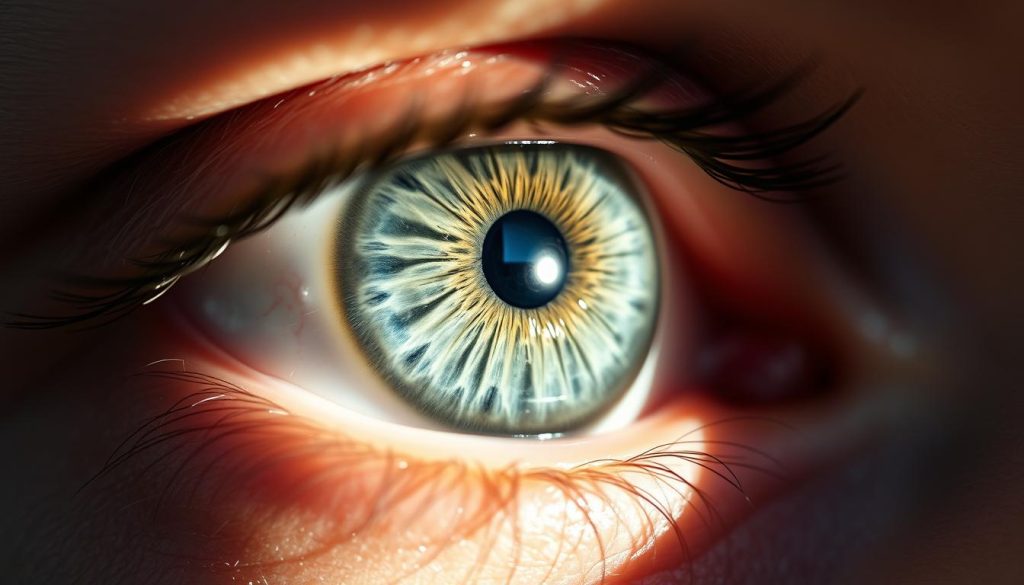
Gray eyes can mysteriously shift towards a greenish hue. This rare eye color is a unique genetic marvel. Gray eyes represent one of the rarest eye colors worldwide1.
The color change involves complex interactions of melanin and light2. Low melanin in the iris causes this effect. Mie scattering creates a chameleon-like appearance, changing color based on surroundings1.
At least 16 different genes influence this eye color trait. Gray eyes are incredibly rare, found in only 3% of the global population3. This rarity makes them fascinating for those studying eye color genetics.
Key Takeaways
- Gray eyes can appear greenish due to unique light scattering
- Only 3% of the world’s population has gray eyes
- Multiple genes contribute to eye color variation
- Melanin concentration plays a crucial role in eye color
- Environmental factors can influence eye color perception
Understanding Gray Eye Genetics and Rarity
Gray eyes are a rare genetic marvel in eye pigmentation. They occur in less than 1% of people worldwide. These unique eyes intrigue researchers and captivate onlookers4.
The scarcity of gray eyes makes them a hot topic. Geneticists and eye color fans find them particularly interesting4.
The Science of Melanin and Eye Color
Melanin is key in determining eye color. Gray eyes typically contain very low levels of melanin. This low melanin content gives gray eyes their distinct look5.
- Melanin concentration determines eye color intensity
- Gray eyes have minimal front-layer melanin
- Light scattering creates the gray appearance
Genetic Factors Influencing Gray Eyes
Gray eye genetics are complex. Genes like OCA2 and HERC2 play a role in eye color6.
The inheritance pattern shows incomplete dominance. This means eye color can vary greatly between generations4.
“Gray eyes are nature’s genetic masterpiece, a delicate interplay of melanin, light, and genetic inheritance.”
Global Distribution of Gray Eyes
Gray eyes are most common in Northern and Eastern Europe. In Estonia, up to 90% of people have blue or gray-blue eyes4.
Gray eyes are very rare in Asian and African populations. Darker eye colors are more prevalent in these regions4.
Gray eyes continue to amaze scientists and people alike. They showcase the incredible diversity of human genetics5.
Grayish-green Eye Color Explanation
Gray eyes are a genetic marvel that can shift between green and silver shades. Their unique look comes from light, genetics, and iris structure7. Gray eyes can change their hue based on surroundings and lighting eye color variations.
Rayleigh scattering causes these color shifts in the iris. Light passing through the low-melanin iris scatters differently, creating a changing color illusion8. This makes green-gray eyes dynamic and captivating.
- Central heterochromia can create additional color variations
- Hazel eyes share similar light-scattering properties
- Surrounding colors can dramatically influence perceived eye color
Genes play a key role in these subtle color nuances. Over 150 genes affect eye color, with OCA2 and HERC2 being main contributors8. This complex genetic makeup allows for mesmerizing color transitions in gray-green eyes9.
About 3% of people worldwide have these rare gray eyes. Their ability to reflect and scatter light creates a stunning effect7. This continues to amaze both researchers and the general public.
Factors Affecting Gray Eye Color Changes
Gray eyes can shift in appearance due to various factors. These changes stem from genetic traits and environmental interactions. The iris’s two layers contribute to these dynamic color variations10.
External influences affect how gray eyes reflect light. Surrounding colors and lighting can make them appear greenish or bluish11. Gray-eyed people are more sensitive to light because of lower melanin levels.
Physical and emotional states can impact eye color perception. Strong emotions may cause changes in pupil dilation and iris muscle tension. This can make gray eyes appear more vibrant or muted10.
These color changes reveal the unique genetics of gray eyes. They show the complex interplay between environment, emotions, and genes10.
FAQ
Why do my gray eyes sometimes look green?
Gray eyes can appear greenish due to Rayleigh scattering. This optical phenomenon occurs when light reflects off the iris collagen. The color can shift between gray and green based on lighting and surroundings.
Are gray eyes really rare?
Gray eyes are indeed extremely rare. They make up less than 1% of the world’s population. Northern and Eastern European populations have the highest concentration of gray-eyed individuals.
The unique appearance stems from low melanin levels and specific iris structure.
What causes the green-gray eye color variation?
The green-gray color variation results from light interacting with minimal iris melanin. Ambient light, clothing colors, and mood can cause subtle shifts in eye color appearance. This makes gray-green eyes particularly fascinating and dynamic.
Can eye color actually change over time?
While dramatic eye color changes are uncommon, gray eyes can appear to shift. Lighting, emotions, and hormone changes can affect color perception. Some gray-eyed individuals may notice slight variations in color intensity throughout their life.
Are there any genetic factors that influence gray-green eye color?
Eye color is determined by complex genetic interactions. Genes like OCA2 and HERC2 play key roles. Gray-green color results from a balance of melanin production and iris structure.
These traits are inherited from your genetic background.
Do gray eyes have any special characteristics?
Gray eyes are often more light-sensitive due to lower melanin content. Some studies link gray eyes to higher risks of certain eye conditions. However, they may also provide advantages like better night vision.
How common is central heterochromia in gray eyes?
Central heterochromia is relatively common in gray eyes. This occurs when the inner iris ring differs in color from the outer ring. It contributes to the green-gray appearance, making each pair of gray eyes unique.
Source Links
- Gray Eyes – All About Vision – https://www.allaboutvision.com/eye-care/eye-anatomy/eye-color/gray/
- A Colorful Window: How Eye Colors Work & What They Can Mean – https://my.clevelandclinic.org/health/articles/21576-eye-colors
- What Is the Rarest Eye Color? – https://www.verywellhealth.com/what-is-the-rarest-eye-color-5087302
- Grey Eyes: Unraveling the Genetics of a Rare Eye Color – https://debspecs.com/blog/grey-eyes-unraveling-the-genetics-of-a-rare-eye-color/
- Are gray eyes the same as blue in terms of genetics? – The Tech Interactive – https://www.thetech.org/ask-a-geneticist/articles/2007/ask232/
- What colour are your eyes? Teaching the genetics of eye colour & colour vision. Edridge Green Lecture RCOphth Annual Congress Glasgow May 2019 – Eye – https://www.nature.com/articles/s41433-021-01749-x
- Eye color – https://en.wikipedia.org/wiki/Eye_color
- Genetics of Eye Color – https://www.news-medical.net/health/Genetics-of-Eye-Color.aspx
- Gray Eyes: Causes, Pros, and Cons | MyVision.org – https://myvision.org/eye-health/gray-eyes/
- What Determines the Color of Your Eyes? – https://www.wonderopolis.org/wonder/what-determines-the-color-of-your-eyes
- Your Eyes Can Change Colors — and Here’s Why – https://health.clevelandclinic.org/can-eye-color-change