
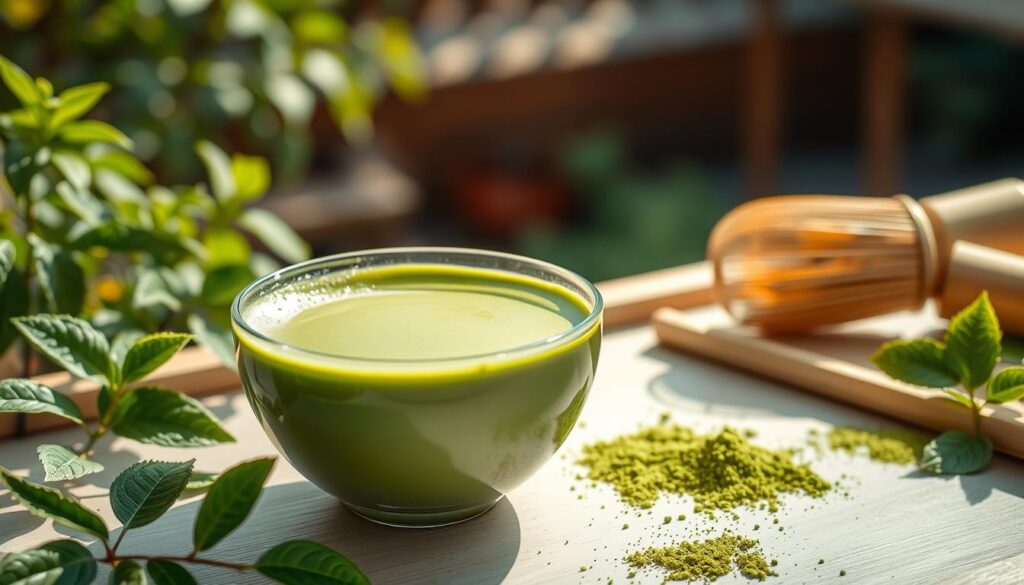
Matcha tea is a powerhouse beverage that surpasses ordinary green tea. It boasts a unique nutritional profile and remarkable properties1. Made from finely ground green tea leaves, matcha delivers an exceptional concentration of nutrients1.
This vibrant green tea offers more than just refreshment. It contains protein, fiber, and minimal calories per serving1. Matcha’s nutrition facts reveal its potential to support brain function and heart wellness1.
Matcha’s unique blend of compounds may boost cognitive performance and improve attention. Its powerful antioxidants, like catechins, could protect your cells and support overall well-being1.
Key Takeaways
- Matcha provides higher nutrient levels compared to regular green tea
- Contains powerful antioxidants that support cellular health
- Offers potential cognitive and physical performance benefits
- Low in calories with impressive nutritional content
- Supports overall wellness through natural compounds
What Makes Matcha Tea Unique
Matcha green tea powder is a remarkable beverage with a rich history. It offers a unique experience that sets it apart from other drinks. Matcha boasts an extraordinary nutritional profile.
Matcha’s magic begins with its careful cultivation and processing. Ceremonial grade matcha represents the pinnacle of tea craftsmanship. It involves intricate techniques passed down through generations in Japan.
Traditional Japanese Processing Methods
Matcha production is an art form that creates vibrant green powder. The process starts with carefully selected tea plants grown under shade. This method dramatically increases the antioxidants in matcha2.
These plants produce leaves with enhanced flavor and nutritional value. The process involves several key steps.
- Shading tea plants for 3-4 weeks before harvest
- Hand-picking the finest young leaves
- Removing stems and veins
- Stone-grinding leaves into fine powder
Difference Between Matcha and Regular Green Tea
Matcha stands out due to its unique consumption method. Unlike steeped green tea, you consume the entire leaf when drinking matcha. This means you’re getting significantly more nutrients from matcha.
Matcha contains up to 10 times more antioxidants than regular green tea2. This makes it a powerful health-boosting beverage.
| Characteristic | Matcha | Regular Green Tea |
|---|---|---|
| Caffeine Content | 70 mg per 2-3 ounces | 35 mg per cup |
| Antioxidant Levels | Extremely High | Moderate |
| Preparation Method | Whole leaf consumption | Steeped and discarded |
Cultivation and Harvesting
Matcha tea plants undergo a special growing process. This method enhances their nutritional value. The shading technique increases chlorophyll production, creating a rich green color3.
“Matcha is not just a beverage, it’s a centuries-old tradition of wellness and mindfulness.”
Ceremonial grade matcha offers an exceptional experience. It provides a nutritional boost and a moment of tranquility. Matcha goes far beyond an ordinary cup of tea.
Benefits of Matcha Tea
Matcha tea offers amazing health benefits for your wellness routine. It provides a unique energy boost that sets it apart from other drinks. This green tea superfood is packed with concentrated nutrients and potential health advantages.
Matcha’s nutritional profile is truly remarkable. It contains 60-70% insoluble ingredients like fat-soluble vitamins and proteins. The remaining 30-40% are soluble components such as polyphenols and amino acids4.
Matcha’s unique makeup makes it attractive for weight loss. Its chemical composition offers various health benefits.
- Enhanced cognitive function5
- Potential cancer prevention5
- Heart health support5
- Improved metabolism5
Matcha tea’s caffeine provides smooth energy without coffee jitters. Its blend of caffeine and L-theanine creates a unique focus-enhancing effect5. Studies suggest matcha may support weight management and improve muscle strength4.
Matcha is not just a beverage, it’s a holistic approach to wellness.
Research hints at matcha’s brain health benefits. Studies on mice show potential improvements in spatial learning and neurological protection4.
Matcha boasts an impressive antioxidant profile, especially epigallocatechin-3-gallate (EGCG). This powerful compound contributes to matcha’s nutritional punch4.
How to Incorporate Matcha Into Your Daily Routine
Matcha can transform your health routine in creative ways. This green tea powder offers many options to boost your diet. Try these versatile matcha recipes to enhance your meals.
Matcha tea prep can be both old-school and modern. You have many ways to enjoy its perks. The powder comes in two main types: ceremonial and culinary.
Ceremonial grade uses the youngest tea leaves. It offers a milder flavor6.
Traditional Preparation Methods
To make real matcha tea, use ¼ teaspoon matcha per 2 ounces of hot water6. The classic method includes:
- Sifting matcha powder into a bowl
- Adding hot water
- Whisking with a bamboo tool until frothy
Modern Matcha Recipes and Uses
Try new matcha latte recipes for exciting benefits. You can add matcha to:
- Smoothies
- Baked goods
- Ice cream
- Soups
Matcha gives you energy without the jitters. This is due to its caffeine and L-theanine mix7. It’s also rich in antioxidants that protect your body.
Recommended Daily Intake Guidelines
For best results, drink 1-2 cups of matcha tea daily. Use matcha within 2 months of opening. This keeps its color and taste fresh6.
Choose organic matcha to lower risks from contaminants8.
Pro tip: Start with small amounts and slowly increase your intake. This helps you find your ideal matcha balance.
Conclusion
Matcha tea is a remarkable superfood with amazing health perks. Its rich history dates back to the Tan Dynasty9. This unique beverage offers more than just taste; it’s a complete wellness approach.
Matcha’s benefits range from boosting brain power to fighting serious health issues10. By drinking it, you tap into age-old wisdom. Its high antioxidant content, especially EGCG, helps defend your body11.
This green tea powerhouse can improve metabolism and reduce chronic disease risks. It provides a well-rounded approach to health. However, it’s important to use matcha wisely.
Choose high-quality, organic matcha for the best results. Be aware that it may cause occasional stomach discomfort9. Understanding its benefits and proper preparation unlocks matcha’s full potential.
FAQ
What exactly is matcha tea?
Matcha is a special green tea made from shade-grown Camellia sinensis leaves. It’s ground into a fine powder, allowing you to consume the whole leaf. Matcha offers maximum nutritional benefits and is known for its vibrant green color.
How is matcha different from regular green tea?
Matcha plants are shaded for three weeks before harvest, increasing chlorophyll and amino acid content. The leaves are stone-ground into a fine powder, letting you consume the entire leaf. This process gives matcha up to 3 times more antioxidants than regular green tea.
What are the main health benefits of matcha tea?
Matcha boosts brain function, improves metabolism, and provides powerful antioxidant protection. It contains more caffeine than regular green tea and L-theanine, promoting alertness without crashes.
Studies suggest matcha may lower cholesterol, improve heart health, and enhance skin condition. It might also have anti-cancer properties.
How much matcha should I drink daily?
Experts recommend 1-2 cups of matcha tea or up to 2 teaspoons of powder daily. Choose organic, high-quality matcha for best results. Don’t exceed 338 mg of catechins per day, equal to about 4 grams of matcha powder.
How do I prepare traditional matcha tea?
Sift 1-2 teaspoons of matcha powder into a cup. Add hot (not boiling) water and whisk with a bamboo chasen until frothy. You can also make matcha lattes, add it to smoothies, or use in baking.
Does matcha contain caffeine?
Yes, matcha has more caffeine than regular green tea. It contains 19-44 mg of caffeine per gram, compared to 11-25 mg in regular green tea. L-theanine in matcha provides a balanced energy boost without jitters or sudden crashes.
Is matcha good for weight loss?
Matcha can help with weight loss by boosting metabolism and increasing fat burning. Its caffeine and catechins enhance thermogenesis, the process of burning calories. Matcha also improves energy levels and provides antioxidant support during your weight loss journey.
Source Links
- Health Benefits of Matcha – https://www.webmd.com/diet/health-benefits-matcha
- Matcha — Even More Powerful Than Regular Green Tea? – https://www.healthline.com/nutrition/matcha-green-tea
- 7 Proven Health Benefits of Matcha Tea – https://www.healthline.com/nutrition/7-benefits-of-matcha-tea
- The therapeutic potential of matcha tea: A critical review on human and animal studies – https://pmc.ncbi.nlm.nih.gov/articles/PMC9792400/
- All About Matcha – https://www.webmd.com/food-recipes/ss/slideshow-all-about-matcha
- Matcha 101 – What It Is and How to Use It – Love and Lemons – https://www.loveandlemons.com/matcha-green-tea/
- How to Incorporate Organic Matcha Tea Powder into Your Daily Diet – https://domatcha.com/blogs/blog-recipes/how-to-incorporate-organic-matcha-tea-powder-into-your-daily-diet
- Matcha Lifestyle: How To Incorporate Matcha Into Your Daily Routine – Matcha Connection – https://www.matchaconnection.com/matcha-lifestyle-how-to-incorporate-matcha-into-your-daily-routine/
- The Amazing Health Benefits of Matcha Tea | Firebelly Tea US – https://www.firebellytea.com/blogs/all/matcha-tea-health-benefits?srsltid=AfmBOoqcaeoY0u30kXzh4vqFeQ6jWNPrpW7lm0iOd8l9pMrd8_o330qF
- Matcha 101: All You Need to Know – https://www.health.com/nutrition/what-is-matcha
- The Ultimate Guide to Matcha: Health Benefits, Quality, and Preparation – https://ujimatchatea.com/blogs/news/the-ultimate-guide-to-matcha-health-benefits-quality-and-preparation?srsltid=AfmBOoqwjmjTbj03idFQMUYwNXReLv16FEQutkW08xneprjmD9msSL5R

