
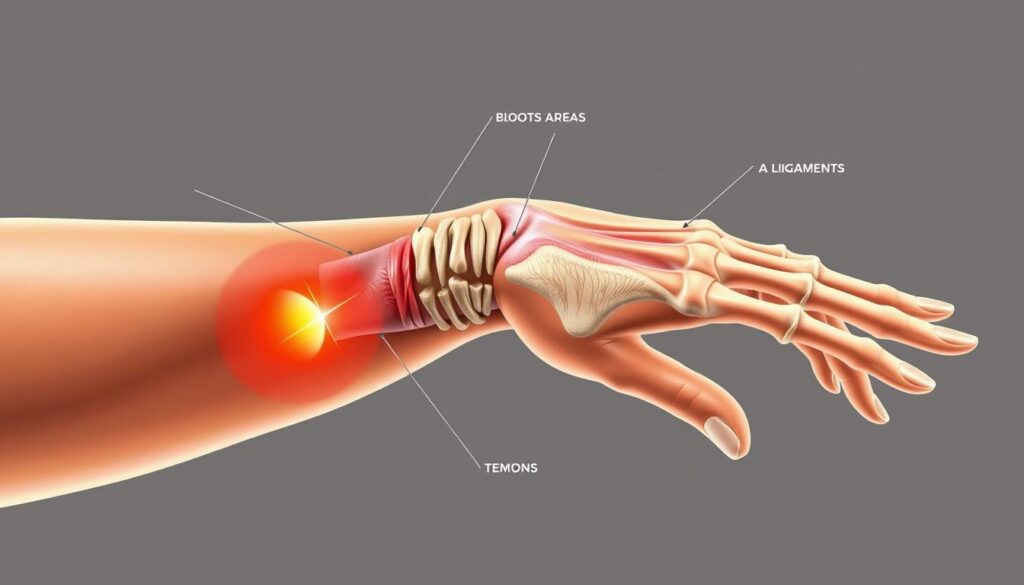
Wrist pain can disrupt daily activities and impact life quality. The complex joint involves multiple bones, ligaments, and nerves. Understanding the root cause is crucial for effective treatment12.
Your wrist faces various health challenges. Repetitive movements, sports, and poor workplace ergonomics can cause pain. These everyday actions might trigger mild to severe discomfort32.
Athletes, office workers, and those with certain medical conditions are at risk. Tendonitis, arthritis, and sprains can stem from lifestyle and health factors. Early detection and proper care can prevent long-term issues13.
Key Takeaways
- Wrist pain can result from multiple causes, including repetitive strain and medical conditions
- Early diagnosis is crucial for effective treatment
- Different activities and professions carry unique wrist pain risks
- Proper ergonomics can help prevent wrist-related issues
- Professional medical evaluation is recommended for persistent pain
Understanding Wrist Pain: What You Need to Know
Wrist pain can significantly impact your daily life. Understanding its nuances is key for effective management and treatment4.
Recognizing symptoms helps identify potential issues. Proper care prevents long-term complications and speeds up recovery.
Common Symptoms of Wrist Pain
Wrist pain symptoms vary based on the underlying cause. Different sensations can help pinpoint the potential problem.
- Numbness or tingling near the thumb5
- Swelling around the wrist joint5
- Difficulty gripping objects5
- Pain that worsens at night or during movement5
Various conditions can trigger wrist pain. These include carpal tunnel syndrome, acute injuries, and repetitive strain.
Your specific symptoms offer valuable clues about the potential cause5. Pay attention to what you’re feeling.
When to See a Doctor
Minor wrist discomfort often responds well to home care. Wrist exercises and gentle pain management can help with mild cases4.
If your wrist pain lasts over two weeks or has severe symptoms, see a doctor4.
Seek medical help if you experience persistent swelling or significant movement limitations. Intense pain disrupting daily activities also warrants attention.
Signs of potential fracture or serious injury require immediate medical care5. Don’t ignore these warning signs.
Wrist splints may offer temporary relief. However, professional advice determines the best treatment for your condition5.
Common Causes of Wrist Pain
Wrist pain can arise from various sources, affecting your daily life and work. Knowing these causes helps protect your wrist health and get proper treatment.
Repetitive Strain Injuries
Repeated motions can lead to serious wrist issues. Typing, driving, and frequent hand movements often cause chronic conditions like carpal tunnel syndrome.
Your workstation setup is key in preventing these injuries.
- Typing for extended periods
- Continuous computer work
- Repetitive sports movements
Arthritis and Degenerative Conditions
Arthritis can greatly affect wrist function. Both osteoarthritis and rheumatoid arthritis cause long-term wrist pain and discomfort.
These conditions often progress slowly and can limit joint movement.
| Arthritis Type | Characteristics |
|---|---|
| Osteoarthritis | Occurs with age, prior injuries |
| Rheumatoid Arthritis | Can affect both wrists simultaneously |
Injuries and Trauma
Sudden impacts can cause major wrist damage. Falls where you catch yourself often result in sprains, strains, or fractures.
“Prevention is always better than cure when it comes to wrist health.” – Sports Medicine Expert
Risk factors for wrist pain include age, family history, and repetitive occupational movements6. Knowing these factors helps you protect your wrists from potential injuries.
Effective Treatment Options for Wrist Pain
Tackling wrist pain requires a tailored approach based on your specific symptoms. Your treatment plan will vary depending on the cause and severity of your discomfort.
Rest and Home Remedies
For mild wrist pain, start with simple home remedies. Wrist massage can ease muscle tension and boost circulation.
Ice packs applied for 10-15 minutes can reduce swelling and offer quick relief7. Try these pain management strategies:
- Apply cold or warm compresses
- Gentle stretching exercises
- Elevating the affected wrist
Physical Therapy Techniques
Professional physical therapy can greatly improve wrist function and ease pain. Therapists may suggest exercises to build strength and increase flexibility.
Specialized hand therapy can aid recovery from various wrist conditions7.
Medications and Pain Relief
Your doctor might recommend different medications based on your condition. Wrist splints can provide extra support during healing.
Over-the-counter pain relievers like ibuprofen can help manage inflammation and discomfort7.
“Proper treatment can significantly improve your wrist mobility and reduce pain,” says orthopedic specialists.
For ongoing or severe wrist pain, seek medical advice. A professional can create a treatment plan just for you.
Preventing Wrist Pain: Tips for Your Daily Routine
Protect your wrists by being proactive. Repetitive strain injury can develop quickly in poorly designed workspaces. Strategic techniques can reduce your risk of wrist discomfort and long-term damage89.
An ergonomic workstation is key to preventing wrist strain. Adjust your keyboard height and maintain a neutral wrist position. Use supportive equipment to minimize stress on your joints10.
Wrist supports can help maintain proper alignment during computer work. They reduce tension and promote better posture9.
Regular wrist exercises keep your joints flexible and strong. Simple stretches improve circulation and prevent muscle tension10.
Professional medical resources suggest daily wrist rotations and gentle stretches. These exercises enhance joint health and prevent potential injuries8.
Take frequent breaks during repetitive activities. Listen to your body’s signals. If pain persists, consult a healthcare professional for personalized prevention strategies9.
FAQ
What are the most common causes of wrist pain?
Wrist pain often stems from repetitive strain injuries, arthritis, and sudden impacts. Carpal tunnel syndrome is another frequent culprit. Activities like typing, using tools, and playing sports can increase your risk.
How can I tell if my wrist pain is serious?
Seek medical help if wrist pain lasts more than a few days or comes with swelling. Persistent pain, reduced motion, or numbness may signal a serious condition. Don’t ignore pain that stops you from moving your wrist.
What home remedies can help relieve wrist pain?
Try the RICE method: Rest, Ice, Compression, and Elevation for minor wrist pain. Over-the-counter pain meds and gentle stretching can also help. Wearing a wrist splint might provide relief.
If pain continues, it’s best to consult a healthcare professional.
Can workplace ergonomics help prevent wrist pain?
Yes! An ergonomic workstation is key to preventing wrist pain. Use an ergonomic keyboard and keep your wrists neutral while typing. Take regular breaks and adjust your chair and desk height.
Are there specific exercises to strengthen my wrists?
Wrist curls, reverse curls, and grip strengthening exercises can help prevent and ease pain. Gentle stretches are also beneficial. Start slow and check with a physical therapist for proper form.
When might I need surgery for wrist pain?
Surgery is an option when other treatments fail and pain affects daily life. Severe carpal tunnel syndrome or chronic arthritis might require surgical help. Your doctor will assess your condition and suggest the best treatment.
How can I prevent wrist pain during sports or physical activities?
Use proper techniques and wear protective gear to prevent wrist pain. Warm up before activities and maintain good form. Gradually increase intensity and consider using wrist supports for activities like tennis or weightlifting.
Can diet and lifestyle impact wrist pain?
Your overall health affects wrist pain. Eat anti-inflammatory foods, stay hydrated, and exercise regularly to support joint health. Maintain a healthy weight to reduce stress on your joints.
Conditions like obesity and diabetes can increase your risk of wrist problems.
Source Links
- Wrist Pain Symptoms & Treatment | Aurora Health Care – https://www.aurorahealthcare.org/services/orthopedics/conditions/wrist-pain
- Wrist Pain Causes and Treatment – https://www.verywellhealth.com/wrist-pain-causes-symptoms-and-treatments-2549458
- Wrist Pain Treatment in New Jersey | RWJBarnabas Health – https://www.rwjbh.org/treatment-care/orthopedics/conditions-treatments/wrist-pain/
- Wrist pain – https://www.nhs.uk/conditions/hand-pain/wrist-pain/
- Possible Causes of Wrist Pain and Treatment Tips – https://www.healthline.com/health/wrist-pain
- Wrist Pain Symptoms & Causes | Dignity Health | Dignity Health – https://www.dignityhealth.org/conditions-and-treatments/orthopedics/common-wrist-injuries-and-conditions/wrist-pain
- Wrist pain: Causes, symptoms, diagnosis, and treatment – https://www.medicalnewstoday.com/articles/312070
- A Guide to Healthy Hands and Wrist: Preventing Pain and Boosting Function – https://www.physicianpartnersofamerica.com/health-news/health-wellness/a-guide-to-healthy-hands-and-wrist-preventing-pain-and-boosting-function/
- The Ultimate Guide to Keeping Your Wrists Healthy: Tips from a Wrist Surgeon – https://www.orthohandandarm.com/the-ultimate-guide-to-keeping-your-wrists-healthy-tips-from-a-wrist-surgeon/
- 9 Ways to Protect Your Wrist Every Day: MidJersey Orthopaedics: Orthopaedics – https://www.midjerseyortho.com/blog/9-ways-to-protect-your-wrist-every-day

