
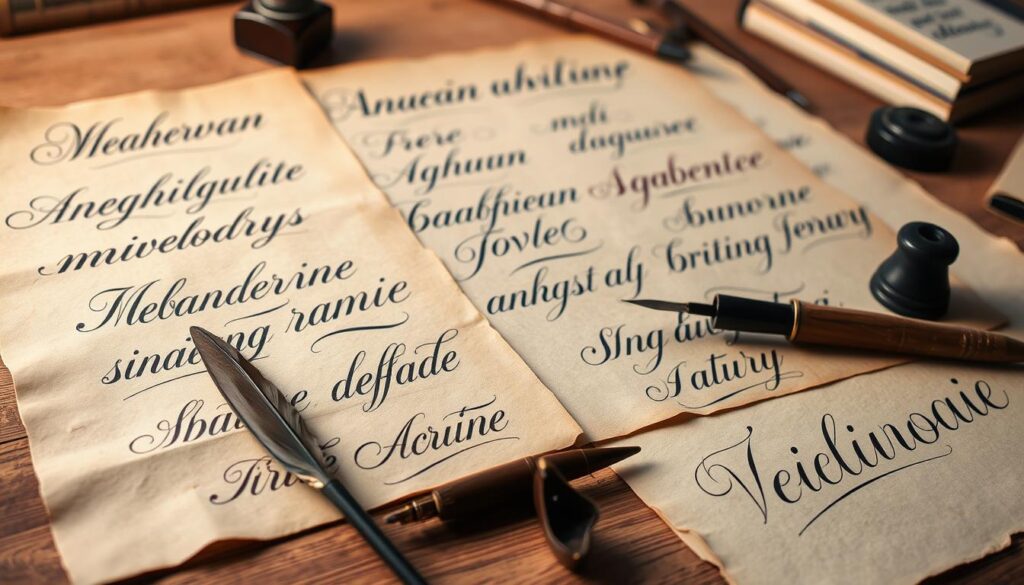
Cursive writing is more than just penmanship. It’s a skill that boosts brain power and creativity. Research shows that cursive practice enhances writing speed and idea generation.
Cursive writing is a brain-boosting tool. It engages multiple brain areas, improving comprehension and communication. Just 15 minutes of daily practice can enhance cognitive abilities and motor skills.
This guide helps students and adults master cursive writing. You’ll learn the basics and complex letter formations. Discover how cursive can transform your writing and thinking skills.
Key Takeaways
- Cursive writing enhances brain development and cognitive skills
- Regular practice improves writing speed and expressiveness
- Cursive writing supports fine motor skill development
- Learn to connect letters and create fluid writing styles
- Explore the unique brain benefits of cursive handwriting
Understanding Cursive Writing Basics
Cursive writing connects you with a rich cultural tradition. It’s a powerful skill that goes beyond nostalgia. This guide will help you understand and improve your cursive writing.
The Fascinating History of Cursive Writing
Cursive writing has ancient roots in human communication. It started as a practical way to write quickly in early civilizations.
Over time, cursive evolved from complex calligraphy to simpler styles. These changes led to the cursive we know today.
Remarkable Benefits of Cursive Writing
Cursive writing tips can boost your cognitive development. Here’s how:
- Enhances brain connectivity1
- Improves motor skills
- Boosts memory retention
- Increases writing speed
“Cursive writing is not just about beautiful penmanship—it’s about brain development and personal expression.”
Dispelling Common Misconceptions
Many think cursive is outdated in our digital world. This couldn’t be further from the truth. Research shows cursive still offers unique brain benefits2.
Students can improve their writing skills with daily practice. Just 15 minutes of cursive practice can make a big difference.
Learning cursive isn’t about being perfect. It’s about enjoying the process and developing your unique style. Your handwriting reflects your personality.
Essential Tools for Cursive Writing
The right tools can greatly improve your cursive writing skills. Proper equipment makes a big difference in your practice.
Choosing the Right Pen or Pencil
Your writing instrument is key when learning cursive. Here are some top picks for practice:
- The Pencil Grip Inc 3-Step Training Kit for beginners3
- Abilitations Weighted Pencils to improve control3
- Specialized grip tools to enhance writing technique
Selecting Quality Paper
The paper you use matters for cursive practice. Try these resources to support your learning:
- Pacon Multi-Sensory Handwriting Tablet (40 sheets)3
- Raised rule tablets for guided practice
- Smooth paper that allows fluid letter connections
Helpful Accessories for Practice
Boost your cursive writing with these helpful tools:
- HandiThings HandiWriters set3
- Shell Education’s 180 Days of Cursive workbooks3
- Alphabet reference guides
“The right tools transform cursive writing from a challenge to an art form.”
Cursive writing skills need patience and regular practice. Quality tools help create a strong base for beautiful handwriting4.
| Tool Category | Recommended Items | Purpose |
|---|---|---|
| Writing Instruments | Weighted Pencils | Improve Motor Control |
| Practice Materials | Multi-Sensory Tablets | Guided Handwriting Practice |
| Learning Resources | 180 Days of Cursive | Structured Learning |
Your path to mastering cursive starts with the right tools. Keep practicing to see improvement5.
Practicing Cursive Writing Techniques
Mastering cursive writing takes dedication and regular practice. Learning fundamental techniques helps your handwriting flow smoothly. Cursive writing practice can turn basic penmanship into beautiful script.
Warm-Up Exercises for Your Hand
Prepare your muscles with targeted warm-up exercises before writing. These techniques build muscle memory and flexibility6.
Try these preparatory movements:
- Gentle hand stretches
- Circular wrist rotations
- Finger flexibility drills
Letters and Their Cursive Forms
Learning cursive letters needs patience and a step-by-step approach. Regular practice helps students become better spellers7.
Start with lowercase letters. They connect more smoothly than uppercase ones8.
Connecting Letters and Words
Connecting letters is key in cursive writing. Practicing letter transitions creates fluid, elegant script6.
Try these strategies:
- Tracing connecting strokes
- Maintaining consistent letter height
- Practicing smooth transitions
Pro tip: Spend 10-15 minutes daily on cursive writing practice6. Consistency improves skills and builds muscle memory.
“Cursive writing is not just about beautiful handwriting, it’s about connecting with your thoughts in a unique, personal way.”
Tips for Improving Your Cursive Skills
Mastering cursive writing takes dedication and smart practice. Set up a routine to transform your penmanship. The Postman’s Knock offers great resources for cursive practice9.
Setting Up a Regular Practice Schedule
Spend at least 15 minutes daily on cursive writing. Consistency builds muscle memory and improves your technique9.
Try using cursive for everyday tasks like grocery lists. This makes practice more fun and useful9.
Finding Online Resources and Communities
Check out online tutorials and workbooks to boost your skills9. Try the Cursive Treasure Hunt for a fun way to learn and track progress9.
Join online groups to share your journey and get feedback. You’ll find inspiration from other cursive fans10.
How to Track Your Progress
Keep a cursive writing journal to monitor your improvement. Compare your current writing to past samples. Focus on progress, not perfection10.
Tailor your learning to tackle specific challenges. This helps you develop your unique cursive style9.
FAQ
Is cursive writing still relevant in the digital age?
Cursive writing remains vital for cognitive growth, despite tech advances. It boosts brain activity, motor skills, and writing speed. Daily practice helps students improve reading and thinking skills.
Elementary students gain from 15 minutes of handwriting practice each day. This supports their overall learning and development.
How long does it take to learn cursive writing?
Learning cursive varies for each person. With daily practice of 15-30 minutes, basic skills can develop in 3-6 months. Patience and the right tools are key to success.
What are the best tools for learning cursive writing?
Quality pens or pencils made for cursive are essential. The Abeka Cursive Writing Program offers great workbooks with traceable letters and words. Wall strips, desk strips, and stickers can also aid learning.
Can adults learn cursive writing?
Yes, adults can learn cursive at any age. It boosts brain power and fine motor skills. Start with basic letters and use age-appropriate resources for a fun learning process.
How does cursive writing benefit brain development?
Cursive writing engages the brain in unique ways. It boosts brain activity and links left and right brain halves. This improves thinking skills and problem-solving abilities.
Most teachers believe cursive is crucial for well-rounded learning. It enhances cognitive function and fine motor skills.
What’s the difference between cursive and print handwriting?
Cursive links letters in a flowing style, unlike print’s separate letters. It involves loops, tails, and varied letter shapes. Cursive is often faster and allows for more personal expression.
How can I practice cursive writing effectively?
Set a daily practice routine. Use guided workbooks and start with simple sentences. Focus on consistent letter size and spacing.
Try the Cursive Handwriting Practice Bundle for varied subject practice. This keeps learning fun and comprehensive.
Source Links
- How to read cursive handwriting in historical documents – https://readcoop.eu/how-to-read-cursive-handwriting-in-historical-documents/
- Learn to Write Cursive – Consistent Cursive – https://consistentcursive.com/
- Dexterity & Handwriting Tools to Help with Cursive Practice – https://blog.schoolspecialty.com/dexterity-handwriting-tools-to-help-with-cursive-practice/
- Order to Teach Cursive Letters (HWT) – The OT Toolbox – https://www.theottoolbox.com/cursive-writing-alphabet-and-easy-order/
- The Art of Cursive and How to Improve – The Glam Pad – https://www.theglampad.com/2022/05/the-art-of-cursive-and-how-to-improve.html
- How to Write Alphabets in Cursive: Step-by-Step Guide for kids – https://www.splashlearn.com/blog/how-to-write-in-cursive/
- Here’s How Cursive Writing Practice Benefits Literacy – https://www.scholastic.com/parents/books-and-reading/raise-a-reader-blog/cursive-writing-practice.html
- Teaching Kids How To Write In Cursive | Real OT Solution – https://realotsolutions.com/blogs/news/how-write-in-cursive?srsltid=AfmBOorFIfLTVt0Y8jlQ_ftgs7EaBSj-71d0KAhtn7WANadWGojfjRjU
- How to Teach Cursive: A Complete Guide for Parents – https://www.genieacademy.com/blog/how-to-teach-cursive
- How to Improve Cursive Writing: 5 Simple Tips – https://littlecoffeefox.com/how-to-improve-cursive-writing/

