
Vitamin E is a powerful antioxidant that shields your body’s cells from harm. This key nutrient supports various aspects of health, from skin care to immune system boosting1. Learning about Vitamin E can help you make smart choices about your diet.
Your body needs Vitamin E for crucial functions like protecting vision and supporting reproductive health. It also maintains healthy blood, brain, and skin cells1. Most people get enough Vitamin E from food, but some consider supplements for extra benefits.
Vitamin E comes in eight different forms. Alpha-tocopherol is the most studied and active version. It dissolves in fat and is stored in fatty tissues and the liver2.
Key Takeaways
- Vitamin E is a powerful antioxidant protecting cellular health
- Supports immune system, vision, and skin maintenance
- Available through diet and supplements
- Exists in multiple chemical forms
- Essential for overall body function
All About Vitamin E
Vitamin E is a powerful nutrient crucial for your overall health. This fat-soluble vitamin acts as a potent Vitamin E antioxidant. It protects your body from harmful free radicals and supports essential functions3.
Understanding Vitamin E Functions
Your body depends on Vitamin E for many important processes. Here are key Vitamin E functions:
- Neutralizing harmful free radicals
- Supporting Vitamin E immune system health
- Protecting cell membranes
- Promoting healthy skin and eyes
Recommended Daily Intake
The Vitamin E recommended intake varies based on age and life stage. For adults 14 and older, the Vitamin E RDA is 15 mg daily4.
Pregnant women need the same amount. Breastfeeding women require slightly more at 19 mg per day4.
Caution: Excessive vitamin E supplementation can have potential health risks4.
Dosage Considerations
Most people can meet their Vitamin E needs through a balanced diet. Clinical studies show varying results for high-dose supplementation4.
The upper limit for adults is 1,000 mg daily. However, excessive intake may increase health risks4.
Natural Sources and Health Benefits of Vitamin E
Vitamin E is a powerful nutrient that can boost your health. It’s an essential antioxidant that protects cells and supports overall wellness5. Alpha-tocopherol is the main form that meets human needs5.
Let’s explore the best Vitamin E sources to boost your nutrition:
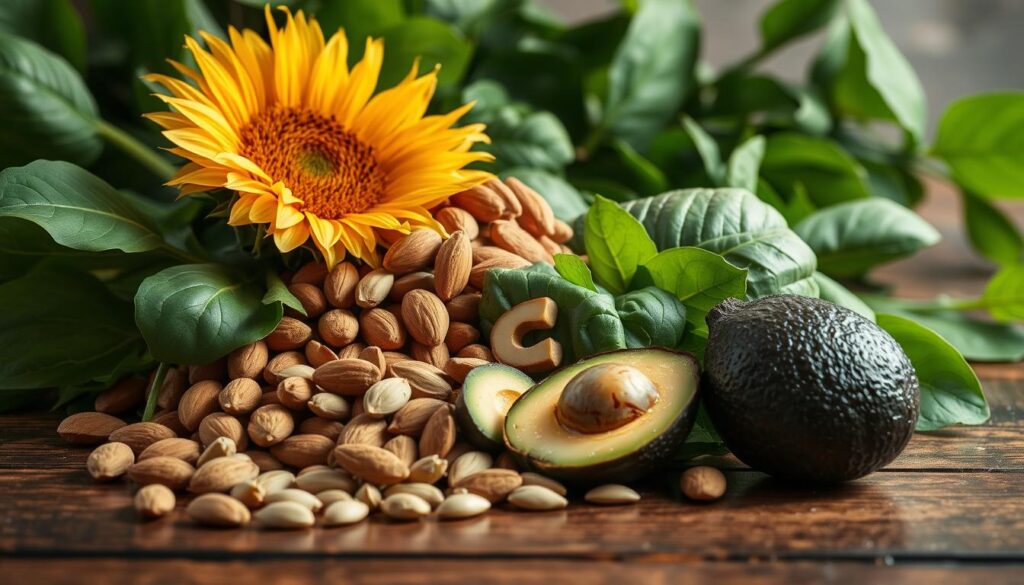
- Nuts and seeds (almonds, sunflower seeds)
- Vegetable oils
- Green leafy vegetables
- Wheat germ oil
Your daily intake is important. Adults need 4 to 15 mg, depending on age and gender5. Many tasty Vitamin E rich foods can fit into your diet.
Vitamin E offers impressive health benefits. Research suggests it may help in several ways:
- Supporting cognitive health
- Improving skin condition
- Potentially reducing markers of oxidative stress6
“Food is your best source of Vitamin E, not supplements.”
Health experts suggest getting Vitamin E from food, not supplements6. High-dose supplements can be risky. Talk to a doctor about your nutritional needs7.
Your body needs balanced nutrition. Adding Vitamin E to your diet can boost your overall health. It’s a simple yet powerful way to support your well-being.
Conclusion
Vitamin E plays a vital role in your health. A balanced diet is the best way to get this nutrient8. Many Americans don’t get enough vitamin E, so it’s important to eat wisely8.
Think carefully before taking vitamin E supplements. Studies show mixed results for preventing age-related issues89. Most people only get about 6.2 mg of vitamin E daily from food9.
Nuts, seeds, and vegetable oils are great natural sources. They offer better nutrition than supplements. Always talk to your doctor before starting any new supplements.
High doses of vitamin E can affect other body processes8. Your health journey is complex, and vitamin E is just one part. Focus on a well-rounded approach to stay healthy.
FAQ
What exactly is Vitamin E?
Vitamin E is a fat-soluble nutrient that acts as a powerful antioxidant. It comes in eight chemical forms, with alpha-tocopherol being the most active. This nutrient protects cells from damage and supports your immune system.
Vitamin E also plays key roles in cellular signaling and metabolic processes. It’s essential for maintaining overall health and well-being.
How much Vitamin E do I need daily?
Adults 14 and older need 15 mg of Vitamin E per day. Pregnant women require 15 mg/day, while breastfeeding women need 19 mg/day.
Children’s needs range from 6 mg/day for ages 1-3 to 11 mg/day for ages 9-13. The maximum safe intake for adults is 1,000 mg/day.
It’s best to talk to a healthcare professional about your specific needs. They can provide personalized advice based on your health status.
What are the best food sources of Vitamin E?
Vitamin E is found in various foods. These include sunflower seeds, almonds, sunflower oil, peanut butter, and spinach.
Other great sources are vegetable oils, nuts, seeds, and fortified cereals. Green leafy vegetables are also rich in this essential nutrient.
What are the health benefits of Vitamin E?
Vitamin E offers many potential health perks. It may reduce heart disease risk factors and improve nonalcoholic fatty liver disease symptoms.
This nutrient also supports cognitive health and can help manage menstrual pain. It benefits skin health, improves lung function, and protects cells from damage.
Can I take Vitamin E supplements?
While Vitamin E supplements exist, it’s best to get this nutrient from a balanced diet. Most people can meet their needs through food sources.
If you’re thinking about supplements, talk to a healthcare professional first. High-dose supplements can pose risks, so expert guidance is crucial.
Are natural or synthetic Vitamin E sources better?
Natural Vitamin E sources are typically more potent and better absorbed by your body. Foods like nuts, seeds, and vegetable oils provide the most bioavailable form.
These natural sources are preferred over synthetic supplements. They offer the best way to meet your Vitamin E needs.
How does Vitamin E benefit my skin?
Vitamin E is a skin health superstar. As a powerful antioxidant, it shields your skin from free radical damage.
This nutrient supports skin healing and may reduce UV damage. It also helps maintain skin moisture and elasticity.
Many skincare products include Vitamin E for its protective and nourishing qualities. It’s a key ingredient for healthy, glowing skin.
Source Links
- Vitamin E and your health – https://www.healthdirect.gov.au/vitamin-e-and-your-health
- Vitamin E for Strong Immunity – https://www.webmd.com/diet/supplement-guide-vitamin-e
- Vitamin E Information | Mount Sinai – https://www.mountsinai.org/health-library/supplement/vitamin-e
- Vitamin E – https://nutritionsource.hsph.harvard.edu/vitamin-e/
- Office of Dietary Supplements – Vitamin E – https://ods.od.nih.gov/factsheets/VitaminE-HealthProfessional/
- Vitamin E: Uses and Benefits – https://www.healthline.com/health/all-about-vitamin-e
- Vitamin E – https://www.mayoclinic.org/drugs-supplements-vitamin-e/art-20364144
- Vitamin E – https://lpi.oregonstate.edu/mic/vitamins/vitamin-E
- Vitamin E – https://en.wikipedia.org/wiki/Vitamin_E

