
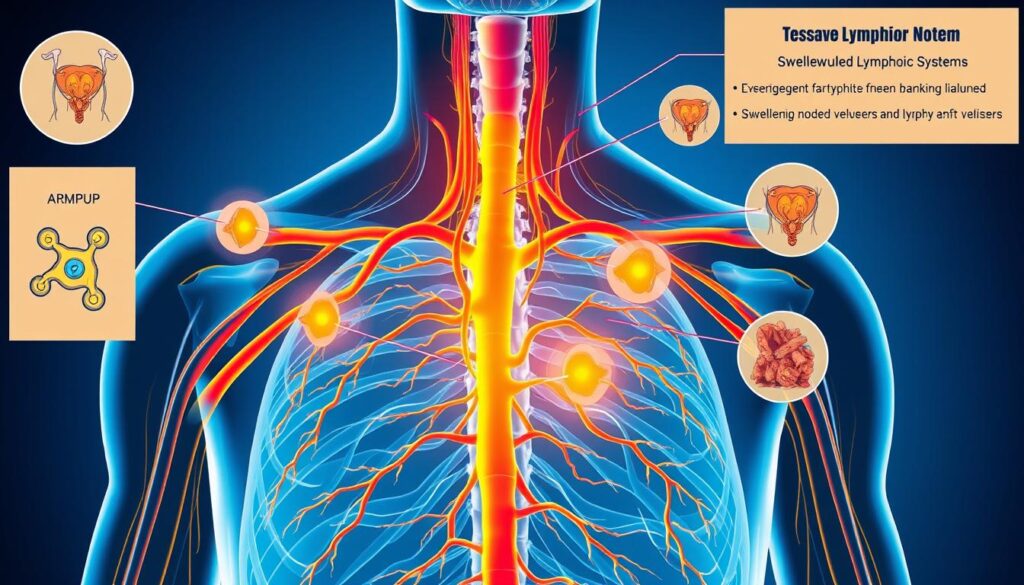
Swollen lymph glands signal that your body is fighting a health issue. These enlarged nodes often show up in your neck, chin, armpits, and groin1. They’re your immune system’s way of saying something’s not right.
Your lymphatic system defends against infections and health threats. Swollen nodes can stem from simple viral infections or serious health problems1. Most cases aren’t serious, but ongoing swelling needs a doctor’s check.
Some factors raise your risk of lymphatic system disorders. These include older age, weak immune systems, and risky behaviors1. Knowing these can help you take charge of your health.
Key Takeaways
- Swollen lymph nodes are typically a sign of your body fighting an infection
- Common locations include neck, chin, armpits, and groin areas
- Most lymph node swelling is caused by bacterial or viral infections
- Persistent swelling lasting over two weeks requires medical attention
- Risk factors include age, immune system health, and lifestyle choices
Understanding Swollen Lymph Nodes
Lymph nodes are vital to your body’s defense system. These small, bean-shaped structures protect your health. They’re key players in your immune response and overall wellness2.
What Are Lymph Nodes?
Lymph nodes are tiny filtering stations in your body. You have about 600 of them. They’re positioned to defend against health threats2.
These nodes are found in specific areas3:
- Behind the ears
- Neck region
- Armpits
- Chest
- Abdomen
- Groin
The Role of Lymph Nodes in Your Lymphatic System
Your lymphatic system is like a security network. Lymph nodes filter fluid, trapping harmful substances. They catch bacteria and viruses before they cause harm4.
Common Symptoms Associated with Lymph Node Inflammation
Swollen lymph nodes can signal health issues. Enlarged nodes often mean your body is fighting an infection2. Here are signs of lymph node inflammation:
- Tenderness in specific body areas
- Visible swelling
- Potential discomfort
- Accompanying fever
“Your lymph nodes are silent guardians, working tirelessly to protect your health.” – Medical Immune Research Team
Important note: Swollen lymph nodes often indicate minor issues. But swelling lasting over two weeks might need medical attention3.
Common Causes of Swollen Lymph Nodes
Swollen lymph nodes can signal potential health issues. Your lymphatic system fights infections and keeps you healthy5. Understanding the causes helps identify health concerns.
Infections: Bacterial and Viral Triggers
Viral and bacterial infections often cause swollen lymph nodes. Your body activates these nodes to fight health challenges6.
- Common viral infections like mononucleosis and flu
- Bacterial infections including strep throat
- Sexually transmitted infections
- Ear and tooth infections
Inflammatory and Autoimmune Conditions
Autoimmune diseases can affect your lymph node health. Conditions like rheumatoid arthritis and lupus may cause ongoing lymph node swelling7.
| Condition Type | Impact on Lymph Nodes |
|---|---|
| Lupus | Chronic inflammation |
| Rheumatoid Arthritis | Systemic immune response |
| Sjögren’s Syndrome | Lymph node enlargement |
Malignancy and Cancer-Related Swelling
Cancer, though rare, can cause lymph node swelling. Leukemia and lymphoma may show as lasting, painless lymph node enlargement5.
Persistent lymph node swelling without infection requires professional medical evaluation.
Additional Considerations
Unexpected factors can trigger lymph node swelling. These include certain medications, stress, and allergic reactions7.
If you have long-lasting or worrying symptoms, talk to your doctor. They can help figure out the cause.
When to Seek Medical Attention
Knowing when swollen lymph nodes need medical evaluation is vital for your health. Some symptoms require immediate attention, though not all swollen nodes indicate serious conditions8.
Signs That Require Immediate Care
Consult a healthcare professional if you notice these warning signs:
- Lymph nodes larger than half an inch8
- Nodes that feel hard or immobile8
- Persistent swelling lasting more than two weeks
- Accompanied symptoms such as:
Medical Evaluation Process
During a medical evaluation, your doctor will examine you thoroughly. They’ll assess your physical condition and review your medical history. This comprehensive diagnostic approach helps determine the cause of swollen lymph nodes.
Potential Diagnostic Tests
Your healthcare provider might recommend various tests to find the exact cause. These may include diagnostic imaging and lymph node biopsy procedures.
- Blood tests (Complete Blood Count)8
- Imaging studies:
- Infection-specific tests:
- HIV
- Tuberculosis
- Syphilis
- Epstein-Barr virus8
- Biopsy procedures:
Early detection and professional medical assessment can significantly improve treatment outcomes for various lymph node conditions.
Treatment Options for Swollen Lymph Nodes
Treating swollen lymph nodes depends on what’s causing them. Doctors suggest specific ways to handle the condition9. Home remedies like warm compresses and rest can bring relief10.
Medical treatments vary based on the diagnosis. For bacterial infections, doctors may prescribe antibiotics10. Anti-inflammatory drugs can reduce swelling and ease discomfort. In rare cases, lymph node removal might be needed10.
Cancer-related lymph node issues need special care. Radiation therapy can shrink affected areas and ease symptoms11. Tests on biopsied lymph nodes help decide the best treatment plan11.
Most swollen lymph nodes get better within two weeks. Medical help is only needed in certain cases9.
At home, gentle care and patience are key. Rest, drink plenty of fluids, and use over-the-counter pain relievers. Watch for ongoing swelling or new symptoms that might need a doctor’s attention9.
FAQ
Are swollen lymph nodes always a sign of serious illness?
Swollen lymph nodes usually aren’t serious. They’re often a normal response to infection. Most cases resolve on their own within 1-2 weeks.
If they persist or feel unusually hard, see your doctor. Other concerning symptoms also warrant a medical check-up.
How can I tell if my swollen lymph nodes are cause for concern?
Watch for red flags such as lymph nodes that:
– Remain swollen for more than two weeks
– Feel hard or rubbery
– Are rapidly growing in size
– Are accompanied by unexplained weight loss
– Cause significant pain or fever
– Are located in multiple areas of your body
What home remedies can help reduce lymph node swelling?
You can try several home treatments to manage swollen lymph nodes:
– Apply warm compresses to the affected area
– Get plenty of rest
– Stay hydrated
– Take over-the-counter pain relievers like ibuprofen or acetaminophen
– Gently massage the area
– Avoid strenuous activities that might cause additional pain
Can stress cause lymph nodes to swell?
Stress doesn’t directly cause lymph node swelling. However, it can weaken your immune system. This makes you more prone to infections that might cause enlarged lymph nodes.
Managing stress can help support your immune system. Try relaxation techniques, get enough sleep, and make healthy lifestyle choices.
What infections most commonly cause swollen lymph nodes?
Common infections that can cause lymph node swelling include:
– Viral infections like the common cold and mononucleosis
– Bacterial infections such as strep throat
– HIV – Ear infections
– Skin infections
– Respiratory tract infections
When should I definitely see a doctor about swollen lymph nodes?
Seek medical attention if your swollen lymph nodes:
– Persist for more than two weeks
– Are accompanied by high fever
– Cause night sweats
– Are painful or continue to grow
– Are connected with unexplained weight loss
– Appear in multiple areas of your body
Can swollen lymph nodes be a sign of cancer?
Most swollen lymph nodes aren’t cancer-related. However, in rare cases, they can signal lymphoma, leukemia, or metastatic cancer.
Promptly see a doctor if lymph nodes are hard, immovable, or rapidly growing. Other systemic symptoms also warrant medical evaluation.
How are swollen lymph nodes diagnosed?
Diagnosis typically involves:
– Detailed physical examination
– Medical history review
– Blood tests
– Imaging studies like CT scans or X-rays
– Potentially a lymph node biopsy if cancer is suspected
– Specific tests based on suspected underlying conditions
Source Links
- Swollen lymph nodes-Swollen lymph nodes – Symptoms & causes – Mayo Clinic – https://www.mayoclinic.org/diseases-conditions/swollen-lymph-nodes/symptoms-causes/syc-20353902
- Swollen Lymph Nodes – https://www.webmd.com/a-to-z-guides/swollen-glands
- What Do Swollen Lymph Nodes Mean? – Health Images – https://www.healthimages.com/what-do-swollen-lymph-nodes-mean/
- Lymph Nodes & Cancer | What are Lymph Nodes? – https://www.cancer.org/cancer/diagnosis-staging/lymph-nodes-and-cancer.html
- What You Need to Know About Swollen Lymph Nodes – https://www.healthline.com/health/swollen-lymph-nodes
- Swollen lymph nodes Information | Mount Sinai – https://www.mountsinai.org/health-library/symptoms/swollen-lymph-nodes
- What Causes Swollen Lymph Nodes? – https://www.verywellhealth.com/cervical-lymph-nodes-2252142
- When to Worry About Swollen Lymph Nodes – https://www.cancercenter.com/community/blog/2022/06/when-to-worry-swollen-lymph-nodes
- Swollen Lymph Nodes: What to Know If It’s Not Cancer – https://www.healthline.com/health/lymph-node-swollen-for-years-not-cancer
- Swollen Lymph Nodes? Here are Your Treatment Options – CV ENT Surgical Group – https://www.cvsurgicalgroup.com/swollen-lymph-nodes-here-are-your-treatment-options/
- Lymphadenopathy (Swollen Lymph Glands) – https://www.cancercenter.com/integrative-care/lymphadenopathy

