
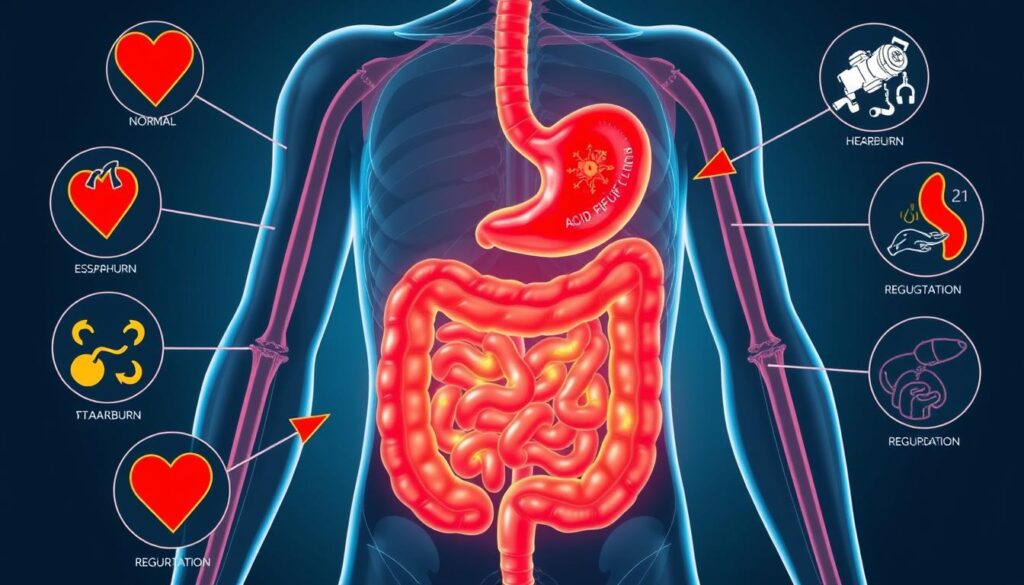
Gastroesophageal Reflux Disease (GERD) is a common digestive issue affecting millions of Americans. It occurs when stomach acid flows back into the esophagus. This happens due to a relaxed lower esophageal sphincter muscle1.
GERD goes beyond occasional heartburn and can disrupt daily life2. Several factors increase the risk of developing GERD. These include obesity, hiatal hernia, pregnancy, and smoking2.
Frequent acid reflux can lead to serious GERD complications. Persistent stomach acid exposure may cause inflammation in the esophagus. This can result in esophagitis or Barrett’s esophagus1.
In some cases, GERD may even increase the risk of esophageal cancer. Knowing these risks helps in managing digestive health effectively.
Key Takeaways
- GERD involves repeated stomach acid backflow into the esophagus
- Multiple lifestyle factors can increase your risk of developing GERD
- Untreated GERD can lead to serious health complications
- Most people can manage GERD through lifestyle changes and medication
- Early recognition of symptoms is crucial for effective treatment
What is Gastroesophageal Reflux Disease (GERD)?
GERD is a complex digestive condition that goes beyond occasional discomfort. It can affect your overall health if not managed properly. Learning about GERD helps you handle symptoms better.
Understanding the Basics of GERD
GERD happens when stomach contents flow back into the esophagus repeatedly. This causes irritation and possible damage3. GERD is more severe than occasional acid reflux3.
Defining the Condition
GERD occurs when the lower esophageal sphincter weakens or relaxes wrongly. This allows stomach acid to enter the esophagus3.
Several factors can lead to GERD:
- Obesity increases the likelihood of developing GERD4
- Pregnancy can worsen heartburn symptoms4
- Smoking and alcohol use may trigger reflux4
Dispelling Common Misconceptions
GERD doesn’t just affect adults. In reality, this esophageal disorder can impact individuals of all ages. Children and infants may show signs like fussiness and feeding problems.
GERD is not just occasional heartburn—it’s a persistent condition that requires proper management.
Potential Complications
Untreated GERD can lead to serious health issues. These may include:
- Worsening of asthma
- Dental problems
- Chronic cough
- Esophageal ulcers
GERD treatment includes lifestyle changes, medications, and sometimes surgery4. A doctor can help create a plan that works for you.
Identifying GERD: Key Symptoms You Should Know
GERD symptoms are crucial for early detection and proper management. Acid reflux can affect your daily life and overall health. It goes beyond simple heartburn, impacting various aspects of well-being.
Frequent Heartburn: More Than Just Discomfort
Heartburn is a common GERD symptom. It causes a burning sensation in your chest. This feeling often worsens after eating or when lying down5.
Frequent heartburn can greatly impact your quality of life6. Its intensity and regularity may disrupt daily activities.
Regurgitation and Unusual Tastes
GERD can cause unexpected sensations in your mouth. You might experience:
- A sour or bitter taste
- Unexpected stomach contents rising into your throat
- Feeling like food is stuck in your chest
Difficulty Swallowing
Dysphagia, or trouble swallowing, can be a serious GERD symptom7. It might feel like food is getting stuck in your throat.
You may experience increased resistance when eating6. This can make mealtimes uncomfortable and challenging.
Additional Warning Signs
GERD can present through other symptoms as well. These include:
- Persistent dry cough
- Chest pain mimicking heart problems
- Unexplained hoarseness
- Potential development of Barrett’s esophagus
Persistent symptoms might indicate more serious conditions like esophagitis or potential esophageal complications.
Early recognition of these symptoms can prevent long-term damage. It improves your overall digestive health5. If you often experience these signs, consult a healthcare professional.
Treatment Options for Managing GERD Effectively
GERD treatment offers various ways to manage your symptoms effectively. Lifestyle changes are key in controlling acid reflux8. Losing weight is the most powerful change for GERD management8.
Over-the-counter meds provide quick relief for mild symptoms. Antacids help with occasional reflux, but be careful about using them too often8. Histamine 2 blockers offer some healing, treating esophageal erosions in half of patients8.
Proton pump inhibitors (PPIs) are a stronger option. They effectively suppress acid production and heal esophagitis89. For stubborn cases, doctors may suggest advanced treatments.
Endoscopic therapies like transoral incisionless fundoplication have shorter recovery times. They also cause less pain than traditional surgery8. Surgical options like Nissen fundoplication help when other methods fall short89.
Some patients might consider weight-loss surgery. It can address both GERD and obesity at once9. Always talk to your doctor about the best GERD treatment for you.
Keep an eye on persistent symptoms. Don’t wait to seek professional advice if your condition doesn’t improve with initial treatments.
FAQ
What exactly is GERD?
GERD is a chronic condition where stomach acid often flows back into your esophagus. It causes irritation and discomfort. GERD occurs when your lower esophageal sphincter weakens, allowing stomach contents to rise.
What are the most common symptoms of GERD?
Key symptoms include frequent heartburn, regurgitation, and difficulty swallowing. You might also experience chest pain, persistent cough, and hoarseness. Some people have nausea, bad breath, and dental erosion.
Who is most at risk for developing GERD?
Obesity, pregnancy, smoking, and hiatal hernia increase your risk of GERD. People who are overweight or eat large meals are more prone. Consuming trigger foods or lying down after eating also raises the risk.
Can children and infants have GERD?
Yes, GERD can affect infants and children, not just adults. Babies might show excessive fussiness and feeding difficulties. Children may have heartburn and regurgitation, similar to adults.
How is GERD typically treated?
Treatment involves lifestyle changes and medications. This includes weight loss, avoiding trigger foods, and eating smaller meals. Over-the-counter antacids and H2 blockers can help with symptoms.
Severe cases might need prescription proton pump inhibitors or surgery. Elevating your head while sleeping can also provide relief.
When should I see a healthcare professional about GERD?
Consult a doctor if symptoms persist despite lifestyle changes and over-the-counter medications. Seek immediate help for severe chest pain or difficulty swallowing. Unexplained weight loss or quality of life impact also warrant medical attention.
Can GERD lead to serious complications?
Untreated GERD can cause esophagitis, Barrett’s esophagus, and esophageal stricture. It may increase the risk of esophageal cancer. Proper management and medical supervision are crucial.
Are there specific foods I should avoid with GERD?
Common triggers include spicy dishes, citrus fruits, and tomato-based products. Chocolate, caffeine, alcohol, and fatty foods can also cause problems. Keep a food diary to identify your personal GERD triggers.
Source Links
- Gastroesophageal reflux disease (GERD) – Symptoms and causes – https://www.mayoclinic.org/diseases-conditions/gerd/symptoms-causes/syc-20361940
- Acid Reflux & GERD: What To Know – https://my.clevelandclinic.org/health/diseases/17019-acid-reflux-gerd
- Acid Reflux (GER & GERD) in Adults – NIDDK – https://www.niddk.nih.gov/health-information/digestive-diseases/acid-reflux-ger-gerd-adults
- Gastroesophageal reflux disease: MedlinePlus Medical Encyclopedia – https://medlineplus.gov/ency/article/000265.htm
- GERD Symptoms & Treatment | Aurora Health Care – https://www.aurorahealthcare.org/services/gastroenterology-colorectal-surgery/gastroesohageal-reflux-gerd
- What You Should Know About Acid Reflux – https://www.greenwichhospital.org/articles/acid-reflux
- Gastroesophageal Reflux Disease (GERD) – https://www.hopkinsmedicine.org/health/conditions-and-diseases/gastroesophageal-reflux-disease-gerd
- Gastroesophageal Reflux Disease (GERD) Treatment – https://www.hopkinsmedicine.org/health/treatment-tests-and-therapies/gastroesophageal-reflux-disease-gerd-treatment
- Treatment for GER & GERD – NIDDK – https://www.niddk.nih.gov/health-information/digestive-diseases/acid-reflux-ger-gerd-adults/treatment

