
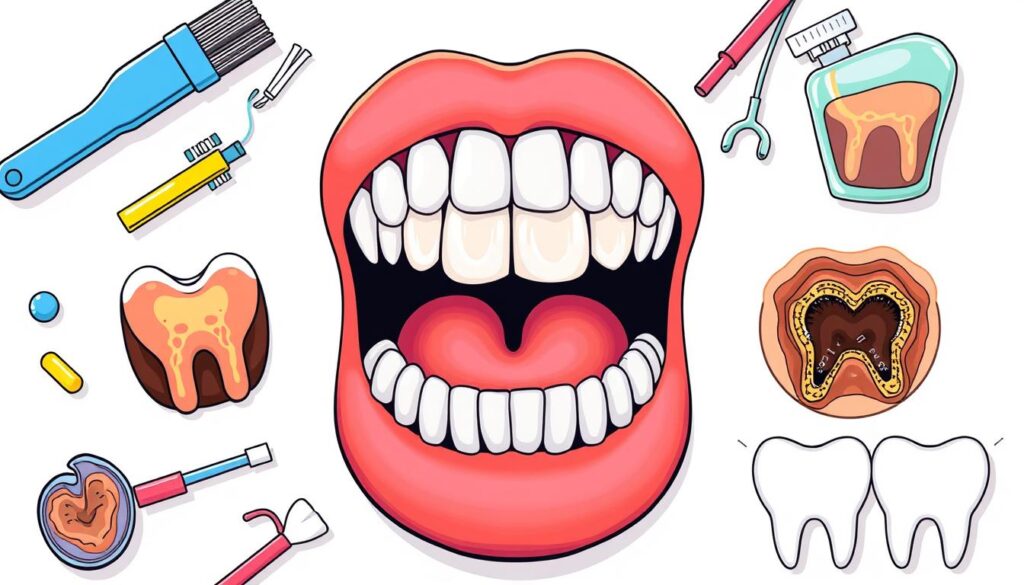
Dental health is crucial for your overall wellness. Cavities and tooth decay can affect your quality of life. They impact people of all ages, so understanding these issues is vital1.
Your mouth contains complex ecosystems of bacteria. These bacteria interact with the foods and drinks you consume. Under certain conditions, they can erode tooth enamel, creating tiny holes in your teeth1.
Decay happens slowly, attacking your tooth’s inner layers. It does this through plaque formation and acid erosion1.
Tooth decay can affect anyone, from kids to older adults. Risk factors include frequent snacking, dry mouth, and low fluoride intake1.
Key Takeaways
- Cavities affect individuals across all age groups
- Bacterial interactions determine dental health
- Regular oral hygiene prevents tooth decay
- Diet plays a crucial role in dental wellness
- Professional dental checkups are essential
Understanding Cavities and Tooth Decay
Dental health is vital for your overall well-being. Cavities can affect people of all ages, challenging healthy smile maintenance. Knowing about tooth decay helps protect your dental health and prevent issues.
Tooth decay gradually breaks down tooth enamel, creating tiny holes in your teeth. Acidic foods and sugar speed up this process, eroding tooth enamel faster2.
What Are Cavities?
Cavities develop through different types of decay:
- Smooth surface cavities on tooth sides
- Root cavities near tooth roots
- Pit and fissure cavities on chewing surfaces
Causes of Tooth Decay
Mouth bacteria feed on sugars and starches, creating plaque that attacks tooth enamel. Some factors increase your risk:
- High consumption of sugar and acidic foods2
- Insufficient fluoride exposure
- Poor oral hygiene practices
- Dry mouth conditions
Signs and Symptoms to Watch For
Spotting early signs of tooth decay can prevent serious problems. Look out for these symptoms:
- Tooth sensitivity to hot or cold
- Visible holes in teeth
- Persistent toothache
- Pain when biting down3
“Prevention is always better than cure when it comes to dental health.”
Regular dental check-ups help detect tooth decay early on. Professional cleanings can stop further decay progression3. By understanding cavities, you can take steps to keep your teeth healthy.
Preventing Cavities and Tooth Decay
Protecting your teeth from decay requires a smart approach to oral health. Preventive dentistry offers powerful strategies to keep your smile healthy. By implementing key protective measures, you can reduce your risk of cavities.
Importance of Oral Hygiene
Your daily oral care routine is crucial in fighting tooth decay. Brushing twice daily with fluoride toothpaste strengthens enamel and removes harmful bacteria4.
Children who brush daily with fluoride toothpaste have fewer cavities. This makes it a vital habit to develop early4.
- Brush for at least two minutes
- Use fluoride toothpaste
- Floss daily to remove hidden food particles
- Replace your toothbrush every three to four months
Dietary Choices That Influence Cavities
Your food choices greatly impact your dental health. Sugary and acidic foods can erode tooth enamel, leading to cavities.
Fluoride treatment can help counter some of these dietary challenges4.
| Foods to Limit | Tooth-Friendly Alternatives |
|---|---|
| Sugary drinks | Water |
| Sticky candies | Fresh fruits |
| Processed snacks | Crunchy vegetables |
Regular Dental Visits
Professional dental care is key in preventing cavities. Dental sealants can prevent 80% of cavities on back teeth4.
Regular check-ups allow dentists to spot early signs of decay. They can then apply protective treatments5.
“Prevention is always better than cure when it comes to dental health.”
These strategies can help protect your teeth and maintain a healthy smile. Half of children aged 6 to 9 have had cavities4.
This fact highlights the importance of early preventive care for long-term oral health.
Treatment Options for Cavities
Understanding cavity treatment options helps you make smart choices about your oral care. Tooth decay needs quick action to stop further damage. Prompt intervention is crucial.
Cavity severity determines the best way to fix your dental health. Different decay stages need specific treatments. Your dentist will choose the right approach for you6.
Dental Fillings: Your Primary Defense
Tooth fillings are the go-to fix for early to moderate cavities. They remove decay and fill the space with strong materials6.
You can pick from these filling types:
- Composite resin (tooth-colored)
- Porcelain
- Dental amalgam
Advanced Treatments for Severe Decay
Deeper cavities need more complex treatments. Root Canal Therapy helps when decay reaches the tooth’s inner pulp, causing pain6.
For badly damaged teeth, dentists might suggest:
- Artificial tooth crowns
- Tooth extraction
- Dental implants or bridges
Specialized Cavity Management
Each decay type needs a unique approach. Pit and fissure decay on back teeth requires extra care. Smooth surface decay might improve with fluoride treatments7.
| Decay Type | Treatment Approach |
|---|---|
| Root Decay | Advanced dental intervention |
| Occlusal Cavities | Careful cleaning and filling |
| Smooth Surface Decay | Fluoride treatment |
“Prevention is always better than cure when it comes to dental health.” – Dental Health Expert
Good home care matters, but don’t skip regular dental check-ups. They’re key for complete cavity management6.
Living with Tooth Decay and Prevention Strategies
Dental health needs proactive care and consistent attention. Preventive dentistry helps maintain oral hygiene and reduce tooth decay risk. Thanks to oral health research, older adults now keep their natural teeth longer.
Your oral hygiene routine fights potential dental issues. Brush teeth twice daily with fluoride toothpaste to prevent decay and cavities8. Regular dental visits catch early decay signs and address problems.
Your diet greatly affects your dental health8. Understanding this connection can improve your overall oral wellness. Avoiding sugary foods protects your teeth from decay.
Professional support is key in dental health management. Consider private dental insurance to manage care costs9. Comprehensive oral health assessments help you stay ahead of issues.
Smoking increases gum disease risks9. Maintain healthy lifestyle choices to protect your oral health. Your commitment to consistent care shapes your long-term dental health.
Educate yourself about dental strategies. Keep up with regular check-ups. These actions will safeguard your smile and overall well-being8.
FAQ
What causes cavities?
Cavities form when bacteria in your mouth feed on sugars left on teeth. These bacteria produce acid that erodes tooth enamel, creating tiny holes. Poor oral hygiene and frequent snacking increase cavity risk.
Sugary drinks and not cleaning teeth regularly also contribute to cavity formation. Regular dental care is crucial for preventing tooth decay.
How can I prevent cavities?
Brush twice daily with fluoride toothpaste and floss regularly to prevent cavities. Limit sugary and acidic foods and drinks in your diet.
Visit your dentist for regular cleanings and check-ups. Using dental sealants and drinking fluoridated water can also protect your teeth from decay.
What are the signs of a cavity?
Common cavity signs include toothache and sensitivity to hot or cold temperatures. You might see holes in your teeth or notice pain when biting down.
Dark spots on the tooth surface can also indicate decay. If you experience persistent tooth pain, consult your dentist promptly.
Are some people more prone to cavities?
Yes, certain factors can increase your risk of developing cavities. Age, dry mouth, diet, and eating frequency all play a role.
Tooth location and medical conditions can also affect cavity risk. Children and older adults are often more susceptible to tooth decay.
What treatments are available for cavities?
Treatment depends on cavity severity. Early-stage decay might be treated with fluoride to restore tooth enamel.
Most cavities are filled with composite resin, porcelain, or dental amalgam. Severe cases may require crowns, root canals, or tooth extraction.
How often should I visit the dentist?
Dentists recommend check-ups every six months for early cavity detection and professional cleaning. These visits allow for preventive treatments like fluoride applications.
If you have specific dental concerns, your dentist might suggest more frequent visits. Regular dental care is key to maintaining oral health.
Can cavities heal on their own?
Once a cavity forms, it can’t heal completely on its own. Early tooth decay might be reversed with excellent oral hygiene.
Fluoride treatments can help in the early stages. However, once a hole forms, professional dental treatment is necessary to prevent further damage.
How do dietary choices impact tooth decay?
Your diet significantly affects tooth decay. Sugary and acidic foods contribute to cavity formation. Frequent snacking gives bacteria more chances to produce harmful acids.
Limit these foods and drink water after meals. Choose tooth-friendly options like fruits, vegetables, and dairy products to protect your dental health.
Source Links
- Cavities and tooth decay – Symptoms and causes – https://www.mayoclinic.org/diseases-conditions/cavities/symptoms-causes/syc-20352892
- Tooth Decay (Caries or Cavities) in Children – https://www.hopkinsmedicine.org/health/conditions-and-diseases/tooth-decay-caries-or-cavities-in-children
- Tooth Decay – https://www.nidcr.nih.gov/health-info/tooth-decay
- About Cavities (Tooth Decay) – https://www.cdc.gov/oral-health/about/cavities-tooth-decay.html
- Cavities (Tooth Decay): Symptoms, Causes & Treatment – https://my.clevelandclinic.org/health/diseases/10946-cavities
- Treatment and Prevention of Tooth Decay – https://www.news-medical.net/health/Treatment-and-Prevention-of-Tooth-Decay.aspx
- Cavity Treatments: What are Ways to Treat Cavities? – https://oralb.com/en-us/oral-health/cavity-treatments-what-are-ways-to-treat-cavities/
- Expert Strategies to Avoid Tooth Decay and Cavities – https://dental.dpu.edu.in/blogs/expert-strategies-to-avoid-tooth-decay-cavities
- Taking Care of Your Teeth and Mouth – https://www.nia.nih.gov/health/teeth-and-mouth/taking-care-your-teeth-and-mouth

