
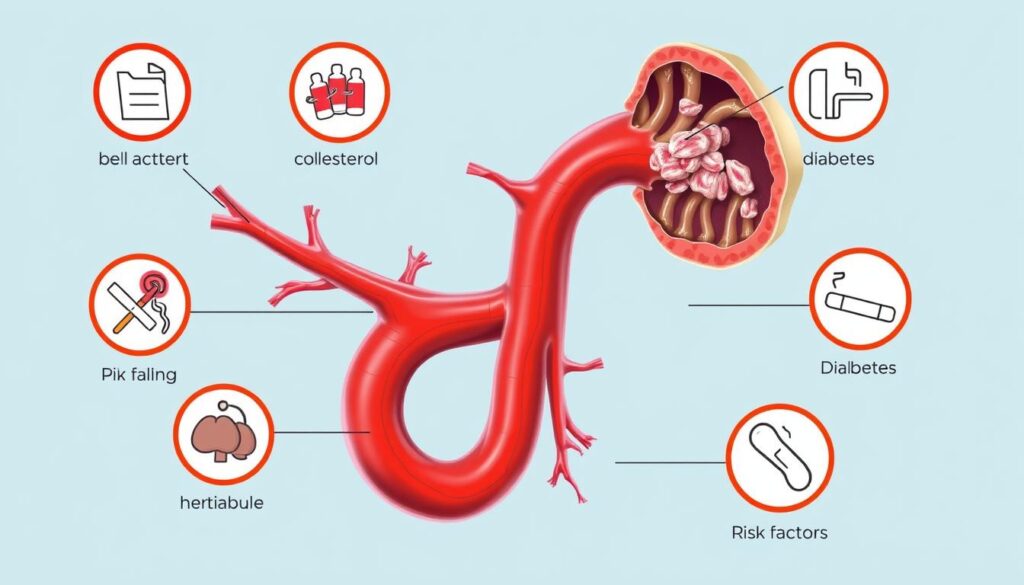
Carotid artery disease poses a silent threat to brain health. It occurs when fatty deposits block blood vessels supplying oxygen to your brain1. As you age, your risk increases, affecting up to 3% of people over 652.
Atherosclerosis in carotid arteries raises stroke risk significantly3. Each year, over 800,000 Americans face stroke risks, often due to carotid artery disease2.
Several factors can boost your vulnerability to this condition. These include high blood pressure, smoking, diabetes, family history, and inactivity3.
Diabetics face a fourfold increase in developing carotid artery disease2. Recognizing these risks is crucial for prevention and early detection.
Key Takeaways
- Carotid artery disease affects blood flow to the brain
- Up to 3% of seniors are at risk
- Multiple lifestyle factors contribute to disease progression
- Early detection can prevent stroke
- Diabetes significantly increases disease risk
Understanding Carotid Artery Disease
Carotid arteries are vital for your body’s blood transport system. They deliver oxygen-rich blood to your brain and head. These complex pathways greatly impact your overall health.
What Are Carotid Arteries?
Carotid arteries are found on each side of your neck. They split into internal and external arteries. Internal arteries supply blood to your brain. External arteries nourish your face, head, and neck4.
How Plaque Buildup Affects Blood Flow
Atherosclerosis is when fatty deposits and other substances build up in arteries. This plaque buildup narrows arteries and reduces blood flow to the brain. It also increases the risk of blockages5.
Carotid artery stenosis develops slowly. It can create dangerous restrictions in blood circulation6.
The Connection to Stroke Risk
Plaque buildup can cause stroke in several ways:
- Dramatically reduced blood flow
- Ruptured plaques traveling to smaller brain arteries
- Blood clot formation at plaque sites4
Understanding your carotid arteries’ health can be a critical step in preventing potential neurological complications.
Transient Ischemic Attack (TIA) often signals potential carotid artery disease6. Recognizing these subtle signs can help protect your brain health.
Major Risk Factors and Warning Signs
Carotid artery disease can develop silently, threatening your heart health. Knowing key risk factors is vital for prevention and early detection7. Your habits and health history affect your risk for this condition.
Several factors can raise your chances of getting carotid artery disease:
- Hypertension can damage arterial walls, promoting plaque buildup7
- Diabetes impairs fat processing, escalating stroke risks7
- High Cholesterol encourages arterial plaque accumulation7
- Smoking increases heart rate and blood pressure7
- Obesity contributes to overall cardiovascular stress
Knowing warning signs is key to stopping strokes. Look out for these symptoms:
- Sudden weakness on one side of the body
- Difficulty speaking or understanding speech
- Unexpected vision problems
- Unexplained dizziness
- Severe, unexpected headaches8
“Early detection can be a lifesaver when it comes to carotid artery disease.”
Your family history matters too. Genetic risk for atherosclerosis can increase your chances8. Regular check-ups help monitor and manage these risk factors7.
| Risk Factor | Impact on Carotid Artery Disease |
|---|---|
| High Blood Pressure | Significantly increases stroke risk |
| Diabetes | Reduces fat processing efficiency |
| Smoking | Elevates cardiovascular stress |
| Obesity | Adds strain to cardiovascular system |
Remember, lifestyle changes can greatly lower your risk of carotid artery disease. Talk to your doctor about creating a personal prevention plan.
Diagnosis and Treatment Options
Early detection of carotid artery disease is vital. Your doctor will use various methods to assess your condition. They’ll determine the best treatment approach based on their findings9.
Understanding Diagnostic Testing
Doctors use multiple techniques to diagnose carotid artery stenosis. A thorough evaluation typically includes several tests.
- Doppler Ultrasound: A noninvasive test that provides detailed information about blood vessel structure and flow9
- CT Angiography: Uses X-ray technology to identify narrowed or blocked arteries9
- Magnetic Resonance Angiography (MRA): Visualizes blood vessels using MRI scans with contrast dye9
Medical Management Strategies
Treatment varies based on your carotid artery stenosis severity. Your healthcare team might suggest different approaches.
- Antiplatelet medications to reduce stroke risk10
- Cholesterol-lowering drugs
- Blood pressure management
Surgical Intervention Options
Severe blockages may require surgery. Two main procedures are available for treatment.
| Procedure | Description | Best Suited For |
|---|---|---|
| Carotid Endarterectomy | Surgical removal of plaque from artery | Patients with severe blockages10 |
| Carotid Artery Stenting | Minimally invasive procedure using a stent | Patients unsuitable for traditional surgery10 |
Your doctor will guide you in choosing the best treatment. They’ll consider your specific condition and overall health11.
For more information, check out this helpful resource on carotid artery disease.
Early detection and proactive management are key to preventing stroke and maintaining cardiovascular health.
Conclusion
Carotid artery disease is a serious health issue that requires active management. It can develop quietly, blocking blood flow to the brain and raising stroke risk12. Your stroke prevention journey begins with understanding risks and making lifestyle changes.
Effective heart health strategies involve a well-rounded approach. Regular check-ups, a balanced diet, and consistent exercise are crucial. Managing underlying health conditions also plays a key role in reducing risk.
Research shows that comprehensive medical care can greatly lower yearly stroke risk13. Early detection and proactive care are vital in protecting yourself. Treatment options range from lifestyle changes to medical procedures like carotid endarterectomy or stenting12.
Studies prove that targeted medical approaches can reduce stroke risks and boost vascular health13. Your health is invaluable. Stay informed and work closely with healthcare professionals to manage carotid artery disease.
Commit to heart-healthy choices to minimize your stroke risk. Remember, prevention and early action are your best defenses for long-term cardiovascular wellness.
FAQ
What is carotid artery disease?
Carotid artery disease happens when fatty deposits clog blood vessels to your brain and head. These deposits narrow arteries, reducing blood flow and raising stroke risk. It often develops slowly without showing symptoms until it becomes serious.
What are the main risk factors for carotid artery disease?
Key risk factors include being over 65, high blood pressure, and smoking. Diabetes, high cholesterol, family history of atherosclerosis, and obesity also increase risk. Sleep apnea, lack of exercise, and poor diet contribute too.
Metabolic syndrome can significantly raise your chances of developing this condition.
What are the warning signs of carotid artery disease?
Warning signs include sudden weakness or numbness on one side of the body. Confusion, trouble speaking, vision problems, dizziness, or severe headache may occur. These symptoms could mean a transient ischemic attack (TIA) or stroke.
Seek immediate medical help if you experience any of these symptoms.
How is carotid artery disease diagnosed?
Doctors use physical exams and imaging tests to diagnose carotid artery disease. Tests may include ultrasound, MRI, CT angiography, and conventional angiography. During exams, doctors listen for unusual sounds in carotid arteries.
What treatment options are available?
Treatment depends on how narrow the artery is. For less than 50% narrowing, lifestyle changes and medications are often recommended. More aggressive treatment may be needed for 50-69% stenosis.
Surgery options like carotid endarterectomy or stenting are suggested for narrowing greater than 70%.
Can carotid artery disease be prevented?
You can lower your risk by adopting a healthy lifestyle. Eat a balanced diet, exercise regularly, and maintain a healthy weight. Quit smoking and control conditions like high blood pressure and diabetes.
Regular check-ups and screenings are crucial, especially if you have multiple risk factors.
How does carotid artery disease lead to stroke?
Carotid artery disease can cause stroke in three main ways. It can reduce blood flow to the brain. Ruptured plaques may travel to smaller brain arteries. Blood clots can form at plaque buildup sites.
This condition is responsible for about 10-15% of strokes, making it a significant health concern.
Who is most at risk for carotid artery disease?
People over 65 and those with a family history of atherosclerosis are at higher risk. Individuals with multiple cardiovascular risk factors face increased danger. These include high blood pressure, diabetes, and high cholesterol.
Smokers and obese individuals are also more likely to develop this condition. Men have a slightly higher risk than women, especially in older age groups.
Source Links
- Carotid Artery Stenosis – https://www.hopkinsmedicine.org/health/conditions-and-diseases/carotid-artery-disease
- Risk Factors for Carotid Artery Disease – Lam Vascular & Associates – https://lamvascular.com/risk-factors-for-carotid-artery-disease/
- Carotid artery disease – Symptoms and causes – https://www.mayoclinic.org/diseases-conditions/carotid-artery-disease/symptoms-causes/syc-20360519
- Carotid Artery Disease – https://www.ucsfhealth.org/conditions/carotid-artery-disease
- Carotid Artery Disease – https://www.bcm.edu/healthcare/specialties/cardiovascular-medicine/vascular-health/carotid-artery-disease
- Carotid Artery Disease: Causes, Symptoms, Diagnosis, Treatment – UChicago Medicine – https://www.uchicagomedicine.org/conditions-services/heart-vascular/vascular-disease/carotid-artery-disease
- Carotid Artery Disease: Risk Factors, Prevention, and Treatment – https://www.cumedicine.us/health-insights/carotid-artery-disease-risk-factors-prevention-and-treatment
- Carotid Artery Disease: What You Should Know – https://njcaheart.com/posts/news/carotid-artery-disease-what-you-should-know/
- Diagnosing Carotid Artery Disease – https://nyulangone.org/conditions/carotid-artery-disease/diagnosis
- An Overview of Carotid Artery Disease – https://www.webmd.com/heart-disease/carotid-artery-disease-causes-symptoms-tests-and-treatment
- Carotid Artery Stenosis: Symptoms, Treatment – https://www.massgeneralbrigham.org/en/patient-care/services-and-specialties/heart/conditions/carotid-artery-stenosis
- Carotid Artery Disease | Carotid Artery Stenosis | MedlinePlus – https://medlineplus.gov/carotidarterydisease.html
- Asymptomatic carotid artery stenosis: a summary of current state of evidence for revascularization and emerging high-risk features – https://jnis.bmj.com/content/15/7/717

