
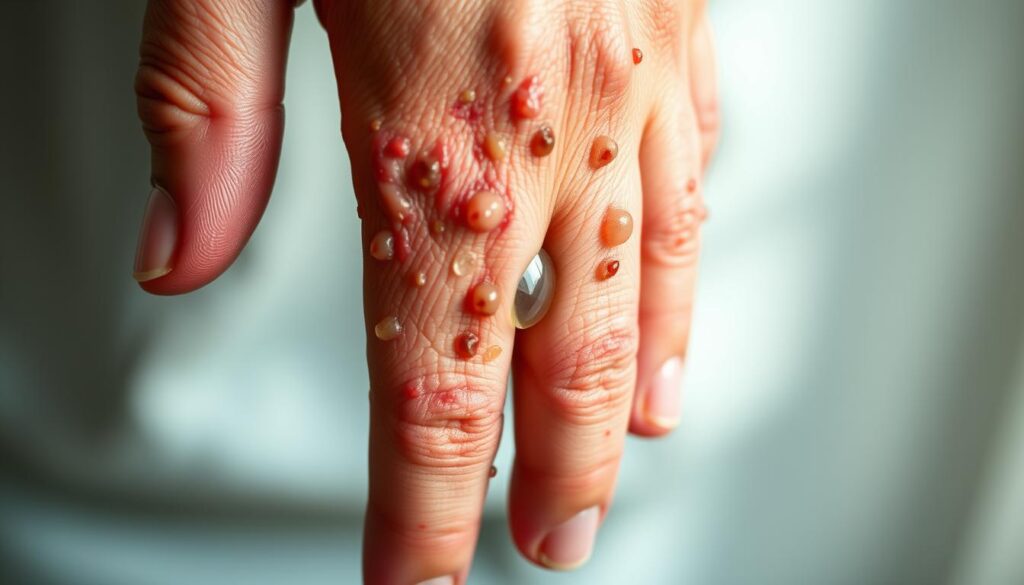
Dyshidrosis, or pompholyx, is a tricky skin issue that can mess up your daily routine. It causes tiny, fluid-filled blisters on your hands and feet1. These blisters can be itchy and uncomfortable2.
This type of eczema mostly hits young adults between 20 and 40. Women tend to get it more often than men2. The blisters can stick around for weeks and often come back1.
Dyshidrosis isn’t just skin-deep. Stress, contact with metals, and sensitive skin can set it off1. Knowing what triggers your symptoms is vital for keeping your skin healthy.
Key Takeaways
- Dyshidrosis creates small, fluid-filled blisters on hands and feet
- The condition is more common in women aged 20-40
- Stress and metal exposure can trigger symptoms
- Blisters typically last weeks and may recur
- Professional medical diagnosis is recommended
Understanding Dyshidrosis
Dyshidrosis is a tough skin problem that affects many people’s lives. This special type of foot and hand eczema can cause a lot of discomfort. It often leads to frustration for those with recurrent palmoplantar dermatitis3.
What is Dyshidrosis?
Dyshidrosis is a long-lasting hand eczema with small, very itchy blisters. These blisters usually show up on palms, finger sides, and foot soles. The skin eruptions can be uncomfortable and sometimes painful.
This condition can make everyday tasks hard to do4.
How Common is Dyshidrosis?
This skin issue mainly affects adults. Some groups have higher rates:
- Adult females between 20-40 years old are most susceptible3
- Approximately 50% of individuals with dyshidrosis already have a history of atopic dermatitis3
- Flare-ups typically last 2-3 weeks4
Risk Factors for Developing Dyshidrosis
Some key factors can raise your chances of getting this skin condition:
- Genetic predisposition4
- Exposure to metals like nickel and cobalt3
- Seasonal allergies4
- Stress and environmental triggers4
- Working with cement or metals4
Understanding your specific triggers is crucial for managing dyshidrosis effectively.
Remember, each person’s experience with dyshidrosis can be unique, and professional medical advice is essential for proper diagnosis and treatment.
Recognizing Symptoms of Dyshidrosis
Dyshidrosis is a tricky skin condition with unique symptoms. Knowing these signs helps identify and manage it well with proper medical guidance. Early detection can lead to better treatment outcomes.
Typical Symptoms to Watch For
Dyshidrosis, also called vesicular eczema, has several key symptoms. These include tiny, itchy blisters filled with fluid on palms, fingers, and soles.
- Tiny, fluid-filled itchy blisters on palms, fingers, and soles
- Clusters of blisters resembling small tapioca pearls5
- Intense itching and burning sensations
- Skin that becomes dry, red, and prone to peeling
Palmoplantar eczema symptoms can range from mild to severe. Some people have small outbreaks, while others face extensive skin changes6.
The blisters often appear suddenly and can cause pain. This can lead to significant discomfort for those affected.
When to Seek Medical Attention
Not all skin issues need immediate medical care. However, certain signs suggest you should see a doctor:
- Blisters spread beyond hands and feet
- Symptoms persist for more than a few weeks
- Signs of secondary bacterial infection
- Significant pain or disruption to daily activities5
Early diagnosis and treatment can prevent complications and provide faster relief from your symptoms.
About 20% of patients in skin clinics have dyshidrotic eczema6. It’s a common skin problem. Spotting symptoms early helps manage your skin health better.
Effective Treatment Options for Dyshidrosis
Dyshidrosis management offers various treatment paths for eczema relief. The right approach can greatly improve your skin condition. Dermatologists often create personalized strategies for your specific dyshidrosis case7.
Home Remedies for Symptom Relief
Begin treating dyshidrosis with simple home methods. Cool, moist compresses soothe irritated skin, while antihistamines help manage itching7.
Controlling sweating is key to managing flare-ups8. Track your nickel and cobalt intake to reduce symptom severity8.
Medical Treatments and Prescription Options
For stubborn cases, medical help is crucial. Topical corticosteroids clear blisters but may thin skin with long-term use7.
Immune-suppressing ointments like tacrolimus offer an alternative7. Some cases may benefit from narrowband UVB light therapy if other treatments fail7.
Preventive Measures for Future Outbreaks
Prevent future dyshidrosis outbreaks with a proactive approach. Stress management techniques can greatly reduce flare-ups8.
An allergist can help identify triggers and create a prevention plan8. Self-care is vital, especially during your 20s through 40s when dyshidrosis is most active8.
FAQ
What exactly is dyshidrosis?
Dyshidrosis is a type of eczema causing small, fluid-filled blisters on hands and feet. It’s also called pompholyx or vesicular dermatitis. These itchy, painful blisters can last for weeks and often come back.
The blisters usually appear in clusters. They can make your skin feel uncomfortable and sensitive.
Who is most likely to develop dyshidrosis?
Women are more likely to get dyshidrosis. It usually affects people between 20 and 40 years old. You’re at higher risk if you have atopic dermatitis, sensitive skin, or allergies.
Genetic factors may play a role. People with family members who’ve had dyshidrosis might be more susceptible.
What triggers dyshidrosis outbreaks?
Many things can trigger dyshidrosis. These include stress, exposure to metals like nickel and cobalt, and seasonal allergies. Hot and humid weather and frequent hand washing can also cause outbreaks.
Your personal triggers might be specific allergens or environmental conditions. Emotional stress can also irritate your skin.
What are the typical symptoms of dyshidrosis?
Small, fluid-filled blisters appear on palms, soles, and sides of fingers and toes. These blisters often look like tapioca and can be very itchy and painful.
As they heal, your skin might become dry, red, and start peeling. In severe cases, small blisters can join to form larger ones.
How can I treat dyshidrosis at home?
Apply cool, moist compresses to affected areas. Use over-the-counter antihistamines for itch relief. Keep your skin moisturized and use mild cleansers.
Avoid potential triggers that irritate your skin. Wearing protective gloves can help prevent further irritation.
When should I see a doctor about dyshidrosis?
See a doctor if the rash is severe or doesn’t improve with home treatment. Seek help if it spreads beyond your hands and feet.
Watch for signs of bacterial infection like increased pain, swelling, or pus. Consult a dermatologist if dyshidrosis significantly impacts your daily life.
What medical treatments are available for dyshidrosis?
Doctors may prescribe topical corticosteroids or phototherapy. Severe cases might need oral steroids or immunosuppressants. Botulinum toxin injections can help with excessive sweating.
A dermatologist might do patch testing to find specific allergens triggering your condition.
Can dyshidrosis be prevented?
You can’t completely prevent dyshidrosis, but you can manage your risk. Identify and avoid triggers, manage stress, and use mild skincare products.
Apply moisturizers regularly and protect your hands from irritants. A consistent skincare routine can help reduce outbreaks.
Source Links
- Dyshidrosis – Symptoms and causes – https://www.mayoclinic.org/diseases-conditions/dyshidrosis/symptoms-causes/syc-20352342
- What is dyshidrotic eczema and how do you know if you have it? – https://nationaleczema.org/eczema/types-of-eczema/dyshidrotic-eczema/
- Decoding the mystery of dyshidrotic eczema – https://nationaleczema.org/blog/decoding-dyshidrotic-eczema/
- Dyshidrotic Eczema (Dyshidrosis) – https://www.healthline.com/health/dyshidrotic-eczema
- Dyshidrotic eczema: What to know about summer finger bumps – https://www.medicalnewstoday.com/articles/summer-finger-bumps
- Dyshidrotic eczema (Pompholyx, Vesicular Hand Eczema) — DermNet – https://dermnetnz.org/topics/dyshidrotic-eczema
- Dyshidrosis – Diagnosis and treatment – https://www.mayoclinic.org/diseases-conditions/dyshidrosis/diagnosis-treatment/drc-20352348
- Eczema types: Dyshidrotic eczema diagnosis and treatment – https://www.aad.org/public/diseases/eczema/types/dyshidrotic-eczema/treatment

