
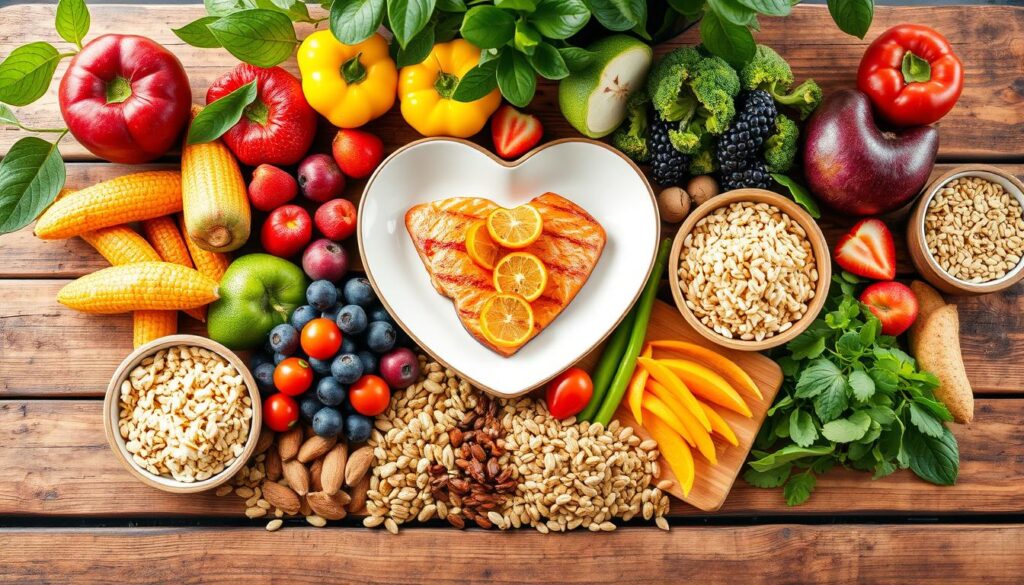
Smart food choices can nourish and protect your heart. Whole foods are key to maintaining peak cardiovascular health. They provide essential nutrients that support your body’s most important muscle1.
Experts suggest a balanced diet with fresh, nutrient-dense ingredients. Focus on fruits, vegetables, whole grains, and lean proteins. These foods support heart wellness and overall vitality1.
Your diet directly impacts your heart health. Each meal is a chance to invest in your long-term well-being. Combine good nutrition with regular exercise for the best results1.
Aim for 150 minutes of moderate exercise weekly. This mix of healthy eating and active living creates a solid heart protection strategy1.
Key Takeaways
- Prioritize whole foods for optimal heart health
- Balance nutrition with regular physical activity
- Choose nutrient-dense ingredients
- Minimize processed and sugary foods
- View each meal as an opportunity for heart wellness
Understanding the Basics of Heart-Healthy Diet
A heart-healthy diet is key to optimal cardiovascular wellness. Good nutrition helps manage cholesterol and supports overall health. Smart food choices can protect your heart and boost your well-being.
Plant-based eating can greatly benefit your heart health. The American Heart Association offers guidelines for a nutritious diet that supports heart function2.
Essential Food Groups for Cardiovascular Health
Focus on anti-inflammatory foods that nourish and protect your heart. These food groups are vital:
- Vegetables and fruits: Aim for 7-9 servings daily2
- Whole grains: 3-6 servings per day2
- Lean proteins: Plant-based and low-mercury fish options2
- Low-fat dairy: 1-3 servings daily2
Recommended Daily Portions
| Food Group | Daily Serving Recommendation |
|---|---|
| Vegetables | 4+ servings |
| Fruits | 2-4 servings |
| Whole Grains | 3-6 servings |
| Protein | 5.5 ounces (focus on plant-based sources) |
“Your diet is a powerful tool for heart protection. Choose wisely, eat mindfully.” – Registered Dietitian Julia Zumpano2
Limit sodium to 2,300 milligrams per day. Keep added sugars below 6% of total daily calories3. These guidelines will help you take big steps toward a healthier heart.
Smart Food Choices for Better Heart Health
A heart-healthy diet focuses on nutrient-rich foods. Your food choices can greatly impact your heart’s health. Picking the right foods helps protect your heart and keeps you healthy.
- Fresh vegetables and fruits packed with anti-inflammatory properties4
- Whole grains that provide essential fiber and nutrients5
- Lean proteins from diverse sources
- Healthy fats, especially Omega-3 Fatty Acids
Omega-3 Fatty Acids are crucial for heart protection. The American Heart Association suggests eating two servings of salmon or oily fish weekly. These fats help reduce inflammation and support heart function4.
| Food Group | Recommended Intake | Heart Health Benefits |
|---|---|---|
| Whole Grains | 3-5 servings daily | Reduces cholesterol, supports fiber intake5 |
| Seafood | 2 servings weekly | Provides Omega-3 Fatty Acids4 |
| Fruits/Vegetables | 5-9 servings daily | Anti-inflammatory properties |
“Your diet is a bank account. Good food choices are good investments.” – Bethenny Frankel
Include anti-inflammatory foods in your meals for better heart health. Add walnuts to help lower cholesterol levels4. Blueberries, rich in anthocyanins and fiber, also offer heart benefits4.
Smart food choices are about balance and variety. Make informed decisions that nourish your heart and support your overall well-being.
Managing Dietary Factors for Heart Protection
Smart food choices are key to heart health. Knowing how to manage sodium, cholesterol, and fats can boost your heart’s well-being6.
Sodium Reduction Strategies
Controlling sodium is vital for heart health. The daily limit is 2,300 mg, with 1,500 mg being ideal6.
Here are ways to cut down on sodium:
- Read food labels carefully
- Choose low-sodium packaged foods
- Use herbs and spices instead of salt
- Rinse canned vegetables before use
Cholesterol Management and Fat Intake
Managing fat intake is crucial for heart health. The DASH eating plan recommends limiting saturated fats and focusing on heart-friendly options6.
Anti-inflammatory foods can greatly benefit your diet. Try adding these to your meals:
- Fatty fish rich in omega-3
- Nuts and seeds
- Olive oil
- Colorful fruits and vegetables
Your heart health is directly influenced by the foods you choose to eat daily.
Your doctor should check cholesterol levels every 4 to 6 years7. Making smart food choices can help protect your heart6.
Conclusion
Your journey to better heart health starts with whole foods and smart eating choices. A heart-friendly diet isn’t about strict rules. It’s about creating lasting habits that fuel your body8.
The American Heart Association suggests eating nutrient-rich foods like veggies, fruits, and whole grains. They also recommend cutting back on processed meats and sugary drinks8.
These diet changes can greatly boost your heart health. Sadly, less than 1% of US adults follow ideal eating guidelines9. Adding plant-based foods and cutting saturated fats can lower heart disease risk8.
Try proven diets like the Mediterranean or DASH diet for full heart protection9. Your heart-healthy diet is a lifelong pledge to wellness.
Small, steady changes can lead to big health improvements. Stay focused on your food choices. See your diet as a powerful tool for preventing diseases and keeping your heart strong.
FAQ
What is a heart-healthy diet?
A heart-healthy diet focuses on nutritious foods that support cardiovascular health. It includes vegetables, fruits, whole grains, lean proteins, and healthy fats. This eating plan limits saturated fats, trans fats, added sugars, and sodium.
How many servings of fruits and vegetables should I eat daily?
The American Heart Association suggests 2½ cups of vegetables and 2 cups of fruits daily. These foods offer vitamins, minerals, and fiber while being low in calories. Choose colorful produce to maximize nutritional benefits.
What are the best protein sources for a heart-healthy diet?
Choose lean proteins like skinless poultry and fish rich in omega-3 fatty acids. Legumes and plant-based proteins such as soy products are also good options. These provide essential nutrients without excess saturated fat.
How can I reduce sodium intake?
Aim for 2,300 mg of sodium daily, with an ideal target of 1,500 mg. Read food labels and choose low-sodium options. Avoid added salt and use herbs and spices for flavoring instead.
Be careful with processed and packaged foods, which often contain hidden sodium. Cooking at home allows better control over sodium content.
What types of fats should I consume for heart health?
Focus on unsaturated fats from olive oil, avocados, nuts, and fatty fish. Limit saturated fats to less than 6% of your daily calories. Avoid trans fats completely.
Include omega-3 fatty acids from flaxseeds, walnuts, and cold-water fish. These fats support heart health and overall well-being.
How can I make heart-healthy choices when eating out?
Choose grilled or baked dishes instead of fried foods when dining out. Ask for sauces and dressings on the side. Opt for vegetables as side dishes and control portion sizes.
Look for menu items with lean proteins, whole grains, and fresh vegetables. These choices support your heart-healthy eating plan.
Can a heart-healthy diet help lower cholesterol?
Yes, a diet rich in whole grains, fruits, vegetables, and lean proteins can help manage cholesterol. Foods like oatmeal, beans, nuts, and fatty fish can lower LDL (bad) cholesterol.
These foods also increase HDL (good) cholesterol. Combine a healthy diet with regular exercise for the best results.
What are some anti-inflammatory foods for heart health?
Anti-inflammatory foods include berries, leafy greens, fatty fish, nuts, olive oil, and whole grains. These foods help reduce inflammation in the body, which is linked to heart disease.
Include a variety of these foods in your diet. They support cardiovascular health and overall well-being.
Source Links
- The American Heart Association Diet and Lifestyle Recommendations – https://www.heart.org/en/healthy-living/healthy-eating/eat-smart/nutrition-basics/aha-diet-and-lifestyle-recommendations
- How To Create a Heart-Healthy Diet Plan – https://health.clevelandclinic.org/heart-healthy-diet
- How to Eat a Heart Healthy Diet – University Health Center – https://healthcenter.uga.edu/how-to-eat-a-heart-healthy-diet/
- 21 Foods That Can Save Your Heart – https://www.webmd.com/heart-disease/ss/slideshow-foods-to-save-your-heart
- Heart-Healthy Foods: Shopping List – MyHealthfinder – https://odphp.health.gov/myhealthfinder/health-conditions/heart-health/heart-healthy-foods-shopping-list
- Managing Blood Pressure with a Heart-Healthy Diet – https://www.heart.org/en/health-topics/high-blood-pressure/changes-you-can-make-to-manage-high-blood-pressure/managing-blood-pressure-with-a-heart-healthy-diet
- Preventing Heart Disease – https://www.cdc.gov/heart-disease/prevention/index.html
- Heart-healthy diet Information | Mount Sinai – https://www.mountsinai.org/health-library/report/heart-healthy-diet
- A Heart-Healthy Diet for Cardiovascular Disease Prevention: Where Are We Now? – https://pmc.ncbi.nlm.nih.gov/articles/PMC10128075/

