
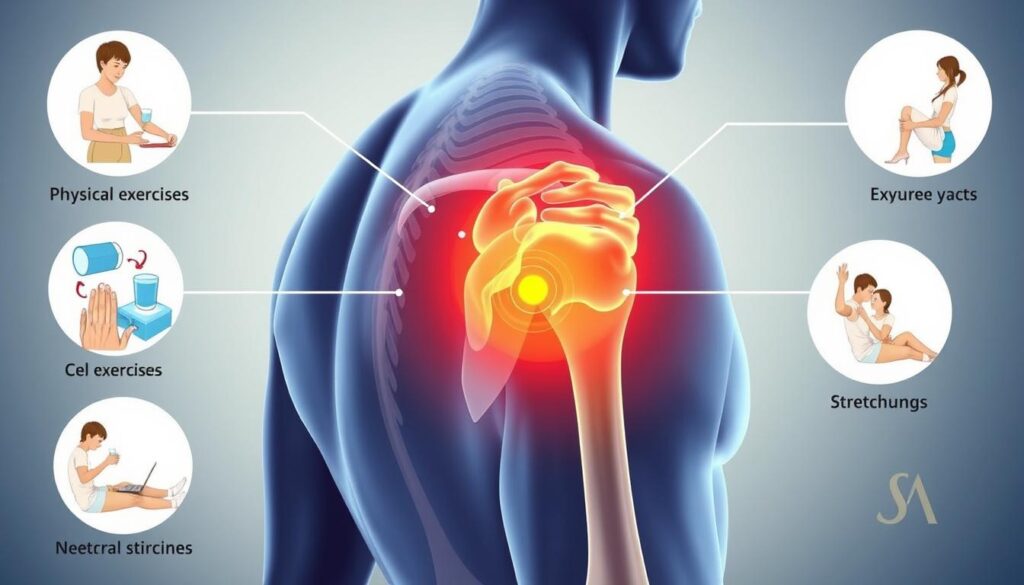
Shoulder pain can limit your mobility and affect daily life. Frozen shoulder, or adhesive capsulitis, is a condition that impacts people over 40, especially women12. It can significantly reduce your quality of life.
Frozen shoulder occurs when tissue around your shoulder joint becomes inflamed and stiff. The condition progresses through stages, each marked by increased stiffness and pain. Symptoms typically improve over 1 to 3 years1.
Certain factors increase your risk of frozen shoulder. Diabetes is a major risk factor, with 10% to 20% of diabetics experiencing this condition2. Extended shoulder immobility after surgery or injury also raises the risk1.
Key Takeaways
- Frozen shoulder typically affects people between 40-60 years old
- The condition can last 1-3 years with gradual symptom improvement
- Women are more prone to developing frozen shoulder
- Diabetes increases the risk of frozen shoulder
- Treatment involves multiple approaches including physical therapy
Understanding Frozen Shoulder and Its Stages
Frozen shoulder limits your shoulder’s movement and can disrupt daily activities. This disorder progresses through distinct stages, affecting mobility and causing discomfort3.
The condition often affects people aged 40 to 60, with women at higher risk. Health issues like diabetes or thyroid disorders can increase chances of shoulder immobility34.
The Freezing Stage: Initial Pain and Stiffness
The freezing stage brings gradual pain and increasing stiffness to your shoulder. This phase lasts 6 to 9 weeks and is the most painful period5.
Pain increases, and your shoulder’s range of motion becomes noticeably limited3.
The Frozen Stage: Peak Immobility
The frozen stage shows peak shoulder immobility with significant stiffness. It lasts about 4 to 6 months, severely restricting shoulder movement4.
Pain might decrease, but your ability to move the shoulder remains very limited5.
The Thawing Stage: Gradual Recovery
The thawing stage marks your path to recovery. This phase can last 6 months to 2 years as your shoulder regains mobility5.
Most patients eventually experience complete pain relief and near-normal shoulder function5.
Patience and consistent treatment are key to managing frozen shoulder effectively.
- Total recovery can take up to 1-2 years
- Physical therapy plays a crucial role
- Individual recovery experiences vary
Treatment Options and Pain Management
Frozen shoulder treatment requires a comprehensive approach to Shoulder Rehabilitation. The main goal is to manage pain and restore mobility. Physical Therapy for Shoulder is crucial in your recovery process6.
- Pain Management: Over-the-counter medications can help reduce discomfort
- Targeted Physical Therapy: Gentle stretching exercises to improve mobility
- Advanced Medical Interventions: Specialized treatments for persistent cases
Physical therapy sessions are vital for recovery7. You might attend therapy one to three times per week. Treatments typically last between one to six weeks.
Home exercises complement professional interventions. They help you regain shoulder function7.
| Treatment Option | Duration | Expected Outcome |
|---|---|---|
| Physical Therapy | 1-6 weeks | Improved Mobility |
| Corticosteroid Injections | Short-term | Pain Relief |
| Surgical Intervention | 3-6 months | Complete Recovery |
Recovery is a journey of patience and persistent effort.
Severe cases may require medical procedures. Corticosteroid injections or surgical manipulation might be recommended6. Surgical options are considered when conservative treatments don’t improve range of motion8.
Complete recovery can take up to six to nine months. This depends on your condition and treatment compliance7. Stay committed to your plan to restore shoulder strength and flexibility.
Conclusion
Grasping frozen shoulder basics helps manage pain and stiffness. Most people face this mid-life, peaking around 56. About 90% improve with targeted treatments for pain control and motion restoration.
Your recovery timeline may differ, but staying active is vital. Medical studies show full resolution can take up to three years. Diabetics might face more complex symptoms and higher risks of shoulder stiffness.
Teaming up with healthcare pros can boost your healing. Conservative treatments often work well. For stubborn cases, surgical options like arthroscopic capsular release exist.
Most patients regain shoulder function. Many achieve full recovery or have minimal limitations. Patience and consistent care are key to beating frozen shoulder.
Keep up with your treatment plan. Move gently within your pain limits. Trust your body’s amazing ability to heal91011.
FAQ
What exactly is frozen shoulder?
Frozen shoulder is a condition that causes joint stiffness and pain. It happens when tissue around the shoulder joint thickens and tightens. This makes movement difficult and uncomfortable.
Who is most likely to develop frozen shoulder?
People aged 40-60, especially women, are at higher risk. Those with diabetes, thyroid issues, or recent shoulder injuries are more susceptible. These factors increase the chances of developing frozen shoulder.
How long does frozen shoulder typically last?
Frozen shoulder can last 1 to 3 years. It progresses through three stages: freezing, frozen, and thawing. Each stage has unique pain and mobility characteristics.
The freezing stage lasts 2-9 months. The frozen stage continues for 4-12 months. Finally, the thawing stage can take 5-24 months.
What are the primary treatment options for frozen shoulder?
Treatment includes pain management with over-the-counter medications and physical therapy. Corticosteroid injections may be used in some cases. Surgical interventions are rare.
The main goal is to manage pain and slowly restore shoulder movement. A tailored approach works best for each patient.
Can I prevent frozen shoulder from getting worse?
Early intervention is crucial for preventing worsening of frozen shoulder. Gentle movement within pain limits can help maintain mobility. Following a physical therapy program is also beneficial.
Working closely with healthcare providers can potentially speed up recovery. They can guide you through the best practices for your condition.
Are there any home remedies that can help with frozen shoulder?
Heat packs and gentle stretches can help manage symptoms at home. Over-the-counter pain relievers may also provide some relief. However, always consult a healthcare professional first.
They can provide a comprehensive treatment plan tailored to your needs. This ensures safe and effective management of your condition.
Is frozen shoulder a permanent condition?
Frozen shoulder is not permanent. Most people regain most or all of their shoulder mobility over time. Recovery can be slow, so patience is key.
Consistent treatment and following your doctor’s advice are crucial. These steps will help you recover more effectively.
Will I need surgery for frozen shoulder?
Surgery is rarely needed for frozen shoulder. Most cases improve with physical therapy, pain management, and corticosteroid injections. Arthroscopic surgery is only considered in very rare, severe cases.
Source Links
- Frozen shoulder – Symptoms and causes – https://www.mayoclinic.org/diseases-conditions/frozen-shoulder/symptoms-causes/syc-20372684
- What Is a Frozen Shoulder? – https://www.webmd.com/a-to-z-guides/what-is-a-frozen-shoulder
- Understanding Frozen Shoulder – https://www.saintlukeskc.org/health-library/understanding-frozen-shoulder
- 3 Stages of Frozen Shoulder: Orthopaedic Specialists: Orthopedics – https://www.orthopaedicspecialists.com/blog/3-stages-of-frozen-shoulder
- Stages of Treatment and Recovery After a Frozen Shoulder – https://www.verywellhealth.com/stages-of-frozen-shoulder-2549450
- Frozen Shoulder – Adhesive Capsulitis – OrthoInfo – AAOS – https://orthoinfo.aaos.org/en/diseases–conditions/frozen-shoulder/
- Frozen Shoulder – https://www.hopkinsmedicine.org/health/conditions-and-diseases/frozen-shoulder
- Frozen Shoulder (Capsulitis) Risk Factors & Treatments | HSS – https://www.hss.edu/condition-list_frozen-shoulder.asp
- Frozen shoulder – PMC – https://pmc.ncbi.nlm.nih.gov/articles/PMC1315655/
- Frozen Shoulder | Orthopedics & Sports Medicine – https://health.uconn.edu/orthopedics-sports-medicine/conditions-and-treatments/where-does-it-hurt/shoulder/frozen-shoulder/
- Frozen shoulder: A systematic review of therapeutic options – https://pmc.ncbi.nlm.nih.gov/articles/PMC4363808/

