
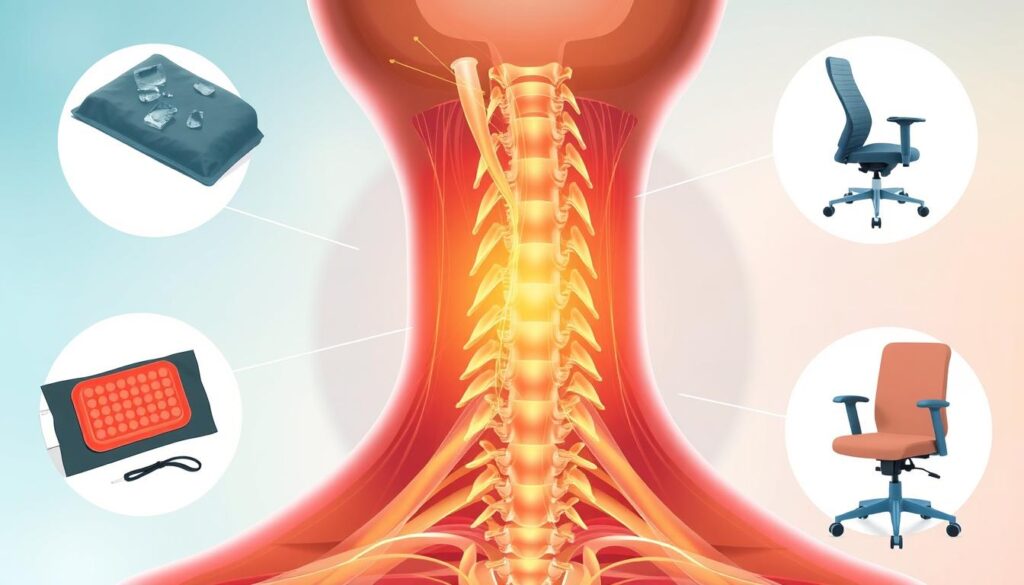
Neck pain can disrupt your daily life. It stems from various causes, like muscle strain or cervical spine disorders. Understanding the right treatment approach is key to managing this condition effectively1.
A mix of self-care and professional help works best for neck pain. Over-the-counter pain relievers offer quick relief2. Physical therapy can help through targeted massage and stretching exercises2.
Be careful when dealing with neck pain. Avoid heavy lifting or intense neck twisting2. Better posture and stress management can greatly reduce discomfort1.
Key Takeaways
- Neck pain has multiple potential causes, including muscle strain and poor posture
- Over-the-counter medications can help manage initial pain symptoms
- Physical therapy is an effective treatment approach
- Proper posture and stress management are critical for neck health
- Persistent neck pain requires professional medical evaluation
Understanding Neck Pain: Causes and Symptoms
Neck pain can disrupt your daily life and well-being. Knowing its causes and signs is key for proper care.
Effective management starts with understanding what’s behind your discomfort. Recognizing warning signs early can lead to better treatment outcomes.
Common Triggers of Cervical Pain
Several factors can contribute to neck discomfort, including:
- Poor posture during computer work or smartphone use3
- Prolonged periods of holding your head in one position3
- Muscle strains from overuse or sudden movements4
- Sleeping in awkward positions
Specific conditions can also cause significant neck pain. These include herniated discs, whiplash injuries, pinched nerves, and cervical spondylosis4.
Various sources can lead to these issues. They range from workplace ergonomics to physical activities and underlying health conditions.
Recognizing Warning Signs
Be alert to these potential indicators of serious neck problems:
- Persistent pain that doesn’t improve with rest
- Numbness or tingling in arms and hands
- Weakness in upper extremities
- Pain radiating to shoulders or arms3
*”Early recognition of neck pain symptoms can prevent long-term complications and guide appropriate treatment,”* says medical experts.
Seek medical help if you have severe or lasting neck pain. Specialists can offer thorough diagnosis and treatment options3.
Take steps to prevent neck pain. Maintain good posture, take regular breaks, and set up ergonomic workspaces3.
Professional Treatment Options and Diagnosis
Neck pain can disrupt your daily routine. It affects many people, with one in five seeking medical help5. Proper diagnosis and treatment are key to managing neck pain effectively.
Diagnosing neck pain requires a thorough evaluation. This includes reviewing your medical history and conducting a physical exam. Advanced imaging tests like X-rays or MRI may also be needed.
- Detailed medical history review
- Thorough physical examination
- Advanced imaging tests such as X-rays or MRI
Neck pain can have various causes. These include degenerative disc disease, muscle strains, and other health issues6. Treatment plans are tailored to your specific diagnosis and pain severity.
“Effective neck pain treatment requires a personalized, multidisciplinary strategy”
Treatment options for cervicogenic headache and neck pain are diverse. They range from non-surgical methods to advanced procedures.
- Non-surgical interventions:
- Physical therapy
- Pain management techniques
- Hot and cold therapy
- Medication management
- Advanced treatments:
- Steroid injections
- Radiofrequency ablation
- Specialized pain management strategies
Chronic cases may need a more comprehensive approach. This could involve specialists like rheumatologists or pain management experts. Neck pain treatment can offer lasting relief and boost your quality of life6.
Conclusion
Neck pain can greatly affect your daily life. Understanding its complexities helps you manage cervical pain effectively. Research shows that non-specific neck pain affects about two-thirds of people, especially in middle age7.
Proactive management involves spotting warning signs early. Medical studies reveal that chronic neck pain develops in about 10% of individuals7. You can reduce your risk by using proper ergonomics, stretching regularly, and managing stress8.
Professional guidance is crucial for neck pain relief. About 10% of adults experience neck pain at any time9. Less than 5% need surgery, but consulting healthcare professionals can provide personalized treatment strategies.
Most acute neck pain cases can be managed conservatively. The focus should be on prevention and overall wellness9. Your commitment to understanding and addressing neck pain is vital.
Stay informed and practice preventive measures. Seek medical advice when needed. This approach can help manage and reduce neck pain’s impact on your life.
FAQ
What are the most common causes of neck pain?
Neck pain can stem from various sources. Muscle strain, poor posture, and prolonged computer use are frequent culprits. Injuries, sudden movements, and degenerative conditions like cervical spondylosis can also cause discomfort.
Physical activities and stress may contribute to neck pain. Underlying health conditions can play a role in neck discomfort too.
When should I seek medical attention for neck pain?
Consult a doctor if pain lasts more than a week. Seek help for numbness, tingling, or weakness in your arms or hands. Get immediate medical attention if pain follows a significant injury.
See a healthcare professional if you have difficulty moving your neck. Severe headaches or fever accompanying neck pain require prompt medical evaluation.
What diagnostic tests are used to identify the cause of neck pain?
Diagnosis starts with a thorough medical history review and physical exam. Your doctor may recommend imaging tests to identify underlying conditions. X-rays, CT scans, and MRIs can reveal herniated discs, pinched nerves, or degenerative disc disease.
What treatment options are available for neck pain?
Treatment options range from over-the-counter pain relievers to prescription medications. Physical therapy and transcutaneous electrical nerve stimulation (TENS) can provide relief. In some cases, steroid injections or surgery may be necessary.
Alternative treatments like acupuncture, chiropractic care, and massage can also help. The best approach depends on the cause and severity of your neck pain.
How can I prevent neck pain?
Maintain good posture and use ergonomic workstations to prevent neck pain. Take regular breaks from prolonged activities and practice stress-reduction techniques. Do neck and shoulder exercises to improve flexibility and support.
Use proper sleeping positions and maintain a healthy weight. Regular stretching can also help prevent neck discomfort.
Can stress cause neck pain?
Yes, mental and emotional stress can lead to neck tension and pain. Stress often causes muscle tension in the neck and shoulders. This can result in cervicogenic headaches and chronic discomfort.
Try stress management techniques like meditation, yoga, and deep breathing exercises. These can help reduce neck pain associated with stress.
What are some home remedies for neck pain?
Apply ice or heat therapy for relief. Try gentle neck stretches and over-the-counter pain medications. Maintain good posture and use supportive pillows when sleeping.
Take warm showers and practice relaxation techniques to ease neck pain. For persistent or severe pain, always consult a healthcare professional.
Source Links
- Neck Pain and Shoulder Pain: WebMD – https://www.webmd.com/pain-management/neck-shoulder
- Neck pain or spasms – self care Information | Mount Sinai – https://www.mountsinai.org/health-library/selfcare-instructions/neck-pain-or-spasms-self-care
- Neck pain – Symptoms and causes – https://www.mayoclinic.org/diseases-conditions/neck-pain/symptoms-causes/syc-20375581
- Neck pain – https://www.healthdirect.gov.au/neck-pain
- Neck Pain: Initial Evaluation and Management – https://www.aafp.org/pubs/afp/issues/2020/0801/p150.html
- Find Out about Neck Pain Common Causes and Treatment Options – https://www.sciatica.com/blog/12-treatment-options-for-neck-pain/
- Neck pain – PMC – https://pmc.ncbi.nlm.nih.gov/articles/PMC2907992/
- Neck pain – https://www1.racgp.org.au/ajgp/2018/may/neck-pain
- Neck pain: Causes, Treatments, and Myths – https://spinehealth.org/article/neck-pain-causes-treatments-myths/

