
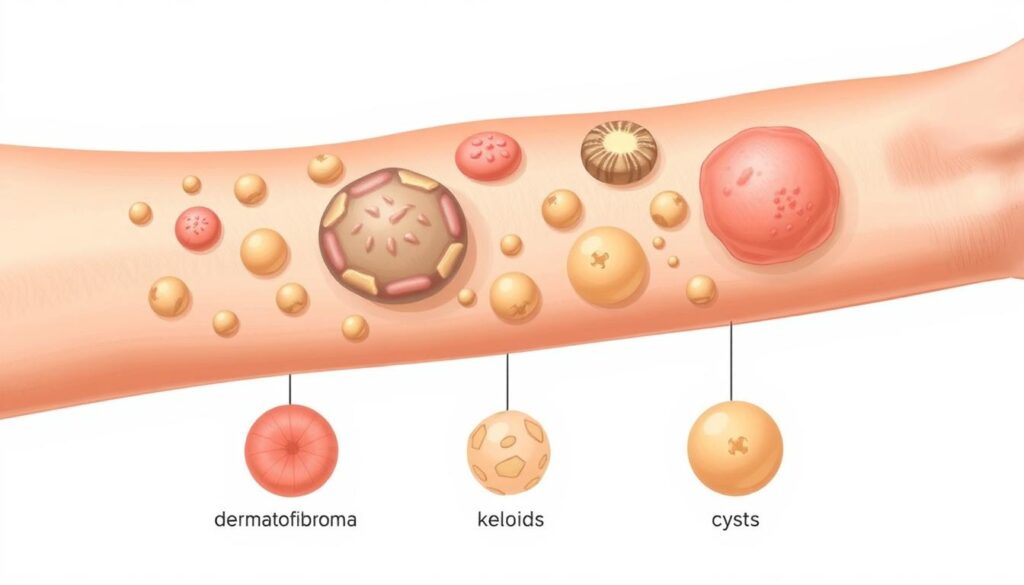
Skin bumps can be worrying, but understanding them is crucial for proper care. These bumps come in many forms and may signal different health conditions12. Some are harmless, while others might need a doctor’s look.
Acne is the most common skin issue in the U.S., often causing raised bumps1. Not all bumps are bad news. Cherry angiomas, for example, usually show up in your 20s or 30s1.
Your skin is complex and can develop bumps for many reasons. Infections, allergies, and genes can all play a role. While most bumps are safe, some may need medical help.
Key Takeaways
- Raised skin bumps are common and often harmless
- Professional medical evaluation is crucial for persistent or changing bumps
- Some skin growths develop naturally with age
- Not all bumps require immediate treatment
- Understanding your skin’s changes can help early detection
Understanding Common Types of Raised Skin Bump
Skin can develop various bumps and protrusions. These range from harmless to potentially concerning. Let’s explore common skin conditions that cause raised bumps on your body.
Benign Skin Growths
Some skin growths are completely harmless. They typically pose no health risks. These include common conditions like cherry angiomas and skin tags.
Cherry angiomas are small, bright red spots. They usually appear after age 40. Skin tags are soft, fleshy flaps of skin. They’re often found in friction-prone areas.
Lipomas are soft, fatty lumps that grow slowly under the skin. They are usually genetic3.
Inflammatory Skin Conditions
Some skin conditions cause raised bumps due to inflammation. Others result from cellular changes. These include keratosis pilaris, acne, and contact dermatitis.
Keratosis pilaris causes small, rough bumps. It’s due to keratin buildup in hair follicles. Acne is characterized by pimples, whiteheads, and blackheads3.
Contact dermatitis is an itchy, red rash. It results from exposure to allergens or irritants.
Infection-Related Bumps
Certain infections can appear as skin lesions or protrusions. These include folliculitis, boils, and cold sores.
Folliculitis is an infection of hair follicles. It’s often mistaken for acne. Boils are painful, pus-filled bumps. They’re caused by bacterial infections34.
Cold sores are painful blisters near the mouth. The herpes simplex virus causes them.
Remember, while many skin bumps are harmless, it’s crucial to monitor any changes and consult a dermatology professional if you’re concerned.
Always pay attention to your skin’s unique characteristics and seek professional medical advice for persistent or changing skin conditions.
Causes and Risk Factors of Skin Abnormalities
Raised skin bumps stem from various factors affecting your body’s largest organ. Genetics, environment, and lifestyle all play a role. Understanding these causes helps you manage your skin health better5.
- Genetic predisposition
- Hormonal changes
- Environmental exposures
- Underlying health conditions
Your risk of skin conditions can increase with certain factors. Age, sun exposure, and personal health history significantly impact skin abnormalities6.
“Skin health is a reflection of your overall well-being” – Dermatology Experts
Different raised skin bumps have unique triggers. Here’s a breakdown:
| Skin Condition | Primary Cause | Risk Factors |
|---|---|---|
| Acne | Hormonal Changes | Genetics, Stress |
| Skin Tags | Genetic Factors | Obesity, Diabetes |
| Viral Rashes | Infections | Immune System |
Skin cancer affects about 1 in 5 people during their lifetime7. Protect your skin from too much sun. Regular dermatology check-ups can help reduce potential risks.
Knowing these causes and risk factors helps you prevent skin abnormalities. Take action to keep your skin healthy and problem-free.
Treatment Options and Management Strategies
Skin growths and protrusions can be tricky to handle. Learning about treatment options helps manage these concerns better. Different conditions need specific care approaches.
Your treatment plan depends on the skin condition and its cause. Professional medical care and home approaches offer complete management. Dermatologists can guide you through the best options.
Medical Interventions for Skin Lumps
Dermatologists provide various treatments for skin conditions:
- Topical medications for inflammatory skin protrusions8
- Antibiotics for bacterial infections8
- Prescription creams for specific skin growths
- Surgical procedures for persistent bumps
Advanced medical treatments include:
- Biologics for moderate to severe conditions8
- Laser therapy for targeted skin growth removal
- Surgical excision for potentially problematic skin lumps
Home Care Management Strategies
You can boost your skin’s health with careful home care:
- Maintain a consistent daily skincare routine
- Use over-the-counter treatments for mild conditions
- Apply warm compresses to soothe irritated areas
- Avoid picking or squeezing skin bumps
Remember, professional medical advice is crucial for accurate diagnosis and treatment of skin conditions.
Other home care approaches include managing weight and practicing good hygiene. Using gentle skincare products can also help8. These methods support your skin’s overall health.
Conclusion
Understanding raised skin bumps empowers you to make smart health choices. Your skin tells a unique story. Knowing different skin abnormalities helps you care for your dermatological well-being. skin changes can occur at various life stages9.
Most raised skin bumps are harmless, but stay alert. Some growths may need professional care. People over 40 are more likely to develop skin lumps9.
Regular skin checks are important. Experts suggest monitoring changes in size, color, or texture of skin bumps10.
Prevention and early detection are crucial for managing skin abnormalities. Keep good skin hygiene and protect yourself from the sun. Seek professional advice if something seems unusual.
If a skin bump causes discomfort or grows quickly, see a dermatologist. This is always the smartest approach for your skin health9.
FAQ
What are the most common types of raised skin bumps?
Benign skin growths include cherry angiomas, seborrheic keratoses, and skin tags. Inflammatory conditions like acne and keratosis pilaris are also common. Infection-related bumps such as boils and cold sores can occur too.
These bumps vary in appearance, size, and texture. Most are typically harmless and don’t require medical attention.
When should I be concerned about a skin bump?
Seek medical advice if the bump is painful or changes in size or color. Also consult a doctor if it bleeds, grows rapidly, or causes significant discomfort.
Watch for unusual characteristics like asymmetry, irregular borders, or multiple color variations. If you notice these, it’s best to see a dermatologist.
Are raised skin bumps always a sign of a serious medical condition?
Most raised skin bumps are benign and harmless. They can result from hormonal changes, environmental exposures, or simple skin conditions.
However, some bumps might indicate underlying health issues. It’s important to monitor them and consult a doctor if you have concerns.
How can I prevent skin bumps?
Maintain good skin hygiene and avoid tight clothing. Protect your skin from sun exposure and manage stress levels.
Eat a balanced diet and stay hydrated. For acne prevention, use non-comedogenic skincare products and avoid touching your face.
Can home remedies help with raised skin bumps?
Home care can be helpful for certain bumps. Warm compresses soothe boils, while oatmeal baths can relieve itching.
Over-the-counter treatments with benzoyl peroxide or salicylic acid can help manage acne. Avoid picking or squeezing bumps to prevent infection.
What medical treatments are available for skin bumps?
Treatments vary based on the specific condition. Dermatologists may prescribe topical or oral medications for different skin issues.
Antibiotics help with bacterial infections, while antiviral drugs treat viral conditions. Some cases may require cryotherapy, laser treatment, or surgical excision.
Are some people more prone to developing skin bumps?
Yes, certain risk factors increase the likelihood of skin bumps. These include age, hormonal changes, genetic predisposition, and sun exposure.
Underlying health conditions can also play a role. People with a family history of skin abnormalities may be more susceptible.
Source Links
- Types of Raised Skin Bumps and Common Causes (with Pictures) – https://www.healthline.com/health/raised-skin-bump
- Lumps and Bumps: What’s on My Skin? – https://www.webmd.com/skin-problems-and-treatments/ss/slideshow-lumps-bumps-skin
- A Photo Guide To Pretty Much Any Bump You Could Find On Your Body – https://www.womenshealthmag.com/beauty/g19941507/body-bump-guide/
- What Are Common Skin Lumps and Bumps? – https://www.scripps.org/news_items/6669-skin-lumps-and-bumps-an-a-z-guide
- Should You Be Concerned About Your Raised Skin Bumps? – https://www.verywellhealth.com/raised-skin-bumps-5498997
- Raised skin bumps: Pictures, causes and treatment – https://www.medicalnewstoday.com/articles/raised-skin-bump
- Skin Lesions: What They Are, Types, Causes & Treatment – https://my.clevelandclinic.org/health/diseases/24296-skin-lesions
- Hidradenitis suppurativa – Diagnosis and treatment – https://www.mayoclinic.org/diseases-conditions/hidradenitis-suppurativa/diagnosis-treatment/drc-20352311
- Skin Lumps & Bumps: Types, Causes & Treatment Options – https://paragon-clinic.com/skin-lumps-and-bumps-symptoms/
- What’s to know about bumps on the skin? – https://www.medicalnewstoday.com/articles/316587

