
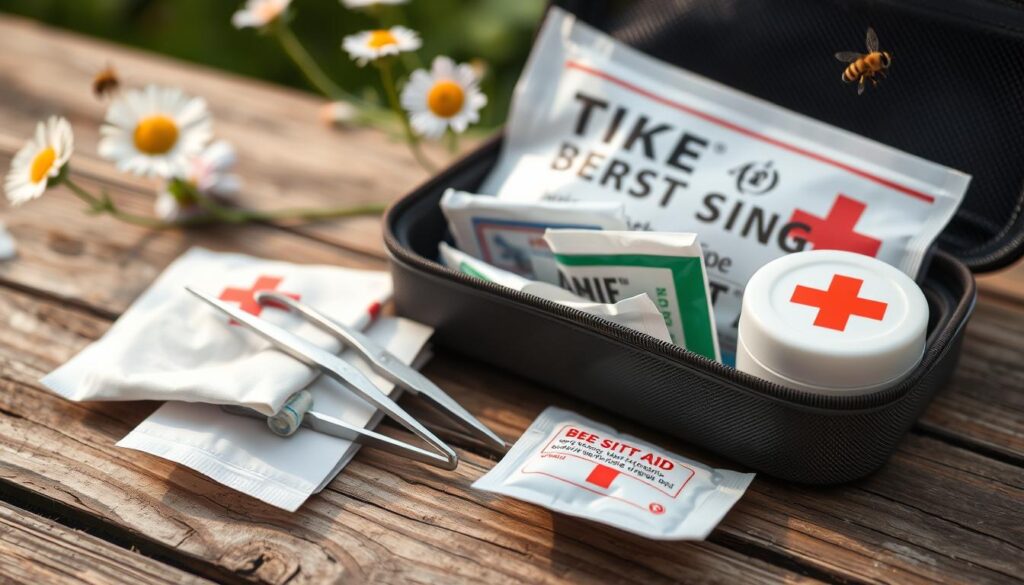
Bee stings can ruin a fun day outdoors. They cause pain and sometimes serious allergic reactions. Quick action is key to handling these unexpected insect encounters safely1.
This guide covers essential first aid for bee stings. You’ll learn how to manage bee venom and respond to insect stings effectively.
Bee stings aren’t just painful; they can be deadly. From 2000 to 2017, stinging insects killed an average of 62 Americans yearly1. Knowing how to respond is crucial.
Key Takeaways
- Recognize the difference between normal and allergic bee sting reactions
- Learn immediate first aid steps for bee stings
- Understand when to seek emergency medical care
- Know how to use an epinephrine autoinjector if needed
- Prevent potential serious complications from bee stings
Being ready is vital for dealing with bee stings2. Each year, 4.6 million people learn lifesaving first aid from groups like the American Red Cross2. These skills can be crucial during insect sting emergencies.
Understanding Bee Stings and Their Effects
Bee stings can be a minor nuisance or a serious health risk. When a honey bee stings, it releases apitoxin, a complex venom. This venom triggers various responses in the body3.
How Bee Venom (Apitoxin) Impacts Your Body
Apitoxin contains proteins and enzymes that cause immediate reactions. It’s injected directly into your skin, triggering inflammation. Most people can safely handle up to 10 stings per pound of body weight4.
Common Symptoms of a Bee Sting
- Instant burning pain at the sting site
- Localized swelling
- Redness and itching
- Small welt or bump
Understanding Reaction Types
Bee sting reactions vary in severity levels:
| Reaction Type | Symptoms | Duration |
|---|---|---|
| Mild Reaction | Local swelling, pain | A few hours |
| Moderate Reaction | Increased swelling, itching | 1-2 days |
| Severe Reaction | Anaphylaxis symptoms | Requires immediate medical attention |
Insect allergy affects a small portion of people. Less than 1% will have a severe anaphylactic reaction to a bee sting4. Those with previous severe reactions have a 50% chance of anaphylaxis in future encounters5.
Understanding your body’s response to bee venom is crucial for proper treatment and prevention.
Venom immunotherapy can help those with severe insect allergies build tolerance. It can also lower future reaction risks. Always talk to a doctor if you’ve had a significant reaction to a bee sting5.
Immediate First Aid for a Bee Sting
Quick action after a bee sting can reduce pain and prevent problems. Your main goal is to remove the stinger and control swelling fast6.
- Move to a safe area to prevent additional stings
- Remove the stinger quickly by scraping with a credit card or fingernail
- Wash the affected area thoroughly with soap and water
- Apply a cold compress to reduce pain and swelling
To manage swelling, use antihistamines. They control allergic reactions and reduce itching. Hydrocortisone cream can help with hives and local inflammation7.
Remember: Avoid scratching the sting site to prevent potential infection.
For mild reactions, use over-the-counter pain relievers to manage discomfort. Elevate the affected limb to reduce swelling and speed up healing6.
| Treatment Step | Purpose |
|---|---|
| Stinger Removal | Prevent continued venom injection |
| Cold Compress | Reduce pain and inflammation |
| Antihistamines | Control allergic reactions |
Caution: Seek immediate medical attention if you experience severe allergic symptoms or multiple stings7.
When to Seek Emergency Medical Care
Bee stings can quickly become life-threatening. Knowing the signs of a severe allergic reaction is crucial. It could save a life when emergency care is needed.
Identifying Critical Symptoms of Anaphylaxis
Anaphylaxis, a severe allergic reaction to bee stings, can develop fast. Be alert for these warning signs8:
- Difficulty breathing
- Swelling of the face, mouth, or throat
- Fainting or dizziness
- Chest tightness
- Widespread hives
- Nausea or vomiting
Anaphylaxis is extremely dangerous. About 100 people die yearly from insect sting allergic reactions8. For children, severe reactions happen in 4 out of 1,000 cases9.
Epinephrine Autoinjector: Your Emergency Lifeline
An Epinephrine Autoinjector is vital if you’re allergic to bee stings. Here’s how to use it:
- Remove the safety cap
- Press firmly against the outer thigh
- Hold for several seconds
- Call 911 immediately after use
Emergency Response Protocol
During an emergency, follow these steps:
- Lie down with legs elevated
- Loosen tight clothing
- Avoid drinking anything
- If trained, prepare to administer CPR
Remember, quick action can prevent a potentially fatal allergic reaction.
Seek immediate medical help for severe symptoms. Your fast response could save a life9.
Conclusion
Bee sting reactions are crucial for outdoor safety. Up to 25% of people may experience large local reactions after insect stings. About 3.5% can develop life-threatening anaphylaxis, highlighting the need for proper first aid knowledge10.
Allergy management starts with prevention and preparedness. If you’ve had allergic reactions before, you’re 60% likely to have similar or worse future encounters11. An allergist can help create a personalized plan to reduce your risk.
Your outdoor safety plan should include protective clothing and surroundings awareness. Carry an epinephrine autoinjector if you’re at high risk. Medical research improves our understanding of bee venom reactions, enhancing protection against dangerous encounters.
Stay informed, prepared, and cautious to minimize bee sting risks. This approach lets you enjoy outdoor activities with more confidence and peace of mind.
FAQ
How quickly should I remove a bee stinger?
Remove the bee stinger within 30 seconds of being stung. Use a credit card or fingernail to scrape it off horizontally. Quick removal limits venom injection into your skin.
What are the signs of a severe allergic reaction to a bee sting?
Severe allergic reactions include difficulty breathing and throat swelling. Other symptoms are dizziness, fainting, rapid pulse, nausea, or vomiting. Seek emergency medical help if you experience these symptoms.
How can I reduce pain and swelling after a bee sting?
Apply a cold compress to the sting site and elevate the affected limb. Use over-the-counter antihistamines or hydrocortisone cream for relief. Taking an oral pain reliever can also help manage discomfort.
When should I use an epinephrine autoinjector?
Use an EpiPen if you’re experiencing signs of a severe allergic reaction. These include difficulty breathing, throat swelling, or dizziness. Press it firmly against your outer thigh for several seconds.
Then, seek immediate medical attention.
Are some people more at risk for severe bee sting reactions?
Yes, individuals with known bee sting allergies are at higher risk. They should always carry an epinephrine autoinjector and wear a medical alert bracelet. Consulting an allergist for venom immunotherapy can help manage potential reactions.
How can I prevent bee stings?
Wear light-colored clothing and avoid strong fragrances to minimize bee sting risks. Stay calm around bees and avoid areas with high bee activity. Be cautious near flowering plants, garbage cans, and food areas.
What should I do if I get multiple bee stings?
Move to a safe area immediately if you receive multiple bee stings. Remove all stingers and monitor for allergic reactions. Seek medical attention promptly.
Multiple stings can introduce more bee venom, increasing the risk of a severe reaction.
Source Links
- Bee Sting Treatment and Home Remedies: What Works? – https://www.healthline.com/health/outdoor-health/home-remedies-for-bee-stings
- Insect Bites and Stings: Symptoms and First Aid | Red Cross – https://www.redcross.org/take-a-class/resources/learn-first-aid/insect-bites-and-stings?srsltid=AfmBOoo8KmW3S_rWKhNQ9mOndnOhFjoAuPckwDwmbGKAuJG2YBZb0n4s
- How Do I Treat a Bee Sting? – https://my.clevelandclinic.org/health/diseases/25093-bee-sting
- Bee Stings 101 : USDA ARS – https://www.ars.usda.gov/pacific-west-area/tucson-az/carl-hayden-bee-research-center/docs/bee-safety/bee-stings-101/
- Bee sting – Symptoms and causes – https://www.mayoclinic.org/diseases-conditions/bee-stings/symptoms-causes/syc-20353869
- Bee sting – Diagnosis and treatment – https://www.mayoclinic.org/diseases-conditions/bee-stings/diagnosis-treatment/drc-20353874
- Insect bites and stings: First aid – https://www.mayoclinic.org/first-aid/first-aid-insect-bites/basics/art-20056593
- When to Worry About an Insect Sting – https://www.scripps.org/news_items/5806-when-should-you-worry-about-an-insect-sting
- Bee or Yellow Jacket Sting – https://www.seattlechildrens.org/conditions/a-z/bee-or-yellow-jacket-sting/
- Insect Stings: Clinical Features and Management – https://pmc.ncbi.nlm.nih.gov/articles/PMC3334720/
- Bee and wasp stings: Symptoms, pictures, and treatment – https://www.medicalnewstoday.com/articles/297999

