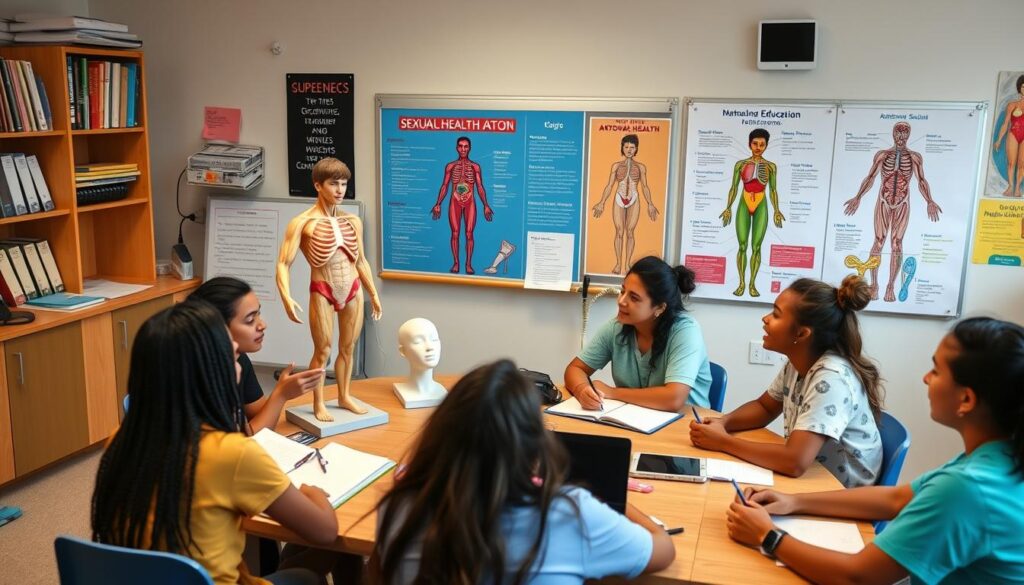
Sexual curiosity is a natural part of growing up. Teens need thoughtful guidance to understand their changing bodies and emotions. Inclusive education helps young people navigate complex feelings about sexuality.
Accurate info is key for making smart choices about sexual health. Open, honest talks are the first step in understanding sexuality. Teens face many sexual health challenges, from unexpected pregnancies to STD risks.
A sex-positive approach celebrates diversity in sexual expression. It removes shame from exploring one’s sexuality. This approach helps create a healthier attitude towards sex and relationships.
Learning about sexuality helps you understand your body and feelings better. It also improves your ability to form healthy relationships. By addressing curiosity, we can reduce risky behaviors and support healthy growth1.
Key Takeaways
- Sexual curiosity is a normal part of human development
- Inclusive education supports healthy sexual understanding
- Open communication reduces potential health risks
- A sex-positive approach removes stigma and shame
- Comprehensive education empowers personal growth
Understanding Sexual Curiosity: What It Is and Why It Matters
Sexual curiosity is a natural part of human development. It plays a key role in learning and self-discovery. Teenagers explore their sexuality as they grow up.
This journey leads to empowerment and self-awareness. Understanding oneself becomes crucial during this time.
The Importance of Curiosity in Learning
Exploring sexual curiosity helps young people develop emotional intelligence. It builds a healthy understanding of gender diversity. Today, 1 in 4 kids experience new forms of communication through digital platforms2.
This exploration is critical for growth. It develops self-awareness and healthy communication skills. It also helps in understanding personal boundaries.
- Self-awareness
- Healthy communication skills
- Understanding personal boundaries
Common Questions Teenagers Have
Teenagers often have many questions about their bodies and relationships. About one-third of teens will have their first sexual experience during this time2.
Their curiosity typically focuses on three main areas:
- Physical changes
- Emotional development
- Relationship dynamics
Open communication about sexuality helps reduce misinformation and supports healthy development2.
Enhancing Emotional Intelligence Through Exploration
A consent culture starts with understanding personal boundaries. It involves respecting others too. Children raised in sex-positive environments often develop positive attitudes toward sexuality3.
Pleasure-focused education can help teenagers in many ways. It builds stronger self-understanding and develops respectful relationships. It also creates healthy communication patterns.
- Build stronger self-understanding
- Develop respectful relationships
- Create healthy communication patterns
Embracing sexual curiosity as natural helps young people. It creates supportive environments for learning and growth. This approach fosters understanding and healthy development.
How “How-To” Questions Shape Sexual Education
Sexual education needs a thoughtful approach to address young people’s curiosity. Comprehensive resources are essential for this purpose. “How-to” questions can transform sex ed by creating stigma-free learning environments.
Sex education faces significant challenges today. In 2019, only 24 states required sex ed in schools. Just 10 states ensured the information was medically accurate4.
This limited approach leaves many young people without crucial knowledge. They miss out on understanding their bodies and relationships better.
Providing Clear Answers to Confusing Topics
Effective sex ed addresses complex topics directly. It goes beyond traditional methods to meet students’ needs.
By using how-to questions, educators can achieve important goals:
- Create safe spaces for honest discussions
- Demystify sexual health concepts
- Empower students with accurate information
Encouraging Healthy Dialogue and Engagement
Inclusive sex ed plays a key role in preventing sexual violence. Research shows it significantly reduces the chance of sexual assault4.
However, only 12% of students learned about LGBTQ topics. This highlights the need for more inclusive approaches4.
Knowledge is the most powerful tool in understanding and respecting personal boundaries and relationships.
| Education Aspect | Percentage Coverage |
|---|---|
| LGBTQ Topics | 12% |
| Medically Accurate Information | 41.7% |
| Consent Education | 37.5% |
A stigma-free approach to sex ed creates informed, empowered communities. Open dialogue helps young people develop healthy relationships. It also boosts their confidence in understanding their own bodies.
Strategies for Addressing Sexual Curiosity in Education
A sex-positive approach creates safe environments for young people to explore their questions. Quality sexual health education helps students make informed decisions about their bodies and relationships. This approach is key to developing effective strategies for sexual education5.
Inclusive education is vital in addressing sexual curiosity. It provides resources to help students understand their bodies, boundaries, and emotional growth. Well-designed programs can reduce substance use, suicide risks, and youth violence5.
Professional development for teachers boosts the quality of sexual health instruction5. Creating a safe space means using respectful language and acknowledging diverse experiences. Schools with supportive policies and accurate content have more successful programs5.
Empowering students and parents with accurate information builds trust. This open communication creates a strong foundation for discussing sexual health. It helps foster a supportive environment for learning and growth.
FAQ
What is sex positivity?
Sex positivity embraces diverse sexual expression without shame or stigma. It encourages healthy sexual exploration and relationships for all genders. This approach focuses on consent, communication, and personal empowerment.
Sex positivity views sexuality as a natural part of human experience. It promotes understanding and acceptance of different sexual identities and practices.
How does sex positivity differ from traditional views of sexuality?
Sex positivity challenges sexual stigma, unlike traditional views that often consider sex shameful. It accepts consensual sexual behaviors and encourages open communication about sexual needs.
This approach recognizes diverse sexual expressions and promotes consent and personal boundaries. It rejects harmful practices like slut-shaming and victim-blaming.
Why is sex education important?
Comprehensive sex education helps individuals develop emotional intelligence and understand bodily changes. It teaches about consent, healthy relationships, and reduces misconceptions about sexuality.
This education creates a foundation for positive sexual experiences. It also promotes self-awareness and communication skills.
How can I create a safe space for discussing sexuality?
Creating a safe space involves using inclusive language and asking for consent to discuss sexuality. Avoid assumptions about gender or sexual orientation.
Provide age-appropriate, medically accurate resources and maintain a non-judgmental attitude. Respect individual boundaries and experiences.
What are common barriers to sexual wellness?
Common barriers include inadequate sexual education and cultural or religious shame. Lack of comprehensive resources and pathologizing of female sexuality also hinder progress.
Unreliable information sources and heteronormative societal expectations create obstacles. Insufficient training for educators and counselors further complicates the issue.
How can individuals develop a more positive approach to sexuality?
To develop a sex-positive mindset, explore your own feelings and boundaries. Seek accurate, comprehensive information and challenge internalized negative beliefs.
Practice open communication and respect others’ sexual choices. Prioritize consent and personal comfort. Engage with supportive, non-judgmental resources.
What role do counseling psychologists play in sex positivity?
Counseling psychologists support sex positivity by helping clients unlearn sexual shame. They provide trauma-informed approaches and explore internalized sex-negative attitudes.
These professionals offer comprehensive sexual wellness guidance. They integrate physical, emotional, and social aspects of sexuality. Counseling psychologists promote self-awareness and healthy communication.
Source Links
- Sexuality Education – Advocates for Youth – https://www.advocatesforyouth.org/resources/fact-sheets/sexuality-education-2/
- Age-Appropriate Sexual Curiosity: A Guide for Parents and Families – https://www.bark.us/blog/appropriate-age-sexual-curiosity/?srsltid=AfmBOopJiwhzYygAkwOqgFP_KBHJ09gPioHcN89QTwiC1cvtj8QjFuCI
- Understanding Sexual Behaviors Among Children – https://www.kdholmeslpc.com/monet/understanding-sexual-behaviors-among-children
- Comprehensive Sex Education in Schools as Primary Prevention – https://mcasa.org/newsletters/article/comprehensive-sex-education-in-schools-as-primary-prevention
- Sexual Health Education – https://www.cdc.gov/healthy-youth/what-works-in-schools/sexual-health-education.html