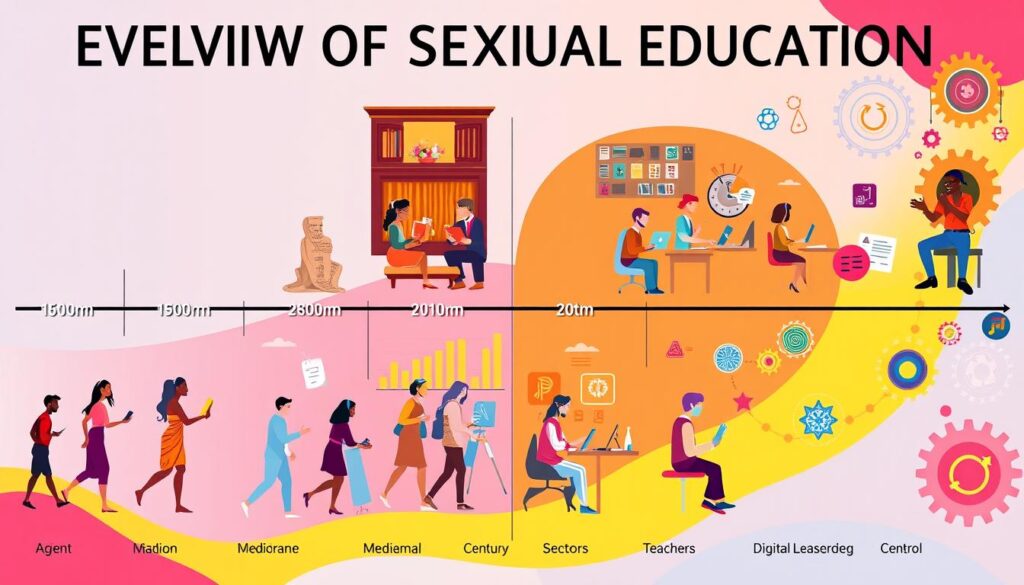
Sexual education has changed a lot over the years. It’s now a key part of personal health and growth. The way we teach about sex shows how our views on sexuality have changed1.
Since the 1960s, the U.S. has seen big changes in sex ed. Schools started to support more complete ways of teaching about sexual health1.
Sexual health is about more than just body facts. It’s about giving people the knowledge to make smart choices. Dr. Mary Calderone saw this need and started SIECUS in 19641.
Full sex education helps young people’s sexual health. Studies show it helps delay first sex and reduces the number of partners. It also helps people use birth control more wisely1.
Good sex ed gives the right info for each age group. It helps you learn skills for relationships and staying healthy.
Key Takeaways
- Sexual education has evolved significantly since the 1960s
- Comprehensive programs provide crucial health information
- Knowledge empowers individuals to make informed decisions
- Sex education goes beyond biological facts
- Professional organizations play a key role in sexual health education
The Origins of Sexual Education
Sexuality education has a rich history shaped by social, medical, and cultural forces. Its roots reveal a fascinating journey of knowledge and cultural evolution. This path has led to our current understanding of reproductive health education.
Early sexual literacy was deeply tied to societal norms. Different civilizations had unique views on sexuality and reproductive health. These perspectives laid the groundwork for modern education approaches.
Ancient Perspectives on Sexuality
Ancient cultures viewed sexuality education through various lenses. Many societies integrated sexual knowledge within:
- Religious teachings
- Cultural ceremonies
- Medical observations
Religious Influences on Sexual Knowledge
Religious institutions shaped sexual understanding for centuries. They controlled narratives about reproduction and set guidelines. These rules greatly influenced sexuality education2.
“Knowledge of human reproduction was often shrouded in mystery and moral interpretation.”
Medical Contributions to Early Sexual Education
Medical professionals brought scientific understanding to sexual education. This shift gradually transformed the field. Key milestones included:
| Year | Medical Development |
|---|---|
| 1918 | Chamberlain-Kahn Act mandates soldier education on sexually transmitted infections3 |
| 1940 | U.S. Public Health Service advocated sexuality education in schools4 |
| 1953 | American School Health Association launches nationwide family life education program4 |
By the mid-20th century, reproductive health education changed significantly. It moved from moral instruction to more scientific approaches2. This shift reflected a deeper understanding of human sexuality’s complexity.
The 20th Century: A Turning Point in Sexual Education
The 20th century revolutionized sexual education. It changed how society approached intimate knowledge and healthy relationships. This era brought significant shifts in understanding and teaching sexual health5.
Social movements and public health concerns drove these changes. Surprisingly, the military played a role in early sexual health awareness. During World War I, the first large-scale sex education program targeted male soldiers5.
The Impact of the Sexual Revolution
The sexual revolution challenged traditional views on intimacy and consent education. Young people questioned established norms. They demanded more comprehensive and honest discussions about sexuality.
This period marked a critical turning point. It changed how people understood personal autonomy and relationship dynamics.
Advocacy for Comprehensive Sexual Health Education
Organizations like Planned Parenthood spread knowledge about sexual health. They developed programs addressing critical aspects of sexual education curriculum changes that prioritized:
- Gender relations
- Sexual abuse prevention
- Healthy relationships
- Consent education
Key Legislation and Educational Initiatives
Legislative efforts supported comprehensive sexual education. The Future of Sex Education Initiative (FoSE) developed National Sexuality Education Standards. These standards ensured students received critical information about personal health and relationships6.
Understanding sexuality is not just about biological facts, but about developing respectful, informed connections with others.
Modern Sexual Education Approaches
Sexual education has become a vital tool for empowering youth with essential life skills. Modern approaches now focus on comprehensive sex education beyond traditional boundaries7. Most parents support robust sexual health education, with 96% backing it in high schools7.
Today’s sexual health understanding includes more inclusive and diverse views. It covers personal safety, consent, and healthy relationships. Sadly, 25% of girls and 8% of boys face sexual abuse in childhood8.
These facts highlight the need for age-appropriate sexual health education. Comprehensive sex education is crucial for young people’s well-being and safety.
Technology has transformed sexual education, making key info more accessible and engaging. Yet, only half of teens receive sex education meeting national standards7. Health risks persist, with few teens using both condoms and effective birth control8.
The future of sex ed needs ongoing innovation and transparency. It must empower youth with accurate, caring information. By tackling new challenges and using tech, we can build safer, informed communities.
These efforts will help prioritize sexual health and personal well-being for everyone. It’s a step towards a more aware and responsible society.
FAQ
What is comprehensive sexuality education (CSE)?
CSE is a high-quality teaching approach about sexuality, sexual health, and relationships. It covers human development, personal skills, sexual behavior, and cultural aspects of sexuality. CSE equips young people with knowledge and skills for responsible choices and healthy relationships.
Why is sexual education important?
Sexual education helps you gain life skills and understand your body. It teaches about healthy relationships and informed decisions on sexual health. You’ll learn about preventing STIs, consent, and protecting yourself from sexual abuse.
When should sexual education begin?
Sexual education should start early and be age-appropriate. It begins with basic concepts of body awareness and personal boundaries in childhood. More complex topics are introduced during adolescence and teenage years.
How has sexual education changed over time?
Sexual education has evolved from traditional hygiene-focused approaches to comprehensive, inclusive methods. The 20th-century sexual revolution sparked a shift towards scientifically accurate, holistic sexual health education. It now addresses diverse topics like gender identity and cultural differences.
What topics are typically covered in comprehensive sexual education?
Comprehensive sexual education covers human anatomy, reproductive health, and consent. It also includes healthy relationships, gender identity, and sexual orientation. Safe sex practices, STI prevention, and personal boundaries are important topics too.
How does technology impact sexual education today?
Technology has made sexual education more accessible through online resources and interactive learning tools. It provides up-to-date information and overcomes geographical barriers. These advancements offer privacy for individuals seeking sexual health information.
What are the main challenges in sexual education?
Main challenges include overcoming cultural barriers and addressing misconceptions. Ensuring accurate information and creating inclusive content are crucial. Keeping up with digital safety and online consent issues is also important.
How can sexual education help prevent sexual violence?
Sexual education teaches about consent, personal boundaries, and healthy relationships. It empowers individuals to understand their rights and recognize inappropriate behavior. This knowledge helps prevent sexual violence and fosters respectful interactions.
Is sexual education only for teenagers?
No, sexual education is a lifelong learning process. It can be adapted for different age groups. From childhood body awareness to adult reproductive health, it provides valuable information throughout life.
How can parents support sexual education at home?
Parents can maintain open communication and create a safe space for questions. They should use age-appropriate language and share accurate information. Challenging myths and reinforcing lessons from formal education is important.
Parents can demonstrate comfort when discussing sexual health. This helps children develop a positive understanding of sexuality.
Source Links
- PDF – https://www.plannedparenthood.org/uploads/filer_public/da/67/da67fd5d-631d-438a-85e8-a446d90fd1e3/20170209_sexed_d04_1.pdf
- A brief history of sex education – https://www.open.edu/openlearn/body-mind/health/health-studies/brief-history-sex-education
- The History of Sex Education – The CSE’s National Sex Ed Conference – https://sexedconference.com/the-history-of-sex-education/
- The History of Sexuality Education – https://rethinkingschools.org/articles/the-history-of-sexuality-education/
- No title found – https://oxfordre.com/americanhistory/oso/viewentry/10.1093$002facrefore$002f9780199329175.001.0001$002facrefore-9780199329175-e-429?p=emailAQqbwIjJPi4zI&d=/10.1093/acrefore/9780199329175.001.0001/acrefore-9780199329175-e-429
- Danger in familiarities : sex education and adolescent sexuality in the early 20th century – https://digitalcommons.csumb.edu/cgi/viewcontent.cgi?article=1387&context=caps_thes
- State of Sex Education in USA | Health Education in Schools – https://www.plannedparenthood.org/learn/for-educators/whats-state-sex-education-us
- The Importance of Access to Comprehensive Sex Education – https://www.aap.org/en/patient-care/adolescent-sexual-health/equitable-access-to-sexual-and-reproductive-health-care-for-all-youth/the-importance-of-access-to-comprehensive-sex-education/?srsltid=AfmBOopN9JxoGA63EueRiUe3DGZijWgT5OFl6KfMawCSj0dGzwTzwwmU