
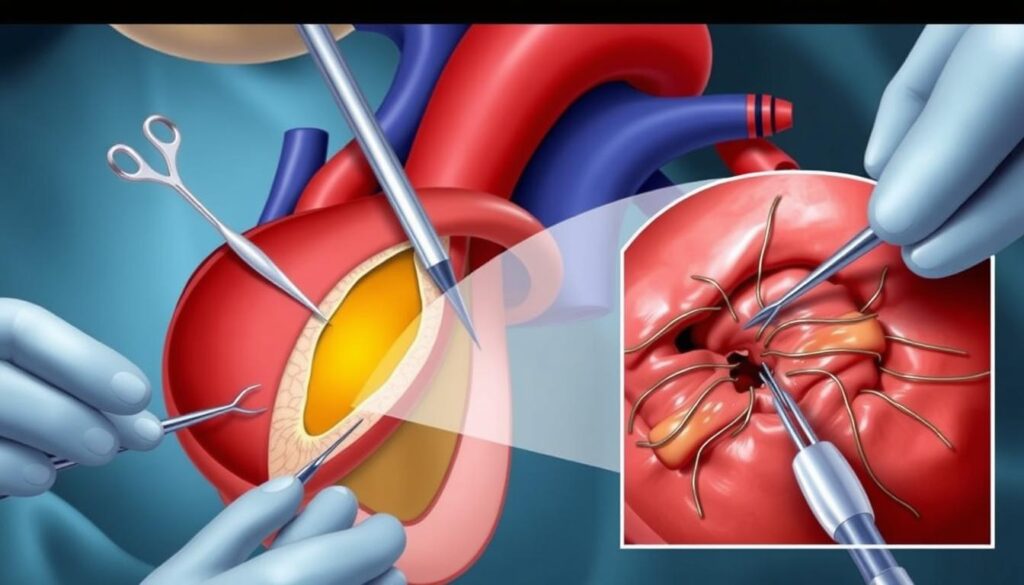
Understanding aortic valve function is vital for managing heart health. Aortic valve repair tackles critical cardiovascular issues that affect your life quality1. Heart valves ensure proper blood flow, and damage may require surgery1.
Valve problems can stem from various conditions, including congenital issues like bicuspid aortic valve1. This occurs when the valve has two cusps instead of three.
Modern medical techniques offer hope for patients facing these challenges. Surgical options range from traditional approaches to minimally invasive procedures1.
Doctors carefully assess each patient’s situation to choose the best treatment. Mild cases may be managed with lifestyle changes and medications. Severe cases need surgery to prevent heart failure1.
Key Takeaways
- Aortic valve repair addresses critical heart health challenges
- Surgical options range from traditional to minimally invasive techniques
- Early detection and treatment can prevent serious complications
- Each patient receives personalized surgical recommendations
- Modern medical techniques offer improved outcomes for valve dysfunction
Understanding the Basics of Aortic Valve Function and Disease
Your heart’s aortic valve is vital for cardiovascular health. It controls blood flow from the heart to your body. This small valve ensures blood moves efficiently in the right direction.
The aortic valve usually has three cusps that open and close each heartbeat. Sometimes, individuals are born with a bicuspid aortic valve, which can impact heart function. This structure prevents Heart Valve Stenosis and manages blood circulation2.
The Role of the Aortic Valve in Cardiovascular Health
The aortic valve is a key gateway for blood flow. It ensures oxygenated blood reaches your body’s vital organs. Any problems with this process can cause health issues.
Common Aortic Valve Conditions
- Aortic Stenosis: Narrowing of the valve that reduces blood flow3
- Aortic Regurgitation: Improper valve closure causing blood backflow3
- Congenital valve defects
Signs and Symptoms of Valve Dysfunction
Spotting early signs of Aortic Regurgitation is important for quick treatment. Symptoms may include:
- Shortness of breath
- Chest pain
- Fatigue
- Fainting spells
“Early detection of heart valve issues can significantly improve treatment outcomes and prevent serious complications.”
Risk factors include older age, congenital heart defects, and certain health conditions. Complications can range from blood clots to heart failure. Regular check-ups are crucial2.
Knowing how your heart valves work helps maintain good cardiovascular health. Talk to your doctor if you have ongoing symptoms or concerns about your heart.
Aortic Valve Repair: Types and Procedures
Aortic valve treatment offers various options to restore heart health. Knowing these approaches helps you make informed decisions about your cardiac care. Your doctor can guide you through the best choices for your situation.
Aortic valve surgery uses different techniques for various heart conditions. The two main approaches are repair and replacement. Each method has its own benefits and considerations.
Traditional Open-Heart Valve Repair
Open-heart valve surgery is a thorough method for fixing valve issues. Surgeons make a 6- to 8-inch cut down the breastbone. This allows them to see and treat the aortic valve directly.
Minimally Invasive Techniques
Minimally invasive procedures offer big advantages for patients. These methods use smaller cuts, reducing surgical stress and blood loss. They also shorten hospital stays and recovery times.
- Shorter recovery times
- Smaller surgical scars
- Less postoperative restrictions
Advanced Valve Replacement Options
Modern cardiac care includes cutting-edge options like Transcatheter Aortic Valve Replacement (TAVR). TAVR replaces the valve through a catheter, usually inserted via the leg artery. This method is less invasive than traditional surgery.
Patients can choose from several valve types for replacement:
- Mechanical valves
- Biological valves
- Homograft valves
Each valve type has its own pros and cons. Mechanical valves last long but need blood thinners. Biological valves offer more flexibility but may not last as long.
“Choosing the right valve replacement technique is a personalized decision that depends on individual health factors and patient needs.”
The Valve-in-Valve Procedure helps patients who’ve had previous valve replacements. It offers new hope for complex heart cases. This option can improve outcomes for many patients4.
Preparing for Your Aortic Valve Surgery
Aortic valve surgery requires careful planning. Proper preparation can improve outcomes and reduce risks. Your heart health is crucial in this process.
Your medical team will conduct pre-operative tests. These tests ensure you’re ready for surgery. They also help identify potential complications5.
Common tests include:
- Chest X-rays
- Electrocardiogram (ECG)
- Blood tests
- Echocardiograms
- Coronary angiograms
Aortic valve replacement typically takes 3 to 5 hours6. You’ll be under general anesthesia during this time. Your surgical team will replace or repair your valve.
“Proper preparation is the key to successful surgical outcomes” – Cardiovascular Surgery Experts
Understanding potential risks is vital. Surgical risks may include:
- Infections
- Bleeding
- Irregular heart rhythms
- Blood clots
- Anesthesia complications
Your recovery starts right after surgery. You’ll likely spend 1 to 2 days in intensive care6. Medical staff will monitor your vital signs during this time.
| Recovery Milestone | Typical Timeframe |
|---|---|
| Breathing Tube Removal | Within 6 hours |
| Neck Catheter Removal | 1-3 days |
| Chest Tube Removal | 1-2 days |
| Urinary Catheter Removal | Within 1 day |
Before you leave, you’ll get detailed post-surgery instructions. These cover medication, activity levels, and wound care. They also include follow-up appointments to ensure a smooth recovery5.
Conclusion
Aortic valve repair offers renewed hope and improved life quality for heart patients. Understanding your options is crucial for effective cardiovascular care. Mechanical valves suit younger patients but require ongoing blood-thinning medication7.
Surgical teams achieve impressive outcomes with low mortality rates. Timely intervention can dramatically improve prognosis for those with aortic valve disease. Without treatment, severe conditions pose significant mortality risks89.
Develop your care strategy with medical professionals. Consider your age, valve condition, and long-term health goals. Biological valves typically last 15 to 20 years7.
Your aortic valve repair journey is unique. Stay informed and maintain regular medical follow-ups. Adhere to post-surgical recommendations to support your heart health and recovery.
FAQ
What is an aortic valve repair?
Aortic valve repair fixes damaged heart valves. It improves blood flow from the left ventricle to the aorta. This surgery aims to restore normal heart function and ease valve dysfunction symptoms.
When might I need an aortic valve repair?
You might need this surgery if you have trouble breathing, feel tired, or have chest pain. These symptoms could point to aortic valve stenosis or regurgitation. Both conditions can seriously affect your heart’s performance.
What are the different types of aortic valve repair procedures?
There are several ways to repair aortic valves. These include open-heart surgery, minimally invasive methods, and transcatheter aortic valve replacement (TAVR). Balloon valvuloplasty is another option. Your doctor will choose the best approach based on your health and condition.
How long does recovery take after aortic valve repair?
You’ll likely stay in the hospital for 3-7 days. After that, you’ll start a cardiac rehab program. Full recovery can take weeks to months. Your healthcare team will guide you through the process.
What are the potential risks of aortic valve repair?
Risks include bleeding, infection, blood clots, and irregular heartbeats. Modern surgical methods have made these risks much lower. Your medical team will explain the specific risks for your case.
Can aortic valve repair be done minimally invasively?
Yes, many aortic valve repairs now use less invasive methods. These include robotic-assisted procedures and TAVR. Such approaches often mean smaller cuts and quicker recovery.
How do I prepare for aortic valve surgery?
You’ll need several tests before surgery. These include echocardiograms, coronary angiograms, and blood tests. Your doctor will give you specific instructions about eating, medicines, and hospital arrival.
It’s important to discuss any worries with your healthcare provider beforehand.
What causes aortic valve problems?
Many things can cause aortic valve issues. These include aging, birth defects, infections, and other heart conditions. Some people are born with valve problems. Others develop them over time due to wear and tear.
Will I need follow-up care after the procedure?
Yes, regular check-ups are crucial after surgery. Your doctor will monitor your heart function and the repair’s success. They’ll also keep an eye on your overall heart health.
Your healthcare team will create a follow-up plan just for you.
How successful are aortic valve repair procedures?
Aortic valve repairs are often very successful. They can greatly improve heart function and reduce symptoms. The success rate depends on your condition and the skill of your surgical team.
Source Links
- Aortic valve repair and aortic valve replacement – https://www.mayoclinic.org/tests-procedures/aortic-valve-repair-aortic-valve-replacement/about/pac-20385093
- Aortic valve disease – Symptoms and causes – https://www.mayoclinic.org/diseases-conditions/aortic-valve-disease/symptoms-causes/syc-20355117
- Aortic Valve Disease FAQ | Columbia University Department of Surgery – https://columbiasurgery.org/aortic/aortic-valve-disease
- Aortic Repair & Replacement | Columbia Surgery – https://columbiasurgery.org/conditions-and-treatments/aortic-repair-replacement
- Aortic Valve Replacement: Open – https://www.hopkinsmedicine.org/health/treatment-tests-and-therapies/aortic-valve-replacement-open
- Aortic Valve Replacement: Before Your Surgery – https://myhealth.alberta.ca/Health/aftercareinformation/pages/conditions.aspx?hwid=abk2162
- Heart Valve Replacement: Types, Procedure & Recovery – https://my.clevelandclinic.org/health/treatments/23966-heart-valve-replacement
- Complications after aortic valve repair and valve-sparing procedures – https://www.annalscts.com/article/view/1412/html
- Aortic valve replacement – https://www.nhsinform.scot/tests-and-treatments/surgical-procedures/aortic-valve-replacement/

