
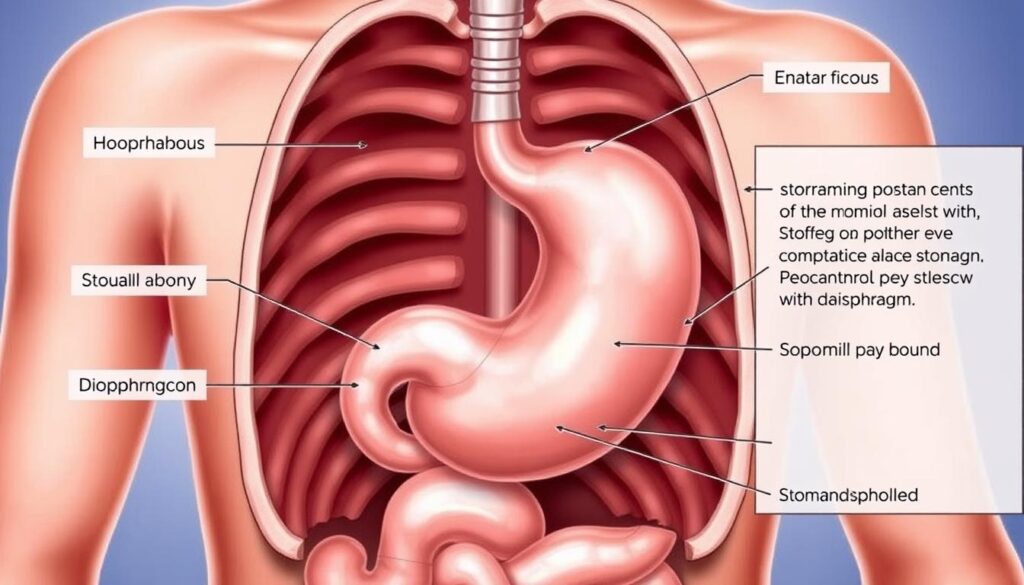
A Hiatal Hernia happens when your stomach pushes through the diaphragm into your chest. This can affect your digestion and life quality1. People over 50 are more likely to have this issue due to age-related diaphragm changes1.
Small hiatal hernias often cause no symptoms. However, larger ones can lead to discomfort. Acid reflux, heartburn, and chest pain may signal a diaphragmatic hernia2.
Gastroesophageal Reflux Disease (GERD) often occurs with this condition. This creates extra challenges for patients.
Several factors can raise your chances of getting a hiatal hernia. These include obesity, chronic coughing, and frequent heavy lifting2. Knowing these risks can help you care for your digestive health.
Key Takeaways
- Hiatal hernias are more common in people over 50
- Not all hiatal hernias cause noticeable symptoms
- Obesity and physical strain can increase hernia risk
- Acid reflux is a potential complication
- Regular medical check-ups can help detect hiatal hernias early
What is a Hiatal Hernia?
A hiatal hernia happens when your stomach pushes through the diaphragm. This creates an unusual opening between your chest and abdomen. Knowing about this condition can help you manage potential health issues better.
Types of Hiatal Hernias
There are two main types of hiatal hernias:
- Sliding Hiatal Hernia: The most common type, where the stomach and esophagus slide up into the chest through the hiatus3. More than 1 in 4 adults develop this type by age 404.
- Paraesophageal Hernia: Less common but potentially more serious, where part of the stomach squeezes next to the esophagus3.
Classification of Hiatal Hernias
Doctors use a detailed system to classify hiatal hernias:
| Type | Description |
|---|---|
| Type 1 (Sliding) | Most common type, involving minimal displacement |
| Type 2 (Paraesophageal) | Stomach protrudes through diaphragm opening |
| Type 3 (Mixed) | Combination of sliding and paraesophageal characteristics |
Causes and Risk Factors
Several things can lead to a hiatal hernia:
- Age: More prevalent in individuals over 505
- Obesity: Increases pressure on abdominal muscles
- Chronic coughing or sneezing
- Pregnancy
- Intense physical activities
Understanding your risk factors can help you take proactive steps in managing potential hiatal hernia development.
Most hiatal hernias aren’t immediately dangerous. However, some paraesophageal hernias can get worse and need medical help4.
If you have ongoing symptoms, it’s best to see a doctor5. They can provide proper diagnosis and treatment options.
Recognizing Hiatal Hernia Symptoms
Hiatal hernias can cause unexpected discomfort. Knowing these signs helps you manage your health better. Understanding symptoms allows for early action and improved care.
Common Symptoms You May Experience
Hiatal hernias often come with distinct signs. Spotting these early can greatly impact your treatment’s success.
- Persistent acid reflux and heartburn
- Chest pain or discomfort
- Difficulty swallowing
- Regurgitation of food or liquids
Women and those over 50 face higher risks of hiatal hernias67. Pain usually occurs in the chest or stomach area. This can make daily tasks quite uncomfortable.
When to Consult a Doctor
Not all symptoms need immediate medical care. However, some signs require professional attention:
| Warning Signs | Recommended Action |
|---|---|
| Persistent chest pain | Seek medical evaluation |
| Difficulty swallowing | Immediate doctor consultation |
| Chronic acid reflux | Schedule a comprehensive check-up |
GERD symptoms can greatly affect your daily life. Over-the-counter meds might help temporarily6. But ongoing symptoms need a doctor’s assessment.
Your body communicates through symptoms—listen carefully and seek expert guidance when needed.
Obesity, pregnancy, and chronic straining raise hiatal hernia risks7. Prevent issues by adopting healthy habits. Stay in touch with your doctor to manage potential problems.
Diagnosis and Evaluation
Diagnosing a hiatal hernia involves various tests. These help doctors understand your condition’s specifics. Healthcare providers use multiple methods to identify and assess diaphragmatic hernias8.
Diagnostic Tests for Hiatal Hernia
Your medical evaluation may include several key procedures:
- Upper Endoscopy: A tiny camera examines your esophagus and stomach
- X-ray Imaging: Helps visualize the upper digestive system
- Esophageal Manometry: Measures muscle contractions in the esophagus
An upper endoscopy allows doctors to view the digestive tract directly. This helps identify potential hernia repair surgery needs9.
Understanding Your Doctor’s Findings
Test results reveal the type and severity of your hiatal hernia. Sliding hiatal hernias are most common, making up about 95% of cases8.
Your doctor will decide if anti-reflux surgery is needed based on these findings10.
Early detection and proper evaluation are crucial in managing hiatal hernia effectively.
The diagnostic process guides your medical team. It helps create a personalized treatment plan for your specific condition8.
Treatment Options for Hiatal Hernia
Hiatal hernia treatment varies based on severity. Your doctor will create a personalized plan for you. This may include lifestyle changes, medications, or surgery11.
Lifestyle changes can greatly improve your condition. Eat smaller meals and avoid trigger foods. Maintaining a healthy weight is also crucial12.
Over-the-counter medications like antacids can help manage acid reflux. For severe cases, doctors may prescribe omeprazole or esomeprazole11.
Surgery becomes necessary when other treatments fail. Nissen fundoplication is the most common anti-reflux surgery. It wraps the upper stomach around the lower esophagus11.
This surgery has shown great results. It boasts an 89.5% success rate over 10 years13. Large hernias or persistent symptoms may require surgical intervention12.
Surgeons can use open surgery or minimally invasive techniques. Your treatment plan is unique to you. Work closely with your doctor for effective management12.
FAQ
What exactly is a hiatal hernia?
A hiatal hernia is when your stomach bulges through the diaphragm into your chest. This happens through a small opening called the hiatus. Small hernias might not cause problems. However, larger ones can lead to acid reflux and other uncomfortable symptoms.
What are the main types of hiatal hernias?
There are two main types of hiatal hernias: sliding and paraesophageal. Sliding hernias occur when the stomach and esophagus move into the chest. Paraesophageal hernias involve part of the stomach pushing through next to the esophagus.
What causes a hiatal hernia?
Hiatal hernias can develop due to age-related changes in the diaphragm or injury. Being born with a larger hiatus or experiencing constant pressure on surrounding muscles can also cause them.
Risk factors include being over 50, obesity, chronic coughing, and constipation. Frequent vomiting, intense exercise, heavy lifting, and pregnancy can also increase your risk.
What are the most common symptoms of a hiatal hernia?
Common symptoms include heartburn, chest pain, indigestion, and difficulty swallowing. You might also experience regurgitation of food or liquids, nausea, and shortness of breath.
Pressure or pain in the upper abdomen or lower chest may occur. These symptoms often relate to acid reflux or GERD.
How is a hiatal hernia diagnosed?
Diagnosis typically involves X-rays of the upper digestive system and endoscopy. Doctors may also use esophageal manometry to measure muscle contractions.
During an upper endoscopy, a tiny camera examines your upper digestive system. This helps doctors visually inspect the area for any issues.
What treatment options are available for a hiatal hernia?
Treatment depends on your symptoms’ severity. Options include lifestyle changes like eating smaller meals and avoiding trigger foods. Maintaining a healthy weight and quitting smoking can also help.
Medical treatments involve antacids, H-2 receptor blockers, and proton pump inhibitors. In some cases, surgery may be necessary to repair the hernia.
When should I see a doctor about a possible hiatal hernia?
Consult a doctor if you have lasting symptoms that worry you. Seek help if you have difficulty swallowing or persistent chest pain.
Signs of bleeding in the digestive tract, like vomiting blood or passing black stools, require immediate attention. Early detection and treatment can prevent serious complications.
Can a hiatal hernia be prevented?
You can’t always prevent a hiatal hernia, but you can reduce your risk. Maintain a healthy weight, avoid heavy lifting, and manage chronic coughing or constipation.
Practice good posture and exercise regularly to strengthen your diaphragm. A healthy diet can also help lower your chances of developing a hernia.
Source Links
- Hiatal hernia – Symptoms and causes – https://www.mayoclinic.org/diseases-conditions/hiatal-hernia/symptoms-causes/syc-20373379
- Hiatal Hernia: A Hidden Cause of Acid Reflux – https://my.clevelandclinic.org/health/diseases/8098-hiatal-hernia
- Find Out the Differences by Types of Hiatal Hernia! – https://pmc.ncbi.nlm.nih.gov/articles/PMC6955185/
- Paraesophageal Hernia (Hiatal Hernia) | Minimally Invasive and Gastrointestinal Surgery – https://www.mcw.edu/departments/surgery/divisions/minimally-invasive-and-gastrointestinal-surgery/patient-care/gerd-and-gastrointestinal-surgery-program/paraesophageal-hernia-hiatal-hernia
- Hiatal hernia – https://www.mountsinai.org/health-library/diseases-conditions/hiatal-hernia
- Hiatal Hernia – https://www.pennstatehealth.org/services-treatments/hiatal-hernia
- Hiatal Hernia Symptoms & Treatment | Aurora Health Care – https://www.aurorahealthcare.org/services/gastroenterology-colorectal-surgery/hiatus-hernia-hiatal-hernia
- An Overview of Hiatal Hernia – https://www.webmd.com/digestive-disorders/hiatal-hernia
- Approaches to the Diagnosis and Grading of Hiatal Hernia – https://pmc.ncbi.nlm.nih.gov/articles/PMC2548324/
- Approach Considerations, Imaging Studies, Procedures – https://emedicine.medscape.com/article/178393-workup
- You Don’t Always Need Surgery To Treat a Hiatal Hernia: 13 Other Ways To Find Relief – https://www.health.com/hiatal-hernia-treatment-8302968
- Hiatal Hernia: Symptoms, Surgery, Treatment, and More – https://www.healthline.com/health/hiatal-hernia
- Treatment Options for Hiatal Hernia – https://www.verywellhealth.com/treating-hiatal-hernias-1742603

