
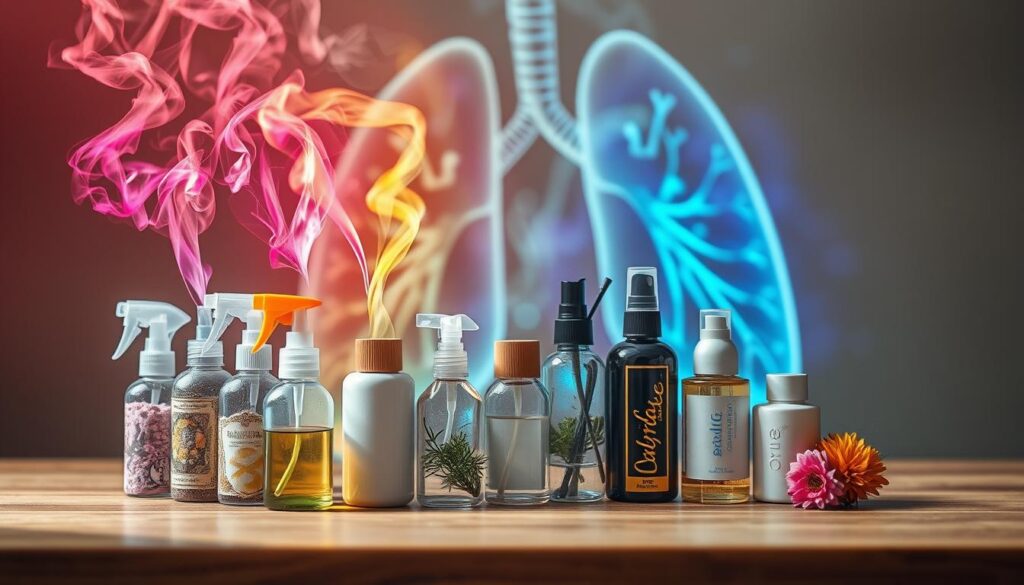
Your home’s freshness might come at a cost to your respiratory health. Many Americans use air fresheners weekly, unaware of potential lung risks1. An alarming 73% use them regularly, while 58% face secondhand exposure1.
Indoor air pollution from these products can hurt your lungs. The chemicals in air fresheners may cause more harm than good. For 20% of Americans, fragrance exposure disrupts daily life1.
The risks go beyond simple irritation. Many store-bought air fresheners contain harmful chemicals like formaldehyde and petrochemicals2. These substances can reduce lung capacity and speed up respiratory disease development2.
Key Takeaways
- Air fresheners contain potentially harmful chemicals
- Secondhand exposure affects over half of Americans
- Respiratory health can be compromised by frequent air freshener use
- Chemical compounds in air fresheners may impact lung function
- Some fragrances can interfere with daily activities
What Are Air Fresheners Made Of?
Air fresheners contain a complex mix of ingredients. These popular scent dispensers can impact your indoor air quality. Understanding their contents is crucial for protecting your health3.
The world of air freshener ingredients is surprisingly intricate. Many contain various chemical compounds. These can potentially affect your respiratory system3.
Common Ingredients in Air Fresheners
- Volatile Organic Compounds (VOCs)
- Phthalates
- Propellants
- Synthetic fragrances
- Preservatives
Air freshener ingredients can include some concerning chemicals. Researchers have identified multiple problematic substances in these products3:
| Chemical Category | Potential Health Risks |
|---|---|
| Formaldehyde | Carcinogenic, respiratory irritation |
| Benzene | Potential cancer risk |
| Phthalates | Hormone disruption |
Synthetic vs. Natural Fragrances
Manufacturers often use chemical compounds to mimic natural scents. Natural fragrances might seem safer, but they can still contain complex mixtures4.
In one can of air freshener, up to 89 ingredients might be present, with only a few actually listed on the label4.
Both synthetic and natural fragrances can release VOCs. These might impact lung health5. Stay informed and choose products carefully for your best defense.
How Do Air Fresheners Affect Lung Health?
Air fresheners can pose serious risks to your respiratory health. These products can trigger breathing issues many people don’t know about. It’s important to understand their potential impact on our lungs.
Researchers have found links between air fresheners and lung function. A study by the National Institute of Environmental Health Sciences looked at volatile organic compounds (VOCs). Their findings revealed how these products can affect breathing.
Respiratory Irritation and Allergies
Air freshener dangers go beyond simple discomfort. People with allergies or asthma are more at risk. Common symptoms of respiratory irritation include:
- Persistent coughing
- Throat irritation
- Shortness of breath
- Increased asthma attacks
- Headaches
Long-Term Exposure Risks
Long-term use of air fresheners can be alarming. Research shows that exposure to 1,4-dichlorobenzene (1,4-DCB) can lead to breathing problems6. The study found a 4% decrease in forced expiratory volume among highly exposed individuals6.
“Understanding the potential impact of indoor air quality is crucial for protecting our respiratory health,” says Dr. Leslie Elliott.
The study found that exposure levels vary across different groups. African Americans had the highest levels of 1,4-DCB in their blood. Non-Hispanic whites showed the lowest levels7.
While the study didn’t prove direct cause, it shows we should be careful. It’s wise to think about the products we use in our homes. Protecting lung function means being aware of air fresheners and other VOC-containing items.
The Role of Volatile Organic Compounds (VOCs)
Indoor air pollution is a growing concern for homeowners. Volatile organic compounds (VOCs) significantly compromise air quality. These invisible gases can silently impact your health and well-being.
Understanding VOCs
VOCs are gases emitted from various products we use daily. They lurk in unexpected places, creating potential health challenges. VOCs are present in thousands of everyday items.
- Cleaning supplies
- Air fresheners
- Cosmetics
- Paints and varnishes
- Adhesives and glues
Sources of VOCs in Air Fresheners
Air fresheners are major culprits in VOC emissions. Indoor VOC levels can be ten times higher than outdoor levels8. We spend about 90% of our time indoors, making air quality crucial8.
“Invisible doesn’t mean harmless. VOCs can silently impact your respiratory health.”
VOC exposure has serious health implications. Short-term exposure can irritate eyes, nose, and throat. Prolonged exposure may lead to more severe health problems8.
People with respiratory conditions like asthma or COPD are especially vulnerable8.
| VOC Source | Potential Health Impact |
|---|---|
| Air Fresheners | Respiratory Irritation |
| Cleaning Products | Nervous System Damage |
| Cosmetics | Potential Cancer Risk |
Protect yourself by choosing low-VOC products. Increase ventilation in your home. Be mindful of the items you bring indoors9.
Understanding Fragrance Sensitivity
Fragrance sensitivity affects many people’s respiratory health. Certain scents can trigger uncomfortable and dangerous symptoms10. Responses vary, so it’s vital to know how fragrances impact your well-being.
Symptoms of Fragrance Sensitivity
Fragranced products can cause various health issues. Common symptoms include:
- Headaches
- Respiratory irritation
- Asthma attacks
- Allergic skin reactions
- Throat and eye irritation
Scented products often contain 100 to 350 ingredients. This increases the risk of allergies and respiratory problems10. People with pre-existing conditions may have more severe reactions.
Who Is Most Affected?
Some groups are more vulnerable to fragrance sensitivity:
| Group | Risk Level | Potential Reactions |
|---|---|---|
| Asthma Patients | High | Increased respiratory distress |
| Individuals with Allergies | Moderate to High | Allergic skin and respiratory responses |
| Children | High | More sensitive respiratory systems |
| Elderly | Moderate | Compromised immune responses |
“Fragrances can cause allergic reactions in some people, impacting individuals differently with symptoms ranging from headaches to worsening asthma”10
Use fragrance-free products to protect your respiratory health. Keep spaces well-ventilated. Creating scent-free environments can reduce the risk of triggering sensitivity symptoms10.
Safe Alternatives to Traditional Air Fresheners
Natural air fresheners offer a healthier way to eliminate unwanted odors. They create a fresh-smelling home without harming your indoor air quality. Essential oils and natural odor eliminators can help you build a safer living space.
Essential Oils: Nature’s Fragrance Solution
Essential oils are powerful, natural alternatives to chemical-laden air fresheners. Plant-based options like Grow Fragrance provide safe, effective solutions for healthier homes11. Popular scents include Blondewood, Woodland Sage, and Lavender Blossom11.
- Lavender: Calming and relaxing
- Eucalyptus: Refreshing and clean
- Lemon: Energizing and purifying
- Peppermint: Invigorating and crisp
Natural Odor Eliminators for Healthy Living
Simple, non-toxic solutions can keep your home smelling fresh. Baking soda, activated charcoal, and white vinegar absorb unpleasant smells without adding chemicals. Non-toxic air fresheners focus on full ingredient transparency for health-conscious consumers11.
| Natural Odor Eliminator | Benefits |
|---|---|
| Baking Soda | Absorbs odors, chemical-free |
| Activated Charcoal | Neutralizes air pollutants |
| White Vinegar | Eliminates strong odors naturally |
Remember, even natural products can cause reactions in sensitive individuals. Always use proper dilution and test for personal tolerance.
Choosing natural air fresheners and essential oils helps create a healthier indoor environment. This choice supports your well-being and promotes a cleaner living space12.
Tips for Reducing Indoor Air Pollution
Indoor air quality is vital for your home environment. Americans spend 90% of their time indoors, making clean air crucial. Indoor pollutant levels can be up to five times higher than outdoor concentrations.
Improving air quality requires multiple strategies. Here are some effective ways to purify and ventilate your indoor air:
- Open windows for 10-15 minutes daily to exchange indoor and outdoor air13
- Use portable HEPA air cleaners to capture particulate matter13
- Regularly clean and vacuum to reduce indoor pollutants13
Ventilation Techniques for Cleaner Air
Proper ventilation is essential for healthy indoor air. Poor air circulation can cause harmful pollutant buildup14. Use exhaust fans and open windows strategically.
Ensure your HVAC system is clean and well-maintained for optimal air quality.
Houseplants for Natural Air Purification
Houseplants are powerful natural air purifiers. Add these air-cleaning plants to your living spaces:
| Plant | Air Purification Benefits |
|---|---|
| Snake Plant | Removes formaldehyde and benzene |
| Spider Plant | Filters xylene and carbon monoxide |
| Peace Lily | Reduces mold spores and acetone |
“Clean air is not a luxury, but a necessity for healthy living.” – Environmental Health Expert
These strategies can significantly improve your indoor air quality. You’ll create a healthier environment for your family. Remember, every small step counts in reducing indoor air pollution.
Regulatory Guidelines for Air Fresheners
Air freshener regulations are surprisingly limited. Many potential health risks remain unchecked. This leaves consumers in a challenging position15.
Several key agencies oversee air freshener regulations. These include:
- Environmental Protection Agency (EPA)
- Consumer Product Safety Commission (CPSC)
- Food and Drug Administration (FDA)
Agency Monitoring and Consumer Safety
Current air freshener regulations offer minimal protection. About 20 percent of people report health issues from these products. Individuals with respiratory conditions face even higher risks15.
Children are especially vulnerable to air freshener effects. They breathe faster and have more contact with floors15.
Current Standards and Environmental Health
Existing rules mainly cover labeling and restrict certain harmful chemicals. Warning labels now alert consumers about potential risks. These warnings focus on children’s exposure15.
Air freshener chemicals can settle in house dust. This creates long-term environmental health risks15.
“Regulation is not just about compliance, but protecting consumer well-being.”
Indoor air quality is a growing concern. Americans spend about 90% of their time indoors16.
Comprehensive air freshener regulations are now more important than ever16.
Consumer Awareness and Education
Knowing air fresheners’ health impacts is key for smart indoor choices. Education helps protect your living space from hidden risks. Your awareness can make a big difference in home safety.
Product labels hold vital information, yet many overlook potential dangers. Surprisingly, 73.7% of people didn’t know fragranced products release harmful pollutants17. This lack of awareness can lead to unintended health risks.
Decoding Product Labels
To make wise air freshener choices, try these strategies:
- Look for full ingredient disclosure
- Avoid products with vague terms like “fragrance”
- Research potentially harmful chemicals
- Choose products with transparent labeling
“Less than 10% of home fragrance ingredients are disclosed to the public in the US, raising significant transparency concerns”
Making Safer Choices
The health effects are serious. 34.7% of Americans reported health issues from fragranced products19. These problems included migraines and breathing difficulties.
Interestingly, 56.3% would stop using a product if they knew it released harmful pollutants17. This shows people care about their health when informed.
| Product Type | Health Risk Level | Recommended Action |
|---|---|---|
| Chemical Air Fresheners | High | Avoid or Minimize |
| Natural Essential Oils | Low | Recommended Alternative |
| Unidentified Fragrance Products | Unknown | Research Ingredients |
Your health is precious. Educate yourself to create a safer, fresher home. By doing so, you’ll guard against potential breathing risks.
The Impact of Air Fresheners on Children and Pets
Air fresheners can harm children and pets in your home. Their small bodies and developing lungs are more at risk from chemicals. Common household air fresheners can be especially dangerous.
Kids’ lung health is at risk from air freshener chemicals. Over 75% of these products contain hazards. Young children may have worse reactions.
These can include breathing problems and allergies. They may also increase the risk of asthma.
- Increased respiratory irritation
- Potential allergic responses
- Higher risk of asthma development
Vulnerability of Children’s Respiratory Systems
Fake scents can cause serious breathing issues in kids. This may lead to long-term health problems20. Kids might get headaches or nerve problems from these chemicals21.
Pet Health Concerns
Pets are even more sensitive to air toxins. Cats have up to 200 million scent cells. This makes air fresheners very harmful to them21.
Essential oils and fake scents can be dangerous for pets. They might cause:
- Respiratory distress
- Neurological issues
- Increased risk of feline asthma21
Protecting your family means understanding the hidden dangers lurking in everyday products.
For safer homes, try natural options like open windows and air purifiers. Use organic ways to freshen air21. Your choices can make your indoor air much healthier.
Final Thoughts on Air Fresheners and Lung Health
Air fresheners can harm your lung health despite seeming like a quick fix. They may irritate eyes, cause throat discomfort, and trigger asthma attacks22. Your indoor air quality directly affects your respiratory well-being.
Air fresheners release Volatile Organic Compounds (VOCs) that can impact long-term respiratory health23. Those with existing lung conditions should be extra careful. These products may affect heart function and overall breathing performance23.
A healthy indoor space isn’t just about masking odors. Try natural ways to freshen air and protect your lungs. Proper ventilation and air-purifying plants can greatly improve air quality23.
Your respiratory health matters most. Choose natural solutions over air fresheners. This approach creates a safer, more breathable living space for your overall well-being.
FAQ
Are air fresheners really harmful to my lungs?
Research shows air fresheners contain volatile organic compounds (VOCs) that can harm lung function. Chemicals like 1,4-dichlorobenzene can reduce lung capacity. This is especially true for children and those with breathing problems.
What dangerous chemicals are typically found in air fresheners?
Air fresheners often contain harmful compounds like formaldehyde, benzene, toluene, phthalates, and synthetic fragrances. These VOCs can irritate your lungs and trigger allergies. Repeated exposure might lead to long-term health issues.
How can air fresheners affect people with respiratory conditions?
People with asthma, allergies, or other breathing issues are at higher risk. Air fresheners can cause eye and throat irritation, headaches, and asthma attacks. Long-term use may slightly reduce lung function.
Are natural or essential oil air fresheners safer?
Natural options can be less harmful, but they’re not risk-free. Essential oils and natural products can still cause reactions in some people. Use them properly and dilute them correctly.
Remember that even natural fragrances can affect your breathing. Be aware of how your body responds to these products.
What are some safe alternatives to chemical air fresheners?
Consider these safe alternatives:
– Opening windows for natural ventilation
– Using houseplants that purify air (like ferns and jasmine)
– Placing baking soda to absorb odors
– Using diluted essential oils – Regularly cleaning to eliminate odor sources
Are children and pets more at risk from air fresheners?
Yes, kids and pets are more vulnerable due to their size and developing lungs. They might have worse reactions to airborne chemicals. These can include breathing problems, increased sensitivity, and possible long-term health effects.
How can I protect myself from harmful air freshener chemicals?
To protect yourself:
– Read product labels carefully
– Avoid products with phthalates and formaldehyde
– Improve indoor ventilation
– Use natural odor elimination methods
– Choose products that fully disclose their ingredients
– Limit use of chemical air fresheners
Do air fresheners undergo strict regulation?
Air fresheners have limited regulation. The EPA and Consumer Product Safety Commission provide some oversight. However, there aren’t comprehensive safety standards in place.
Be cautious and learn about product ingredients and potential health risks. This will help you make informed choices about air fresheners.
Source Links
- Air Fresheners: Are They Safe? – https://www.poison.org/articles/air-freshener-171
- Are air fresheners bad for your health? – https://home.howstuffworks.com/home-improvement/household-safety/air-freshener-dangers.htm
- Toxic Chemicals in Air Fresheners – https://madesafe.org/blogs/viewpoint/toxic-chemicals-in-air-fresheners
- The UnFreshening Ingredients In Toxic Air Fresheners – https://www.meghantelpner.com/ingredients-in-toxic-air-fresheners/
- The Impact of Air Fresheners in Cars on Children’s Health – HealthyAir Nigeria – https://healthyairnigeria.com/the-impact-of-air-fresheners-in-cars-on-childrens-health/
- Chemical in Many Air Fresheners May Reduce Lung Function – https://www.nih.gov/news-events/news-releases/chemical-many-air-fresheners-may-reduce-lung-function
- Chemical in Many Air Fresheners May Affect Lungs – https://www.nih.gov/news-events/nih-research-matters/chemical-many-air-fresheners-may-affect-lungs
- Volatile Organic Compounds in the Home: The Surprising Places You Might Find Them – https://www.lung.org/blog/volatile-organic-compounds-at-home
- Volatile Organic Compounds – https://www.lung.org/clean-air/indoor-air/indoor-air-pollutants/volatile-organic-compounds
- Scents | Canadian Lung Association – https://www.lung.ca/lung-health/scents
- Your Guide to Non-Toxic Air Fresheners In 2024 – https://www.growfragrance.com/blogs/learn/choosing-non-toxic-air-fresheners-for-a-healthier-home-in-2024?srsltid=AfmBOopLmnpfBEsEhd_tUetgQhkiyXZSERdxU-RwQciDljr5c6Msydj-
- Are air fresheners toxic to humans? – Lena’s World – https://lenasworld.com/are-air-fresheners-toxic-to-humans/
- Let the Air in – https://www.lung.org/blog/indoor-air-quality-improvements
- 14 Ways to Reduce Indoor Air Pollution – https://www.consumerreports.org/indoor-air-quality/ways-to-reduce-indoor-air-pollution/
- PDF – https://portal.ct.gov/-/media/Departments-and-Agencies/DPH/dph/environmental_health/eoha/pdf/AirFreshenerFSpdf.pdf
- The Case for Government Regulation Over Indoor Air Pollution – https://globalhealth.georgetown.edu/posts/the-case-for-government-regulation-over-indoor-air-pollution
- Health and societal effects from exposure to fragranced consumer products – https://pmc.ncbi.nlm.nih.gov/articles/PMC5122698/
- How home fragrances can impact indoor air quality – and your health – https://theconversation.com/how-home-fragrances-can-impact-indoor-air-quality-and-your-health-244221
- Fragranced consumer products: exposures and effects from emissions – https://pmc.ncbi.nlm.nih.gov/articles/PMC5093181/
- The Dangers of Toxic Air Fresheners and the Benefits of Healthier Alternatives – https://www.soapandpaperfactory.com/blogs/journal/the-dangers-of-toxic-air-fresheners-and-the-benefits-of-healthier-alternatives?srsltid=AfmBOopCz6_BoO9ojY96mbpJSkYli5iqcTDuWqzBSXZNs2hJzFO7V6Wa
- Why You Shouldn’t Use Air Fresheners in Homes with Cats (or Humans, for That Matter!) – Purrs of Wisdom with Ingrid King – https://ingridking.com/?p=78023
- Holiday Scents and Lung Disease Triggers – https://www.lung.org/blog/holiday-scents-asthma-triggers
- Do Air Fresheners Impact Our Health? – https://www.columbiadoctors.org/news/do-air-fresheners-impact-our-health

