
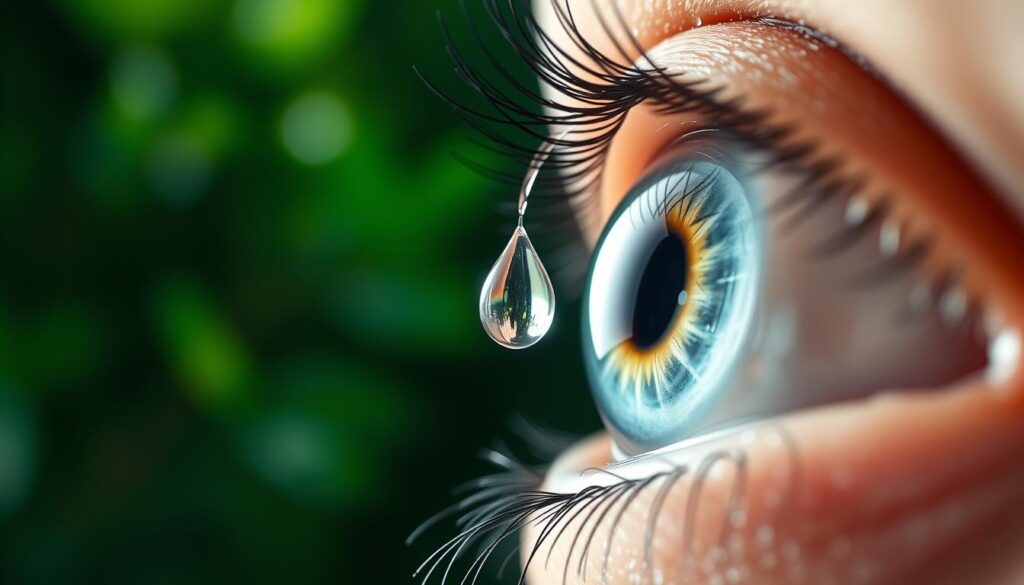
Dry eye syndrome can make your daily life uncomfortable. Artificial tears offer a practical solution for managing eye moisture. These drops provide relief for people with dry eye symptoms1.
Finding the right treatment can help restore eye comfort. It can also maintain your visual health2. Artificial tears mimic natural tears, providing essential moisture for your eyes.
They come in different formulations for various dry eye conditions. This makes them a versatile solution for many people1. Lubricating eye solutions can help ease discomfort and improve eye health2.
Key Takeaways
- Artificial tears are an effective first-line treatment for dry eye syndrome
- Multiple formulations exist to address different dry eye conditions
- Over-the-counter eye drops provide convenient moisture relief
- Some artificial tears contain special agents to enhance effectiveness
- Consulting an eye care professional can help find the best solution
Understanding Dry Eye Syndrome and Its Causes
Dry eye syndrome affects millions worldwide. It occurs when tear production and retention are imbalanced. This imbalance can cause uncomfortable symptoms that impact daily life3.
Common Causes of Dry Eyes
Multiple factors can contribute to dry eye syndrome, including:
- Age-related changes in tear production3
- Hormonal fluctuations, especially in women3
- Autoimmune conditions like Sjögren’s syndrome4
- Chronic medical conditions
- Environmental factors such as dry air or wind3
Symptoms and Warning Signs
Spotting dry eye syndrome early helps manage it better. Common symptoms include:
- Sandy or burning sensation in the eyes4
- Blurred vision4
- Increasing eye redness throughout the day4
- Difficulty wearing contact lenses3
Impact on Daily Life
Untreated dry eye syndrome can disrupt your daily activities. It may lead to eye infections and vision problems3. Ophthalmic lubricants and preservative-free eye drops can provide relief.
Your eye health is crucial – don’t ignore persistent dry eye symptoms!
Tear substitutes help maintain eye moisture and comfort. An eye care professional can help create a plan to manage dry eye syndrome.
This strategy will protect your vision and improve your quality of life. Don’t hesitate to seek help if you experience ongoing symptoms.
Types of Artificial Tears and Their Benefits
Artificial tears come in various formulations for different eye moisture needs. Understanding these types can greatly improve your eye health. They aim to address specific dry eye conditions effectively.
Visine, Systane, and Refresh offer unique solutions for dry eyes. These products mimic the complex composition of natural tears. They include multiple layers of moisture to soothe your eyes.
- Preservative-free drops: Ideal for sensitive eyes and frequent use5
- Low-viscosity drops: Provide quick relief but require more frequent application
- High-viscosity drops: Offer longer-lasting moisture with potential temporary vision blurring
- Lipid-based tears: Specifically designed for meibomian gland dysfunction
Systane Ultra and Refresh Endura use advanced formulations to enhance eye moisture. They help stabilize your tear film for better relief. These products contain special ingredients like hydroxypropyl guar for improved tear retention.
Choosing the right artificial tear depends on your specific eye condition and lifestyle needs.
Your eye condition and lifestyle affect which artificial tear is best for you. Consult an eye care professional to find the most suitable option. Consider factors like ingredients, preservatives, and your specific symptoms.
Conclusion
Choosing the right artificial tears can be tricky. It’s vital to understand your options for lasting eye comfort. Research shows that OTC artificial tears offer relief, but their effectiveness varies6.
Most OTC options have similar abilities to treat dry eye symptoms. Finding the right match for your specific needs is crucial6. Artificial tears often provide short-term relief, lasting only a few hours7.
You might need to apply drops several times daily for comfort7. Be cautious of preservatives in these products. They can irritate sensitive eyes7.
Your eye health journey extends beyond artificial tears. While they offer valuable dry eye relief, persistent symptoms need professional help. A thorough eye exam can uncover underlying issues and create a tailored treatment plan7.
Managing dry eye is about finding balance. Stay informed and consult eye care professionals. Understand your unique eye health needs. This approach helps you tackle dry eye symptoms and maintain optimal comfort.
FAQ
What are artificial tears and how do they work?
Artificial tears are eye drops that moisturize and protect your eyes. They copy real tears to ease dry eye symptoms. These drops add moisture and shield the cornea from dryness-related damage.
Who typically needs artificial tears?
You might need artificial tears if you have dry eye symptoms. These can stem from aging, medications, medical conditions, or eye surgery. Environmental factors like smoke, wind, or long screen time can also cause dry eyes.
Artificial tears help people with occasional or ongoing dry eye syndrome.
Are there different types of artificial tears?
Yes, artificial tears come in many forms. Some have preservatives, while others don’t. Low-viscosity drops offer quick relief. High-viscosity drops provide longer-lasting moisture.
Lipid-based drops help with meibomian gland problems. Gel or ointment types work well for overnight use.
How often can I use artificial tears?
Usage frequency depends on your needs. Preservative-free drops can be used more often. Preserved drops should be used less frequently.
If you need drops more than four times daily, choose preservative-free options.
Can artificial tears help with all types of dry eye?
Artificial tears ease many dry eye conditions. However, they may not fix all underlying causes. For ongoing or severe symptoms, see an eye care professional.
They can suggest a full treatment plan for your specific situation.
What should I consider when choosing artificial tears?
Think about your dry eye cause, lifestyle, and any sensitivities. Popular brands like Visine, Systane, and Refresh offer various options.
If you have sensitive eyes or need frequent use, try preservative-free drops.
Are there any side effects of using artificial tears?
Most artificial tears are safe to use. Some people may have brief blurry vision, especially with thicker drops.
If you have ongoing irritation or allergic reactions, stop using them. Consult your eye doctor for advice.
Can I use artificial tears with contact lenses?
Some artificial tears work well with contact lenses. Look for drops labeled safe for contacts. Always follow the maker’s instructions.
Some drops need to be used before or after wearing contacts.
Source Links
- Artificial tears: How to select eye drops for dry eyes – https://www.mayoclinic.org/diseases-conditions/dry-eyes/expert-answers/artificial-tears/faq-20058422
- patients – A Patient’s Guide to Artificial Tears – TFOS – https://www.tearfilm.org/dettnews-a_patients_guide_to_artificial_tears/5523_5519/eng/
- Dry eyes: How to maintain clear, comfortable vision-Dry eyes – Symptoms & causes – Mayo Clinic – https://www.mayoclinic.org/diseases-conditions/dry-eyes/symptoms-causes/syc-20371863
- Dry Eye – https://www.hopkinsmedicine.org/health/conditions-and-diseases/dry-eye
- How to Choose an Artificial Tear for Your Eye Problem – https://www.verywellhealth.com/artificial-tears-3422086
- Over the counter (OTC) artificial tear drops for dry eye syndrome – https://pmc.ncbi.nlm.nih.gov/articles/PMC5045033/
- What are the Drawbacks of Using Artificial Tears for Dry Eyes? | Lighthouse Vision | Milford, CT – https://lighthousevisionct.com/blog/what-are-the-drawbacks-of-using-artificial-tears-for-dry-eyes/

