
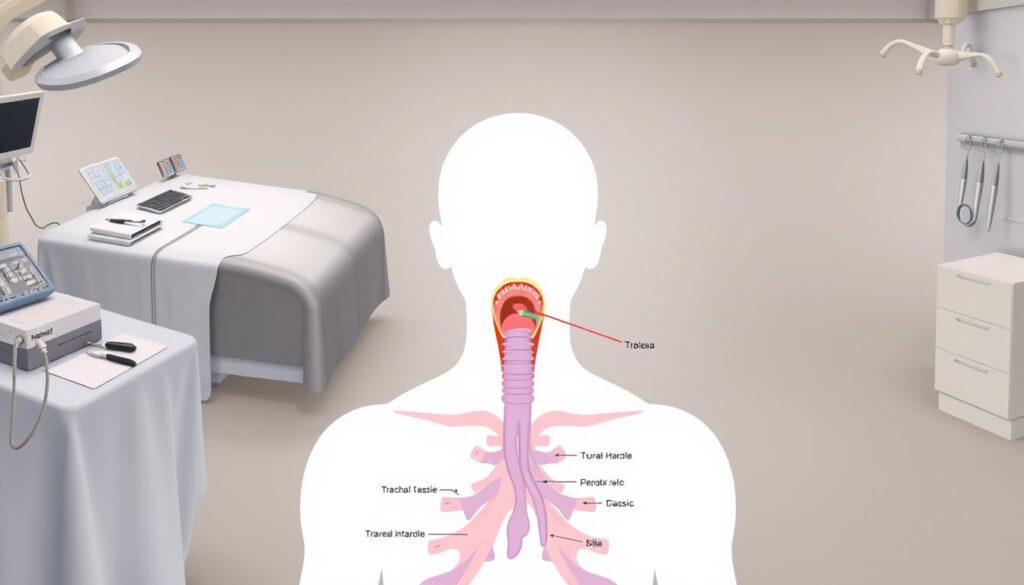
A tracheostomy is a vital medical procedure for airway management. It creates a direct opening in the windpipe. This allows patients to breathe through a special tube when normal breathing is difficult1.
The procedure involves making a stoma (surgical opening) in the neck. This lets air bypass the usual breathing route. Patients may need this due to paralysis, brain disorders, or emergencies1.
The average trachea is about 4½ inches long. This helps doctors place the tracheostomy tube correctly2. Your medical team will choose a tube that fits your body’s needs3.
Key Takeaways
- Tracheostomy is a life-saving airway management procedure
- The procedure creates a direct breathing pathway through the windpipe
- Multiple medical conditions can necessitate a tracheostomy
- Tube selection depends on individual patient needs
- Professional medical guidance is crucial for successful tracheostomy care
Understanding Tracheostomy and Its Purpose
Tracheostomy is a vital surgery for patients with severe breathing issues. Breathing is fundamental to life. This procedure becomes crucial when regular airways don’t work well.
https://www.youtube.com/watch?v=2-GtlrpCDns&pp=ygUMI3Jhc2h0cmFjaG5o
Tracheotomy creates a neck opening for direct airway access. There are two main methods for this procedure:
- Surgical tracheotomy with a larger neck incision
- Minimally invasive tracheotomy using specialized equipment4
What is a Tracheostomy Procedure
Tracheostomy makes a stoma in the front neck. This opening gives direct access to the trachea. Patients may need this for various breathing problems.
These include airway blockages or long-term ventilator use5. The surgery type depends on each patient’s needs.
Common Reasons for Tracheostomy
Doctors suggest tracheostomy for several critical situations:
- Prolonged mechanical ventilation requirements
- Blocked upper airway due to tumors or infections5
- Difficulty clearing airway secretions
- Severe head or neck injuries
Types of Tracheostomy Tubes
Different tracheostomy tubes serve various patient needs:
- Cuffed tubes with inflatable seals
- Cuffless tubes for patients without ventilator support
- Tubes with disposable or reusable inner cannulas4
“Selecting the right tracheostomy tube is crucial for patient comfort and effective respiratory management.”
A tracheostomy usually heals in 7 to 10 days. Tube changes may happen around 28 days6.
Knowing about this procedure helps patients and families face this important medical step confidently.
Living with a Tracheostomy: Essential Care and Management
Managing a tracheostomy demands careful attention to prevent complications. Your daily routine will involve specific care practices for health and comfort7. Quick access to a care kit is vital, as blocked tubes can cause breathing problems7.
Proper suctioning is crucial for tracheostomy maintenance. You’ll need to remove mucus plugs to keep airways clear8. Your care team will teach you cleaning techniques to prevent infection8.
- Daily stoma cleaning
- Regular tube maintenance
- Infection prevention strategies
A tracheostomy can affect various aspects of your life. You might face challenges in several areas.
| Area of Impact | Potential Challenges |
|---|---|
| Sensory Experience | Reduced ability to smell and taste food |
| Nutrition | Possible need for feeding tube |
| Psychological | Body image adjustments |
Your medical team suggests seeing an otolaryngologist to assess your tracheostomy needs. They can help develop a personalized management plan8. Professional medical guidance is key for successful long-term care.
Remember, with proper care and support, you can effectively manage your tracheostomy and maintain a good quality of life.
Conclusion
Living with a tracheostomy can be tough. But understanding your situation helps improve your care and life quality9. Each year, about 800,000 people in the U.S. need mechanical ventilation. Up to 34% get a tracheostomy for long-term breathing support9.
Your recovery needs careful monitoring and personalized care. Studies show that early tracheostomy procedures may shorten ICU stays and boost airway safety10. While challenges like stenosis exist, new medical methods keep improving patient outcomes10.
Every patient’s journey is different. Tracheostomy survival rates are looking up. Studies report lower death rates compared to non-tracheostomy patients9. Your healthcare team will help you manage your tracheostomy and adapt to it11.
Keep in touch with your doctors and follow their advice. Stay positive and hopeful. With the right support, you can thrive with a tracheostomy. You can lead an active and fulfilling life despite the challenges.
FAQ
What exactly is a tracheostomy?
A tracheostomy is a surgery that makes a direct opening in your windpipe. It helps you breathe by inserting a tube through this opening. The tube bypasses your nose, mouth, and throat, letting air flow straight into your lungs.
How are tracheostomy procedures performed?
Two main methods exist for tracheostomy: surgical and minimally invasive. Surgical tracheotomy involves cutting the front of your neck to create an opening. Minimally invasive, or percutaneous tracheotomy, uses a small cut and special tools for tube placement.
Both procedures typically take place in a hospital under anesthesia.
What are the most common reasons for getting a tracheostomy?
Tracheostomies are done for various medical reasons. These include long-term ventilator use, airway blockage, and difficulty clearing mucus. Major head or neck surgery, severe injuries, and breathing emergencies are also common reasons.
What types of tracheostomy tubes are available?
Tracheostomy tubes come in cuffed and cuffless types. Cuffed tubes have an inflatable balloon that seals against the tracheal wall. Cuffless tubes are for patients not needing ventilator support.
Popular types include Shiley, Bivona soft silicone, and Jackson metal tubes. Your doctor will choose the best tube for your needs.
How do I care for my tracheostomy?
Caring for a tracheostomy requires careful management. You’ll need to clean the site, change the inner tube, and suction out secretions. Proper humidification is also important.
Learning to speak may involve covering the tube or using special valves. You’ll also need to adjust your bathing and eating habits.
Can I live a normal life with a tracheostomy?
Yes, you can lead a fulfilling life with a tracheostomy. It requires some lifestyle changes and careful management. With proper care and follow-ups, you can effectively handle your condition.
The length of tracheostomy use varies. Some patients need it temporarily, while others require long-term support.
How do I communicate with a tracheostomy?
You can communicate in several ways with a tracheostomy. Covering the tube opening with a finger allows speaking. Special valves also help produce sound.
Working with a speech therapist can help develop effective communication strategies.
What are potential complications of a tracheostomy?
Possible complications include infection, bleeding, and tube blockage. Breathing difficulties and mucus clearance problems can also occur. Watch for signs of infection and keep the area clean.
Contact your doctor right away if you notice unusual symptoms or breathing issues.
Source Links
- Tracheostomy – Mayo Clinic – https://www.mayoclinic.org/tests-procedures/tracheostomy/about/pac-20384673
- Caring for Your Tracheostomy – https://www.mskcc.org/cancer-care/patient-education/caring-your-tracheostomy
- Microsoft Word – Trach Care Guide-2.15.18 – https://www.ohsu.edu/sites/default/files/2019-03/OHSU-Trach-Care-Guide.pdf
- What It Is and When It Is Needed – https://www.nationwidechildrens.org/family-resources-education/health-wellness-and-safety-resources/helping-hands/tracheostomy-what-it-is-and-when-it-is-needed
- Tracheostomy – https://www.hopkinsmedicine.org/health/treatment-tests-and-therapies/tracheostomy
- Tracheostomy – https://www.nhs.uk/conditions/tracheostomy/
- Nursing guidelines : Tracheostomy management – https://www.rch.org.au/rchcpg/hospital_clinical_guideline_index/tracheostomy_management/
- Living With a Tracheostomy: What to Expect | My Vanderbilt Health – https://my.vanderbilthealth.com/living-with-a-tracheostomy/
- Tracheostomy: Epidemiology, Indications, Timing, Technique, and OutcomesDiscussion – http://rc.rcjournal.com/content/59/6/895
- Tracheostomy Indications and Timing | Iowa Head and Neck Protocols – https://medicine.uiowa.edu/iowaprotocols/tracheostomy-indications-and-timing
- Tracheostomy care – British Journal of Nursing – https://www.britishjournalofnursing.com/content/tracheostomy-care/tracheostomy-care/

