
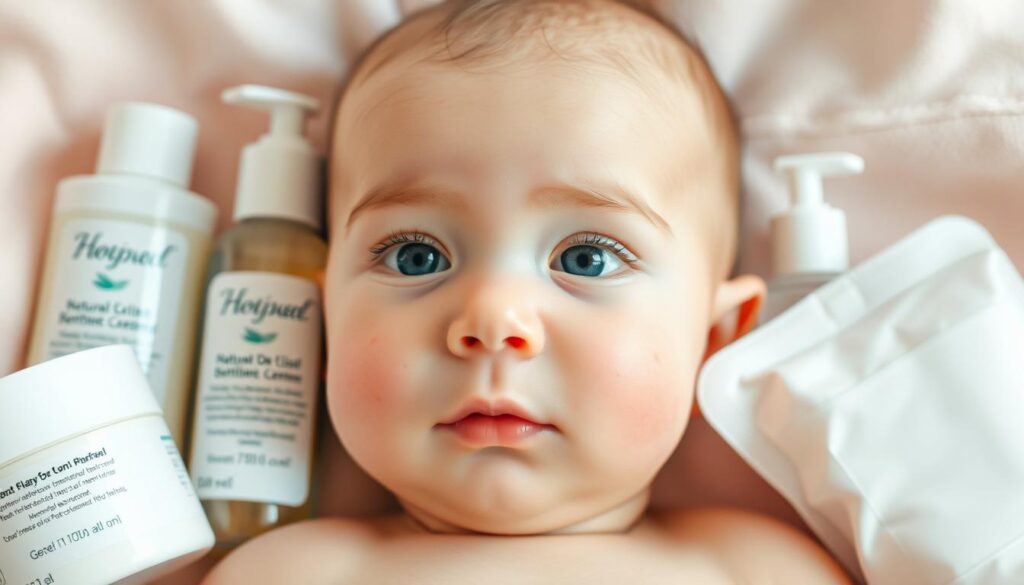
Baby acne is a common skin rash in newborns. It usually appears shortly after birth and clears up on its own1. These tiny pimples can show up at birth or within the first two months1.
The rash looks like small red or purple bumps. They often appear on the cheeks, nose, forehead, and neck12. Don’t worry, this skin issue is usually harmless and doesn’t bother your baby.
Hormonal changes during birth likely cause these skin eruptions1. Baby acne doesn’t mean your child will have skin problems later. It typically goes away in a few weeks2.
Key Takeaways
- Baby acne is a normal skin condition in newborns
- Typically appears on face, neck, and chest
- Caused by hormonal changes after birth
- Resolves without medical intervention
- Does not predict future acne problems
Understanding Baby Acne: Types and Symptoms
Baby skin can be tricky for new parents. Neonatal acne is common but rarely serious. Your baby’s skin changes a lot in the first few months.
Baby acne shows up as small red bumps on your infant’s face. It affects about 20% of newborns. These bumps usually appear on cheeks, nose, and forehead.
They can also spread to the chest and back34.
Common Signs and Appearance
Baby acne has specific features:
- Small red or white bumps
- Clusters of pustules
- Slightly raised skin texture
- Potential inflammation when baby cries
Types of Baby Acne
There are two main types of baby acne:
- Newborn (Neonatal) Acne: Appears within two to four weeks after birth4
- Infantile Acne: Develops between three and six months, potentially lasting until the child is 2 years old4
| Condition | Characteristics | Duration |
|---|---|---|
| Neonatal Acne | Mild red bumps | Typically resolves within weeks |
| Infantile Acne | More persistent bumps | Can last up to 2 years |
Not all skin bumps are acne. Milk rash, cradle cap, milia, and eczema can look similar. If you see unusual skin changes, talk to your pediatrician4.
Remember, most baby acne clears up naturally without intervention.
What Causes Baby Acne and Risk Factors
Baby acne is a common infant skin rash. It affects about 2 out of 10 newborns. Understanding its causes can help parents feel more at ease.
This infant skin rash is linked to several factors. While the exact cause is unknown, we can identify key contributors.
Hormonal changes are a big factor in baby acne. Maternal hormones can stimulate a baby’s oil glands during pregnancy and birth. This can lead to excess sebum production, clogging pores and causing tiny red bumps.
- Maternal hormone exposure
- Overactive sebaceous glands
- Potential yeast presence on skin
Baby acne is more common in male infants. It usually appears when babies are 2 to 6 weeks old. Most cases clear up on their own without medical help.
“Baby acne is a temporary condition that requires patience and gentle care.” – Pediatric Dermatology Experts
| Acne Type | Occurrence Rate | Duration |
|---|---|---|
| Neonatal Acne | Up to 20% of newborns | 2-6 weeks |
| Infantile Acne | Less than 2% of infants | 6-12 months |
Severe or long-lasting baby acne might signal other issues. See a doctor if it doesn’t improve after a few months. Also, seek help if other symptoms appear56.
Conclusion
Understanding baby skin care helps manage newborn pimples with confidence. Baby acne is usually harmless and temporary. Your gentle approach supports your infant’s delicate skin health78.
Minimal intervention often works best for infant skin rashes. Clean your baby’s face with warm water only. Avoid harsh products that could irritate sensitive skin.
Pediatric dermatologists suggest gentle cleansing to protect your baby’s natural skin barrier7. Every baby’s skin is unique, so what works for one may not suit another.
If pimples last beyond six weeks or show inflammation, consult a healthcare professional7. Stay attentive and patient. In most cases, baby acne will clear up without major intervention8.
FAQ
What exactly is baby acne?
Baby acne is a common skin issue that shows up as tiny red bumps. It usually appears on a baby’s face, chest, and back within two months of birth. These bumps look like small pimples and may stand out more when your baby cries.
Baby acne is harmless and often clears up on its own. It’s thought to be caused by hormone changes during birth.
Is baby acne different from adult acne?
Yes, baby acne differs from adult acne in several ways. It doesn’t have blackheads and is mainly caused by birth-related hormone shifts. Baby acne is short-lived and doesn’t point to future skin problems.
The acne shows up as small red bumps, mostly on the cheeks, nose, and forehead. Unlike adult acne, it doesn’t need strong treatment.
How can I treat my baby’s acne?
Gentle care is the best way to handle baby acne. Clean your baby’s face with warm water and mild, unscented soap. Don’t scrub or use harsh products on your baby’s skin.
Avoid squeezing the bumps to prevent infection. Be patient, as baby acne often clears up on its own without special treatment.
When should I be concerned about baby acne?
Baby acne is usually harmless, but some signs may need a doctor’s check. See a doctor if the acne lasts more than a few months or appears after six weeks.
Also, get medical advice if your baby has a fever or severe skin irritation. If the rash shows up after new medicine, products, or illness, consult a doctor.
Are there different types of baby acne?
Yes, there are two main types of baby acne. Newborn acne appears at birth or within three weeks and usually clears up without scarring.
Infantile acne develops between three and six months. It may be caused by irritants, skin conditions like eczema, or infections.
Can baby acne be prevented?
Baby acne can’t be fully prevented because it’s linked to hormone changes. However, you can help manage it with gentle skin care. Keep your baby’s skin clean and avoid harsh products.
Remember, baby acne isn’t caused by poor hygiene. It’s a normal part of many babies’ early skin growth.
Is baby acne contagious?
No, baby acne is not contagious. It’s a normal skin condition caused by hormone changes, not an infection. You can care for your baby without worry about spreading it to others.
Does baby acne mean my child will have acne later in life?
Baby acne doesn’t predict future acne problems. It’s a short-term condition unrelated to teen or adult acne. Each stage of skin growth is unique and baby acne doesn’t point to later skin issues.
Source Links
- Baby Acne: Causes & Treatments – https://my.clevelandclinic.org/health/diseases/17822-baby-acne
- Everything You Need to Know About Baby Acne – https://www.columbiadoctors.org/news/everything-you-need-know-about-baby-acne
- Neonatal Acne: Causes, Symptoms, and Treatment – https://skinsight.com/skin-conditions/neonatal-acne-benign-cephalic-pustulosis/
- Baby Acne: Causes, Symptoms, and Treatment – https://www.healthline.com/health/childrens-health/baby-acne
- Neonatal Acne – https://www.saintlukeskc.org/health-library/neonatal-acne
- Infantile Acne: What to Do When Your Baby Is Breaking Out – https://www.verywellhealth.com/baby-acne-break-out-15929
- Baby Acne Treatment: Effective Strategies for Clear Skin – https://soteriskin.com/blogs/skincare-articles/baby-acne-treatment?srsltid=AfmBOorM3kLajz7WKZ78ozAmcMo_ygvQ_bBYJ_Ir-5eQrwtydV85xXEy
- All You Want To Know About Baby Acne – https://giftofsleepconsulting.com/want-know-baby-acne/

