
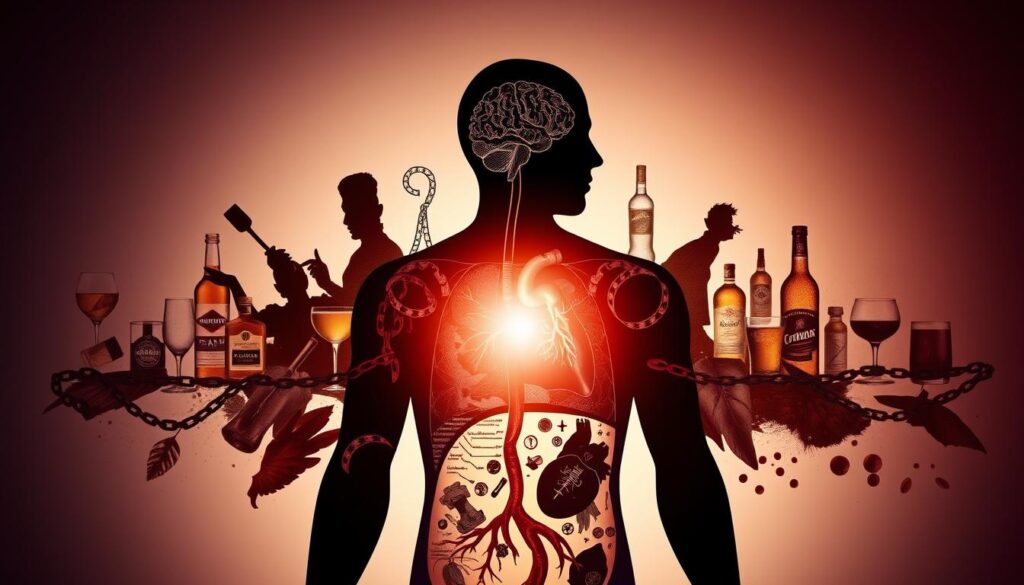
Alcohol abuse affects millions of Americans yearly. It’s a major public health issue. Learning about excessive drinking risks can safeguard your well-being1.
In the U.S., about 178,000 people die from excessive alcohol use annually. This makes it a significant preventable health problem2.
Your drinking habits can greatly affect your long-term health. Unchecked alcohol use often leads to violence and mental health issues.
In 2023, nearly 28.9 million Americans battled alcohol use disorder. This shows how widespread the problem is2.
Excessive drinking costs the U.S. about $249 billion yearly2. These costs go beyond money, affecting families, workplaces, and communities.
Key Takeaways
- Excessive alcohol use causes over 178,000 deaths annually
- Mental health can be significantly impacted by alcohol abuse
- Alcohol-related violence is a serious societal concern
- Nearly 29 million Americans struggle with alcohol use disorder
- Preventative awareness is crucial for health management
What Defines Excessive Alcohol Use and Its Immediate Effects
Excessive drinking can harm your health and safety. It’s more than casual social drinking and can have serious consequences.
Understanding Binge Drinking Thresholds
Binge drinking is a risky pattern of alcohol consumption. It can quickly lead to severe health problems34.
For women, binge drinking means four or more drinks in two hours. For men, it’s five or more drinks in the same period4.
The National Institute on Alcohol Abuse and Alcoholism defines a standard drink as:
- 12 ounces of regular beer
- 5 ounces of wine
- 1.5 ounces of hard liquor
Signs of Alcohol Poisoning
Alcohol poisoning can be life-threatening. Look out for these warning signs:
- Confusion and stupor
- Vomiting
- Seizures
- Slow or irregular breathing
- Pale or blue-tinged skin
Short-term Health and Safety Impacts
Excessive drinking can lead to immediate dangers4. These risks include:
- Motor vehicle accidents
- Accidental injuries
- Increased likelihood of violent behaviors
- Risky sexual encounters
“Alcohol affects your judgment and can put you in dangerous situations almost instantly.”
Underage drinking raises the risk of future alcohol use disorders. Starting early increases the chances of developing these problems later4.
About 178,000 deaths yearly are linked to excessive drinking3. Knowing these risks is crucial for your well-being.
Alcohol Use Risks: Long-term Health Consequences
Consistent alcohol consumption puts your body through significant long-term health challenges. Alcoholism can trigger serious medical complications beyond temporary impairment5. Knowing these risks is vital for your overall well-being.
Chronic alcohol use profoundly impacts your health in many ways. It can dramatically compromise multiple organ systems. Alcohol and liver disease pose critical health risks with devastating consequences5.
- Increased risk of serious chronic conditions
- Potential damage to cardiovascular system
- Compromised immune function
- Higher susceptibility to specific cancers
Cancer risks are particularly alarming. About 3.5% of cancer deaths in the U.S. are directly alcohol-related6. This represents roughly 19,500 annual fatalities.
For women, even moderate drinking raises breast cancer risk by 5% to 15%6. Your liver suffers most from excessive alcohol use. Alcohol-related liver disease has become increasingly common.
Liver cirrhosis caused about 48,000 nationwide deaths in 20195. The death rate for alcohol-related cirrhosis rose by 47% between 2000 and 20195.
“Prevention is always better than cure when it comes to alcohol-related health risks.”
Long-term alcohol use can harm your mental health, relationships, and career. It may lead to cognitive problems, memory issues, and mental health disorders.
Your health is your most valuable asset – protecting it requires informed, proactive choices.
The Hidden Dangers of Alcohol-Related Diseases
Alcohol can harm your body’s critical systems. It creates potential health risks beyond a simple hangover. Understanding these dangers is key for making informed decisions about drinking habits.
Impact on Vital Organs
Excessive alcohol use harms multiple body systems. Research shows links between alcohol and serious health issues. About 95,000 people die yearly from alcohol-related causes.
Over half of these deaths come from long-term health effects7. This highlights the severe impact of alcohol on our bodies.
Liver Disease and Dysfunction
The liver suffers greatly from alcohol’s harmful effects. Chronic drinking can cause serious conditions like fatty liver and alcoholic hepatitis.
It can also lead to liver fibrosis and cirrhosis. For every four daily drinks, the risk of alcohol-related diseases rises by 14%8.
Liver cirrhosis risk doubles with increased alcohol consumption. This shows a strong link between drinking and liver damage.
Cardiovascular Complications
Alcohol harms your heart and blood vessels too. Studies suggest zero alcohol is the only safe level7.
Drinking can increase stroke risk by 38%. It may also negatively impact your overall heart health8.
Cancer Risk Factors
Alcohol’s link to various cancers is alarming. Even moderate drinking can increase your risk of developing serious conditions.
Alcohol use is associated with higher risks of breast, liver, and esophageal cancers. It also raises the chances of head, neck, and colorectal cancers.
- Breast cancer
- Liver cancer
- Esophageal cancer
- Head and neck cancers
- Colorectal cancer
“No amount or type of alcohol is considered safe to consume at any time” – Health Experts
Alcohol affects both physical and mental health. Drunk driving and excessive drinking can cause severe long-term health issues.
Protect your well-being by making responsible choices about alcohol use. Your health depends on informed decisions about drinking.
Conclusion
Knowing alcohol use risks is vital for making smart health choices. Your drinking habits can greatly affect your long-term wellness. Research shows that drinking less can reduce potential health issues910.
Preventing alcohol abuse starts with self-awareness and proactive healthcare. The NIAAA suggests talking to doctors about your drinking habits. This helps spot risks and create custom health plans9.
Science keeps uncovering new facts about alcohol’s effects on our bodies. Drinking can impact many body systems and may lead to various health problems10. Staying informed helps you make better choices.
Your health journey is unique. Getting support and understanding your risks are key. These steps can help you manage alcohol use and maintain a healthy life.
FAQ
What is considered excessive alcohol use?
Excessive alcohol use includes binge drinking and heavy drinking. For women, binge drinking is 4+ drinks per occasion. For men, it’s 5+ drinks.
Heavy drinking means 8+ drinks weekly for women and 15+ for men. Underage drinking and any alcohol during pregnancy are also excessive.
Moderate drinking is up to 1 drink daily for women and 2 for men.
What are the immediate risks of excessive drinking?
Excessive drinking can lead to injuries from accidents and increase the risk of violence. It may cause alcohol poisoning, affecting vital body functions like breathing.
Other risks include higher chances of sexually transmitted infections and unplanned pregnancy.
How does alcohol impact long-term health?
Long-term excessive drinking can cause high blood pressure, heart disease, and liver problems. It may lead to stroke and alcohol use disorder.
Alcohol can also weaken your immune system and cause digestive issues. It may contribute to mental health conditions like depression and anxiety.
What organs are most affected by alcohol consumption?
Alcohol greatly impacts the brain, heart, liver, and pancreas. It can cause cardiomyopathy and arrhythmias in the heart.
The liver may develop problems like cirrhosis. The pancreas can suffer from issues such as pancreatitis.
Does alcohol increase cancer risk?
Yes, alcohol is a known human carcinogen. It increases the risk of head and neck, esophageal, liver, breast, and colorectal cancers.
Even moderate drinking can raise a woman’s breast cancer risk. One drink per day may increase the risk by 5% to 15%.
How prevalent is alcohol use disorder in the United States?
In 2023, about 28.9 million Americans had alcohol use disorder (AUD). Excessive alcohol use is a leading preventable cause of death.
It results in about 178,000 deaths annually. The cost to the country is around 9 billion per year.
What are the risks of drinking during pregnancy?
Drinking during pregnancy can lead to miscarriage, stillbirth, or fetal alcohol spectrum disorder (FASD). There is no known safe amount of alcohol to consume while pregnant.
How does alcohol affect mental health?
Alcohol can greatly impact mental health, contributing to depression and anxiety. It may cause learning problems and memory difficulties.
Excessive drinking can potentially increase the risk of dementia. It affects overall cognitive function and well-being.
What resources are available for understanding alcohol use risks?
The National Institute on Alcohol Abuse and Alcoholism (NIAAA) offers valuable resources. They help individuals check their drinking habits and get personalized feedback.
NIAAA provides ongoing research and support. They focus on prevention, treatment, and recovery programs for alcohol-related issues.
Source Links
- Alcohol Use and Your Health – https://www.cdc.gov/alcohol/about-alcohol-use/index.html
- Understanding Alcohol’s Adverse Impact on Health – https://www.niaaa.nih.gov/publications/brochures-and-fact-sheets/understanding-alcohol-adverse-impact-health
- Facts About Excessive Drinking – https://www.cdc.gov/drink-less-be-your-best/facts-about-excessive-drinking/index.html
- Alcohol use disorder – Symptoms and causes – https://www.mayoclinic.org/diseases-conditions/alcohol-use-disorder/symptoms-causes/syc-20369243
- Medical Complications: Common Alcohol-Related Concerns – https://www.niaaa.nih.gov/health-professionals-communities/core-resource-on-alcohol/medical-complications-common-alcohol-related-concerns
- Alcohol’s Effects on the Body – https://www.niaaa.nih.gov/alcohols-effects-health/alcohols-effects-body
- Risks, Dangers, and Effects of Alcohol on the Body’ – https://americanaddictioncenters.org/alcohol/risks-effects-dangers
- Unveiling the hidden health hazards of alcohol use – Institute of Alcohol Studies – https://www.ias.org.uk/2023/06/13/unveiling-the-hidden-health-hazards-of-alcohol-use/
- Alcohol in moderation: How many drinks is that? – https://www.mayoclinic.org/healthy-lifestyle/nutrition-and-healthy-eating/in-depth/alcohol/art-20044551
- The Risks Associated With Alcohol Use and Alcoholism – https://pmc.ncbi.nlm.nih.gov/articles/PMC3307043/

