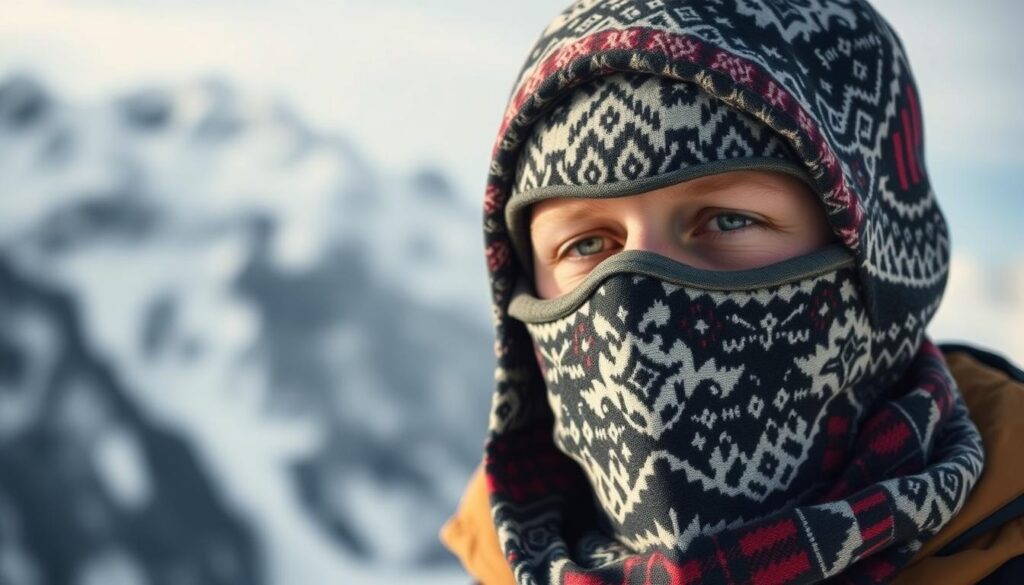
The Battle of Balaclava happened on October 25, 1854, during the Crimean War. It’s a key event in history that named a winter face mask, known as a balaclava or ski mask1. This battle was part of the Siege of Sevastopol, where the Allies tried to take Russia’s main naval base on the Black Sea. The forces involved were from the United Kingdom, France, and the Ottoman Empire, with 20,000 British troops, 7,000 French troops, and 1,000 Turkish troops2.
Imagine being in the middle of this historic battle. The Charge of the Light Brigade and the Thin Red Line event happened here. Lieutenant General the Earl of Raglan led the British Army1. The battle’s location, at 44°32′07″N 33°36′07″E, was key. The Russians took seven guns, leading to a strategic defeat for the British2.
Introduction to the Battle
The term “balaclava” is now linked to a head covering that also covers the neck and face. It’s used as a ski mask or winter face mask, thanks to this battle1. The battle was complex, with the Charge of the Heavy Brigade and the 93rd Highlanders’ participation1.
Key Takeaways
- The Battle of Balaclava took place on October 25, 1854, during the Crimean War1.
- The battle involved the United Kingdom, France, and the Ottoman Empire, with a total of 20,000 British troops, 7,000 French troops, and 1,000 Turkish troops2.
- The Charge of the Light Brigade and the Thin Red Line event were significant events during the battle1.
- The Russians captured seven guns, resulting in a strategic defeat for the British2.
- The term “balaclava” originates from this battle and refers to a type of headwear, often used as a ski mask or winter face mask1.
Historical Overview of the Battle of Balaclava
The Battle of Balaclava took place on October 25, 1854. It was a key moment in the Crimean War. This war was sparked by political and military tensions between France, the Ottoman Empire, Russia, and the United Kingdom3.
Context and Causes of the Crimean War
The Crimean War started over territories and influence in the Ottoman Empire. Countries wanted to protect their interests and stop Russian growth. This led to the Battle of Balaclava.
Major Players Involved in the Battle
Lord Raglan and General Liprandi led their forces in tough conditions. The British Heavy Brigade, with 800 horsemen, faced 3,000 Russian cavalrymen4.
Key Events of the Day: October 25, 1854
The day started with a Russian attack on Ottoman redoubts. The “Thin Red Line” and daring charges by the Heavy and Light Brigades were notable. The Heavy Brigade’s charge lasted about 10 minutes, showing great bravery4.
The Light Brigade, with 673 horsemen, lost 475 horses and about 260 men in the charge43.
Soldiers fought in the cold, needing cold weather gear to survive. The full face balaclava was key tactical headwear, protecting against the cold and improving performance.
| Statistic | Details |
|---|---|
| Date of Battle | October 25, 1854 |
| British Heavy Brigade Horsemen | 800 |
| Russian Cavalrymen | 3,000 |
| Duration of Heavy Brigade Charge | 10 minutes |
| Light Brigade Horsemen | 673 |
| Horses Lost by Light Brigade | 475 |
| Total British Casualties | Approximately 615 |
| Light Brigade Men Casualties | Approximately 260 |
| Light Brigade Survivors | Sergeant Frederick Peake |
Tactical Analysis of the Battle Strategies
The Battle of Balaclava was a clash of strategies that has shaped military history. These tactics give us insight into both past battles and today’s outdoor gear.
The Charge of the Light Brigade
The Charge of the Light Brigade was a result of bad communication. It led 600 men into a fierce battle against Russian defenses. This event shows bravery and the dangers of poor communication5.
Defensive Maneuvers by the Russians
Russian forces used smart defensive tactics. They built trenches and redoubts to stop the Allied cavalry. These moves showed the power of strong defenses against bigger forces5.
The Role of Cavalry and Infantry Tactics
Cavalry and infantry worked together in 19th-century battles. Cavalry could do quick attacks and flanking maneuvers with infantry support. Balaclava’s lessons have shaped modern head protection and thermal wear, keeping soldiers safe and agile6.
| Aspect | Light Brigade | Russian Defenses |
|---|---|---|
| Strategy | Offensive cavalry charge | Fortified trench systems |
| Tactical Advantage | Morale and speed | Terrain and numbers |
| Outcome | High casualties | Successfully repelled charge |
Legacy and Impact of the Battle of Balaclava
The Battle of Balaclava has made a big impact on military history and pop culture. Its events shape how armies plan and carry out missions today.
Influence on Military Strategy and Tactics
The Battle of Balaclava showed the value of clear communication and strong leadership. These lessons are now part of military training. They focus on teamwork and planning to avoid past errors7.
Commemoration and Cultural Representations
The courage shown at Balaclava is remembered in books and art. Alfred, Lord Tennyson’s poem “The Charge of the Light Brigade” tells the story of bravery and loss. It has become a part of our cultural memory.
Also, the term “balaclava” now means winter face masks and ski masks. People all over the world wear them outdoors.
Lessons Learned from the Battle
Balaclava reminds us of the price of poor communication and the bravery of soldiers. It teaches us to always improve in military training and leadership. This way, we honor the sacrifices made by remembering them through better preparation and planning8.
FAQ
What was the Battle of Balaclava?
The Battle of Balaclava was a key fight in the Crimean War, happening on October 25, 1854. It’s famous for the Charge of the Light Brigade. British cavalry bravely faced huge Russian forces.
This battle showed how important Sevastopol was. It also showed how tough the weather was, affecting how soldiers fought and what they wore.
Who were the key figures in the Battle of Balaclava?
Important people in the Battle of Balaclava were Lord Raglan, the British leader, and General Liprandi, leading the Russians. Lord Cardigan also played a big role in the Charge of the Light Brigade. His bravery was matched by the tragic mistakes of the battle.
Why is the balaclava headwear named after the Battle of Balaclava?
The balaclava, a winter face mask, got its name from the Battle of Balaclava. British soldiers wore it in the cold. It kept their heads warm, a legacy in today’s outdoor gear.
How did the Battle of Balaclava influence modern tactical headwear?
The cold of the Battle of Balaclava made soldiers need good headwear. This led to the balaclava. Today, it’s used by both military and outdoor fans for warmth in cold places.
What is the historical significance of the Charge of the Light Brigade?
The Charge of the Light Brigade is a famous part of the Battle of Balaclava. It shows bravery and the sad results of bad communication. It has shaped military tactics and gear, showing the need for safety in battles.
How did the Russian defensive maneuvers impact the outcome of the Battle of Balaclava?
The Russians used smart defense tactics, using the land and their numbers to fight off the British. Their plans gave them an edge and showed the value of flexible military strategies. These ideas have shaped today’s headwear and cold weather gear.
What lessons were learned from the Battle of Balaclava that influence today’s cold weather gear?
The Battle of Balaclava taught the importance of warm headgear in cold weather. This knowledge has led to better outdoor gear. Today’s gear is made to keep heads warm and safe for both soldiers and outdoor lovers.
How is the Battle of Balaclava commemorated in popular culture?
The Battle of Balaclava is remembered in many ways, like Alfred Lord Tennyson’s poem “The Charge of the Light Brigade.” It has made the battle famous in books, art, and movies. It also made the balaclava a must-have for winter in both military and outdoor settings.
What role did the harsh climate play in the Battle of Balaclava?
The cold weather of the Crimean War was key in the Battle of Balaclava. It changed how soldiers fought and what they wore. This led to the balaclava, now a key part of outdoor and military gear.
How has the Battle of Balaclava impacted modern military and outdoor equipment design?
The Battle of Balaclava has shaped today’s military and outdoor gear, like the balaclava. The need for warm headgear in cold weather has led to better materials and designs. This ensures heads are protected and comfortable for both soldiers and outdoor fans.
Source Links
- Battle of Balaclava – https://www.britishbattles.com/crimean-war/battle-of-balaclava/
- Battle of Balaclava – https://en.wikipedia.org/wiki/Battle_of_Balaclava
- Battle of Balaklava (1854) | Crimean War, British-Russian Conflict | Britannica – https://www.britannica.com/event/Battle-of-Balaklava
- Battle of Balaklava | National Army Museum – https://www.nam.ac.uk/explore/battle-balaklava
- Breaking the Line: Cavalry Tactics at Balaklava – https://airspacehistorian.wordpress.com/2013/12/12/breaking-the-line-cavalry-tactics-at-balaklava/
- Why Do Eastern European Soldiers Always Wear Ski Masks? – https://wesodonnell.medium.com/why-do-eastern-european-soldiers-always-wear-ski-masks-d4bb135a9ff6
- The Battle of Balaklava in Perspective | The Past – https://the-past.com/feature/the-battle-of-balaklava-in-perspective/
- Who Blew the Balaklava Bugle?: The Charge of the Light Brigade and the Afterlife of the Crimean War – https://19.bbk.ac.uk/article/id/1683/