
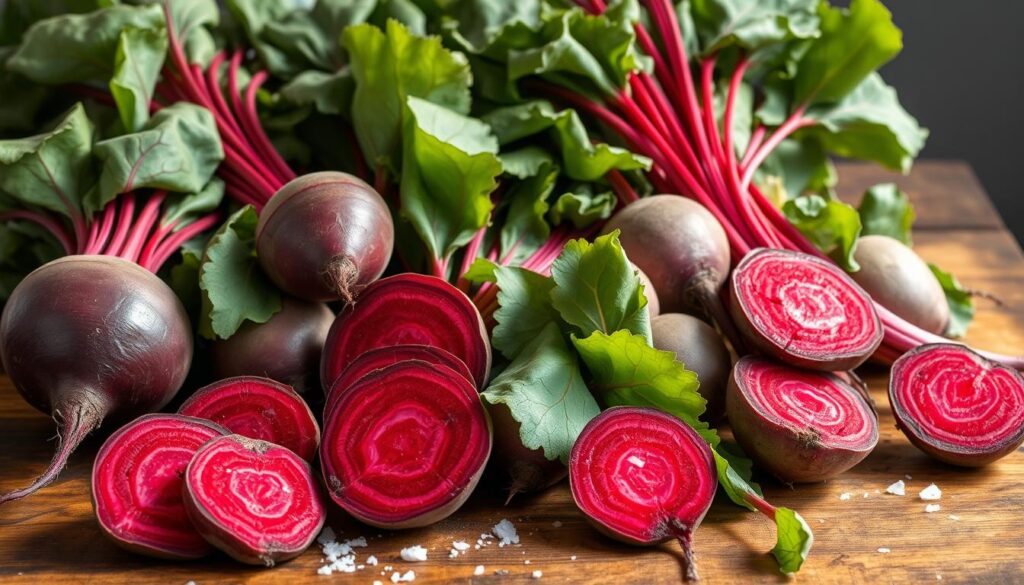
Beetroot is a powerhouse veggie that can transform your diet and boost your health. This root vegetable packs a nutritional punch. It offers a wide range of benefits that can improve your overall wellness1.
Beetroots are low in calories but rich in essential nutrients. They support your body’s optimal functioning2. You can enjoy them raw, juiced, roasted, or boiled.
This versatile veggie can easily fit into your meals1. It’s great for improving exercise performance and supporting heart health2.
Key Takeaways
- Beetroots are a nutrient-dense vegetable with minimal calories
- Contains essential vitamins and minerals supporting overall health
- Versatile in cooking and can be prepared in multiple ways
- Supports exercise performance and cardiovascular health
- Rich in antioxidants and natural plant compounds
Understanding Beetroot’s Nutritional Profile
Beetroots are nutritional powerhouses packed with essential nutrients. These vibrant vegetables can boost your overall health. Their unique composition reveals why they’re so beneficial for your diet.
Essential Vitamins and Minerals
Beetroot vitamins and minerals make this vegetable a nutritional superstar. One cup of raw beets provides impressive benefits3.
- 7% daily vitamin C
- 34% daily folate
- 11% daily potassium
- 9% daily magnesium
- Iron and vitamin B6
Caloric Content and Macronutrients
Beetroots offer a balanced nutritional profile3. A single cup of raw beetroot contains:
| Nutrient | Amount |
|---|---|
| Calories | 58 |
| Protein | 2.2g |
| Carbohydrates | 13g |
| Fat | 0.2g |
Beetroot carbs are mostly natural sugars, with 9.2 grams per cup3. The fiber content is impressive, offering nearly 4 grams per serving4.
Natural Plant Compounds
Beetroots are rich in antioxidants and unique plant compounds. The betalains provide powerful health-supporting properties. These natural compounds include:
- Nitrates that support blood flow
- Antioxidants that combat cellular damage
- Betalain pigments with potential anti-inflammatory effects
Nature’s most vibrant vegetables often pack the most nutritional punch!
Beetroots are an excellent addition to a balanced diet. They support exercise performance and provide essential nutrients. These remarkable vegetables offer numerous health benefits.
Powerful Health Benefits of Beetroot
Beetroot packs a powerful punch for your health. It supports heart health and boosts exercise performance. This vibrant veggie is a nutritional powerhouse that can transform your wellness routine.
Beetroot offers remarkable cardiovascular support. Its natural nitrates help relax blood vessels, potentially lowering blood pressure5. This can reduce risks of heart disease and stroke.
- Supports heart health by reducing blood pressure
- Enhances exercise performance
- Promotes gut health
- Provides anti-inflammatory properties
Athletes will love beetroot’s impact on exercise. It can improve cycling performance and increase oxygen use by 20%6. Nitrates help muscles work more efficiently, boosting stamina and endurance.
Beetroot exercise performance benefits go beyond immediate workout improvements. Regular consumption may reduce inflammation markers, supporting long-term athletic recovery6.
“Beets are nature’s performance-enhancing food, offering athletes a natural way to improve their capabilities.” – Nutrition Experts
Beetroot’s nutritional profile is impressive. A single serving provides folate, manganese, and vitamin C5. These nutrients support immune function and may reduce chronic disease risks.
| Nutrient | Percentage of Daily Value |
|---|---|
| Folate | 20% |
| Manganese | 14% |
| Copper | 8% |
Try adding beetroot to your meals in various ways. You can juice it, roast it, or add it to salads. Each method offers unique benefits and keeps your meals exciting6.
Conclusion
Beetroot is more than just a vegetable. It’s a nutritional powerhouse that can transform your daily meals. This vibrant ingredient offers a wealth of vitamins C, A, and K7.
Growing beetroot at home is easy. Your garden can provide fresh produce that supports heart health8. Beetroot’s high nitrate content improves blood pressure and boosts physical performance8.
Athletes have found that beetroot juice can enhance exercise abilities9. Research shows beetroot’s potential in repairing DNA and supporting cancer prevention9.
Enjoy beetroot juiced, roasted, or in salads. You’re making a smart choice for your health7. This crimson marvel offers a tasty path to better wellness.
Unlock beetroot’s incredible potential for your body and mind. It’s a delicious way to boost your health journey.
FAQ
What are the main nutritional benefits of beetroot?
Beetroots are nutrient powerhouses. They’re low in calories but rich in folate, manganese, copper, and potassium. These veggies also contain beneficial plant compounds like betanin and nitrates.
How can beetroot improve my exercise performance?
Beetroots boost exercise performance by enhancing oxygen use and increasing stamina. The nitrates in beetroot improve blood flow, helping you endure longer during workouts.
Are beetroots good for heart health?
Absolutely! Beetroots can lower blood pressure by increasing nitric oxide levels. This relaxes blood vessels, potentially reducing heart disease and stroke risks.
How can I incorporate beetroot into my diet?
Beetroots are versatile and easy to add to meals. Try them raw, juiced, roasted, boiled, or pickled. Add them to salads or make beetroot hummus.
You can also create beetroot fries or enjoy a refreshing glass of beetroot juice.
Do beetroots have any potential cancer-fighting properties?
Beetroots contain betacyanin, which may have anti-cancer properties. They’re also rich in antioxidants that fight inflammation and protect cells from damage.
Are there any precautions I should take when eating beetroot?
Beetroots are generally safe, but moderation is key for some people. Those prone to kidney stones should limit their intake.
Beetroots can cause temporary red or pink urine and stool. This is harmless but might be surprising.
How do beetroots affect blood sugar?
Beetroots have a medium glycemic index but a low glycemic load. They shouldn’t significantly affect blood sugar levels. Each serving provides 2-3 grams of dietary fiber.
Can beetroot benefit brain function?
Yes, beetroot nitrates may improve brain function by boosting blood flow. This can potentially support cognitive health and enhance mental performance.
Source Links
- Beetroot 101: Nutrition Facts and Health Benefits – https://www.healthline.com/nutrition/foods/beetroot
- Top 10 health benefits of beetroot – https://www.bbcgoodfood.com/health/nutrition/ingredient-focus-beetroot
- Beets Nutrition Facts and Health Benefits – https://www.verywellfit.com/beets-nutrition-facts-calories-and-their-health-benefits-4116852
- Beetroot: Benefits and nutrition – https://www.medicalnewstoday.com/articles/277432
- Health Benefits of Beetroot – https://www.webmd.com/diet/health-benefits-beetroot
- 9 Impressive Health Benefits of Beets – https://www.healthline.com/nutrition/benefits-of-beets
- Give me a beet: Why this root vegetable should be on your plate – https://www.heart.org/en/news/2023/02/22/give-me-a-beet-why-this-root-vegetable-should-be-on-your-plate
- The Potential Benefits of Red Beetroot Supplementation in Health and Disease – https://pmc.ncbi.nlm.nih.gov/articles/PMC4425174/
- Beetroot as a Potential Functional Food for Cancer Chemoprevention, a Narrative Review – https://www.jcpjournal.org/journal/view.html?doi=10.15430/JCP.2021.26.1.1

