
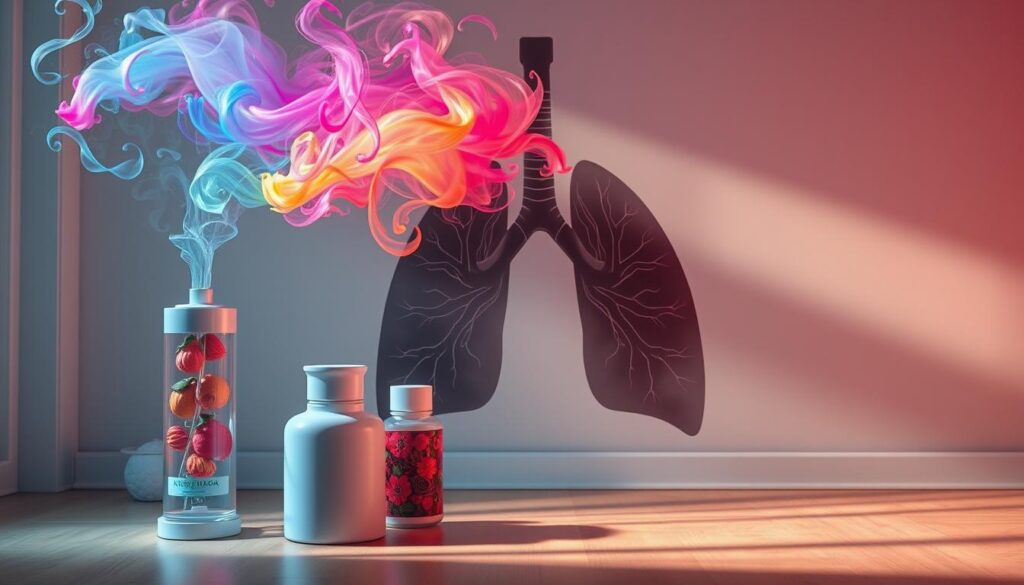
Air fresheners promise fresh scents but may harm your health. These products could be silently damaging your lungs. Research shows a hidden danger in these common household items12.
Harmful chemicals hide in air fresheners’ pleasant fragrances. Studies found 1,4-dichlorobenzene in many people’s blood. Some groups face higher exposure to this indoor air pollutant1.
These chemicals can seriously affect respiratory health. People with lung conditions are at greater risk23.
Your lungs may suffer without you knowing it. Research links these products to decreased lung capacity. Asthma sufferers and those with breathing issues face even higher risks12.
Key Takeaways
- Air fresheners contain potentially harmful chemical compounds
- 96% of people have detectable levels of harmful chemicals in their blood
- Exposure can negatively impact lung function
- People with respiratory conditions are at higher risk
- Indoor air pollution from air fresheners is a real health concern
Understanding Air Fresheners: Ingredients and Types
Air fresheners are common in homes and offices. They promise to make stale spaces smell good. But their pleasant scents hide complex chemical mixtures that need closer study.
People spend up to 90% of their time indoors. These spaces are full of air freshener products. Knowing about these products can help you make better choices for indoor air quality.
Common Ingredients in Air Fresheners
Most store-bought air fresheners contain potentially harmful chemicals. The U.S. Environmental Protection Agency has found several concerning ingredients:
- Volatile organic compounds (VOCs)
- Formaldehyde
- Phthalates
- Propellants
- Petrochemicals
A University of California at Berkeley study made an important discovery. Some air freshener ingredients, like terpenes, can react with ozone. This reaction creates more harmful compounds4.
Types of Air Fresheners on the Market
| Type | Delivery Method | Common Usage |
|---|---|---|
| Aerosol Sprays | Pressurized can | Instant fragrance release |
| Plug-In Devices | Electrical outlet | Continuous scent distribution |
| Gel-Based | Stationary container | Slow, steady fragrance emission |
| Reed Diffusers | Porous sticks | Natural, passive scent spread |
Caution is advised: Indoor air pollution from these products can be very toxic. It can be worse than outdoor air pollution5. Many fragrance ingredients are kept secret due to trade protections.
“Knowledge is the first step toward creating a healthier indoor environment.” – Environmental Health Expert
Choose air fresheners with clear ingredient lists. Consider natural options that reduce exposure to volatile organic compounds. These choices can help minimize potential health risks5.
How Air Fresheners Work in Homes and Offices
Air fresheners transform indoor spaces by managing air quality. They use clever methods to tackle bad smells and create nice environments. These products work in smart ways to make homes and offices more pleasant.
Mechanisms of Odor Masking
Air fresheners use odor masking to get rid of bad smells. This process involves several key approaches:
- Chemical neutralization of odor molecules
- Overwhelming existing scents with stronger fragrances
- Blocking olfactory receptors temporarily
These products contain special compounds that interact with smelly molecules. This interaction helps reduce how much we notice bad odors6. Air fresheners often use volatile organic compounds (VOCs) like formaldehyde.
These VOCs help release fragrances into the air6. Other common VOCs in air fresheners include acetaldehyde and benzene.
Release of Fragrance Compounds
Modern air fresheners use different ways to spread fragrance. Here are some common methods:
| Delivery Method | Mechanism |
|---|---|
| Aerosol Sprays | Propellant-based mist distribution |
| Electric Diffusers | Continuous controlled fragrance release |
| Gel-Based Products | Slow, steady scent emission |
Phthalates are important chemicals in air fresheners6. They help embed fragrances into the products. These chemicals ensure that odor control lasts a long time7.
Knowing how air fresheners work helps you choose wisely. You can make better decisions about indoor air quality and your health.
Air fresheners can make your space nicer. But remember to think about how they might affect your health over time6.
The Science Behind Lung Function
Your respiratory system is vital for good lung health. Pulmonary function shows how your lungs work to oxygenate your body and remove waste gases.
Lungs are complex organs that perform critical functions. They exchange oxygen and carbon dioxide through airways and blood vessels.
Exploring Pulmonary Function
Pulmonary function measures how well your respiratory system breathes and exchanges gases. Doctors use several key tests to assess this.
- Forced Expiratory Volume (FEV1)
- Peak Expiratory Flow Rate
- Lung Capacity Measurements
Key Factors Affecting Lung Health
Various elements can affect your lung health and breathing performance:
| Factor | Impact on Lung Function |
|---|---|
| Environmental Pollutants | Reduced lung capacity8 |
| Indoor Air Quality | Potential respiratory irritation9 |
| Lifestyle Choices | Direct influence on lung performance |
“Your lungs are a remarkable system that responds to both internal and external conditions.”
To protect your lung health, learn about these complex mechanisms. Make smart choices about your environment and lifestyle89.
Air Fresheners and Indoor Air Quality
Indoor air pollution threatens many households. Your home’s air quality affects lung health, especially with volatile organic compounds (VOCs) in products like air fresheners10.
Understanding Volatile Organic Compounds
VOCs are invisible gases from household products. Air fresheners release multiple chemical compounds. Scented goods emit over 100 VOCs, with each product releasing about 17 VOCs10.
- A single fragrance can contain hundreds of chemicals
- 44% of tested products generate carcinogenic air pollutants10
- Potential health risks include respiratory irritation
Impact on Lung Health
Your respiratory system is sensitive to chemical emissions. Nearly 19% of people reported health issues from air fresheners10. VOCs can trigger or worsen conditions like asthma11.
“Reducing exposure to chemical fragrances can significantly improve indoor air quality.” – Environmental Health Specialist
| Product Type | Average VOCs Emitted | Health Risk Level |
|---|---|---|
| Air Freshener Sprays | 17-25 VOCs | High |
| Plug-in Air Fresheners | 12-18 VOCs | Moderate |
| Scented Candles | 8-15 VOCs | Low-Moderate |
Experts suggest using unscented alternatives to lower health risks from fragranced products10. Be aware of your indoor air quality. This can protect your lungs and create a safer home.
Research Insights: Air Fresheners and Lung Function
Scientists are exploring how air fresheners affect respiratory health. They’re studying lung function to uncover hidden risks of these common household products. This research is vital for understanding indoor air quality’s impact on breathing.
A survey revealed surprising health effects of air fresheners. 34.7% of Americans reported health issues, including breathing problems, when exposed to fragranced products12. Shockingly, 15.1% of adults lost work due to these exposures12.
Key Research Findings on Respiratory Risks
- Over 100 known chemicals are released by air fresheners13
- Less than 10% of volatile components are typically listed on product labels13
- Air fresheners have been linked to multiple health issues, including:
- Asthma symptoms
- Migraine headaches
- Breathing problems
Populations at Higher Risk
Some groups are more vulnerable to air freshener health effects. People with asthma or allergies may have stronger reactions. Air freshener exposure can significantly worsen lung function13.
The invisible chemicals in air fresheners can have very visible impacts on your lung health.
| Health Impact | Prevalence |
|---|---|
| Respiratory Difficulties | 34.7% |
| Workplace Disruption | 15.1% |
| Workplace Avoidance | 20.2% |
Current evidence suggests being cautious with air fresheners. More research is still needed in this area. Knowing these risks helps you make smart choices about products in your home and workplace.
Common Symptoms of Lung Irritation
Air fresheners can trigger various lung irritation effects. They might seem harmless, but they can impact your well-being. Knowing the symptoms helps protect your lung health.
Identifying Symptoms Related to Air Freshener Use
Lung irritation from air fresheners can show up in different ways:
- Persistent coughing
- Wheezing and shortness of breath
- Throat and nasal passage discomfort
- Headaches and dizziness
- Eye and skin irritation
Long-Term vs. Short-Term Exposure Effects
Air freshener side effects depend on exposure time and intensity. Short-term exposure can cause quick respiratory symptoms. Long-term use might lead to serious health issues14.
“Protecting your respiratory health begins with understanding potential indoor air pollutants”
People with asthma or allergies may have worse reactions. Air fresheners can harm vulnerable groups like children and older adults1415.
American Lung Association14Indoor Air Quality Research Institute
Safe Alternatives to Conventional Air Fresheners
Clean air at home doesn’t mean giving up pleasant scents. Natural fragrances can protect your lung health while still smelling great. Safe alternatives to traditional air fresheners offer effective and health-conscious options.
Traditional air fresheners often contain harmful chemicals that can hurt indoor air quality16. VOCs like formaldehyde and benzene can cause breathing problems and allergies16. Luckily, many safe options can keep your space fresh and clean.
Natural Air Freshening Solutions
- Use fragrant houseplants like jasmine and lavender
- Utilize essential oil diffusers with pure botanical extracts
- Create natural room sprays with organic ingredients
- Open windows for fresh air circulation
DIY Air Freshener Recipes
Make your own air fresheners using simple, natural ingredients. These homemade solutions are safe alternatives to store-bought products17. Try these easy recipes:
- Citrus Simmer Pot: Boil orange peels, cinnamon sticks, and cloves
- Baking Soda Deodorizer: Mix essential oils with baking soda in a mason jar
- Herb Sachet: Dry lavender and rosemary in small cloth bags
“Natural air fresheners not only smell great but protect your health and environment.”
Plant-based air fresheners can reduce odors without harsh chemicals17. These options are biodegradable and eco-friendly. They offer health benefits while keeping your indoor air clean1617.
Reducing Exposure to Potential Irritants
Indoor air quality is crucial for lung health. We spend about 90% of our time indoors. Indoor air can be more polluted than outdoor air18.
Volatile organic compounds (VOCs) indoors can be 2 to 5 times higher than outside18. Creating a healthier living space is vital for our well-being.
Tips for Minimizing Air Freshener Use
Clean indoor air requires less air freshener use. Here are some practical strategies to consider:
- Replace chemical air fresheners with natural alternatives
- Use unscented cleaning products19
- Remove sources of unpleasant odors quickly
- Clean surfaces regularly to prevent odor buildup
Enhancing Ventilation in Living Spaces
Good ventilation is key to better indoor air quality. Open windows daily for 15-30 minutes to let fresh air in.
Follow these ventilation guidelines for best results:
- Avoid opening windows during high pollution times
- Use fans to improve air circulation
- Maintain indoor humidity between 30-50%18
| Ventilation Strategy | Benefit |
|---|---|
| Daily Window Opening | Reduces indoor pollutant concentration |
| HEPA Air Filters | Removes microscopic particles |
| Regular HVAC Maintenance | Prevents pollutant buildup |
“Clean air is not a luxury, but a necessity for healthy living.”
Protecting your lung health needs constant care for your indoor space. These strategies can help reduce irritants significantly. Breathe easier by making these simple changes15.
Regulatory Perspectives on Air Fresheners
Air freshener safety can be tricky to navigate. Current regulations have gaps that affect consumer safety and product transparency. Many products enter the market without thorough safety evaluations.
Safety Regulations Landscape
Your grasp of product safety matters greatly. Air freshener regulations are surprisingly loose. Studies show complex issues in tracking air and chemical exposure from household items.
- Minimal federal regulations on chemical composition
- Inconsistent product labeling requirements
- Limited testing for long-term health impacts
Consumer Awareness Initiatives
Clear product labeling is becoming more crucial. Transparency in ingredient disclosure helps you choose safer air fresheners for your home20.
“Knowledge is the first line of defense in protecting your health from potential environmental risks.”
Studies reveal high exposure to chemicals like 1,4 dichlorobenzene. 96 percent of people tested had detectable levels in their blood21.
This highlights the urgent need for stronger air freshener regulations. Enhanced consumer safety measures are also crucial.
Emerging Standards and Recommendations
Regulations change slowly, but you can take action now. Choose products with clear ingredient lists and minimal synthetic fragrances. Look for third-party certifications that indicate safer formulations21.
National Institute of Environmental Health Sciences20European Commission Consumer Studies
Expert Opinions on Air Freshener Safety
Experts in respiratory and environmental health share crucial insights about air freshener safety. Their research uncovers potential risks linked to these common household products. Understanding these findings is vital for protecting our health.
Respiratory experts worry about air freshener safety. Fragrance exposure impacts indoor air quality, especially for those with sensitive lungs19. Weekly, 73% of Americans use air fresheners or deodorizers22.
Respiratory Experts’ Perspectives
Leading researchers highlight key points about air freshener safety:
- Chemical compounds in air fresheners can potentially trigger respiratory issues
- Individuals with asthma or chronic lung diseases are more vulnerable
- Long-term exposure may increase health risks
Insights from Environmental Health Specialists
Environmental health specialists stress the importance of understanding air freshener impacts. For 20% of Americans, fragrance exposure disrupts daily activities22.
Researchers recommend:
- Reducing frequent air freshener use
- Improving indoor ventilation
- Choosing natural alternatives
“Understanding the potential risks of air fresheners is crucial for maintaining a healthy indoor environment.”
| Expert Recommendation | Purpose |
|---|---|
| Minimize chemical air freshener use | Reduce respiratory irritation |
| Improve ventilation | Enhance indoor air quality |
| Choose natural alternatives | Minimize chemical exposure |
Stay informed and make smart choices to protect your respiratory health. Create a safer indoor environment by following expert advice. Your lungs will thank you.
The Importance of a Healthy Home Environment
A healthy home goes beyond simple cleaning. It involves choices that protect your family’s respiratory health. Your living space can impact lung function and allergy susceptibility.
Developing an allergy-friendly home requires multiple approaches. Over 7 million U.S. children have asthma, highlighting the need for proactive indoor air management23.
Creating an Allergy-Friendly Home
Transform your home into an allergy-friendly space with these key strategies:
- Maintain indoor humidity below 50% to prevent mold growth23
- Improve ventilation for at least 12 hours daily
- Reduce exposure to household chemical irritants
- Implement regular cleaning protocols
Benefits of Plant-Based Air Purification
Plant-based air purification offers a natural solution for a healthy home. Some plants absorb volatile organic compounds (VOCs) while enhancing indoor aesthetics.
| Plant Type | Air Purification Capability | Maintenance Level |
|---|---|---|
| Spider Plant | Removes formaldehyde | Low |
| Snake Plant | Filters multiple toxins | Very Low |
| Peace Lily | Reduces benzene | Moderate |
Eating more vegetables and fruits can support lung development. Daily exercise also improves respiratory health24.
By using these strategies, you can create a healthier home. This environment supports optimal lung function and reduces allergy risks.
“Your home should be a sanctuary of health, not a source of respiratory challenges.”
Final Thoughts on Air Fresheners and Lung Health
Your lung health is more important than hiding indoor smells with risky air fresheners. Smart choices about indoor air can protect your breathing. Indoor VOC levels can be ten times higher than outdoors, making home air potentially dangerous25.
Look into natural air freshener options that won’t harm your health. Kids, seniors, and people with breathing issues face the highest risk from VOCs25. Experts suggest avoiding scented products that may cause breathing problems26.
Better indoor air starts with safer practices. Choose solid wood furniture and air-dry cleaning outside. Let new items breathe before bringing them in25.
By focusing on lung health and making smart choices, you can create a healthier home. This approach supports your breathing and overall well-being.
Making Informed Choices for Better Lung Health
Protecting your lungs is an ongoing effort. Stay curious about indoor air risks. Choose natural, breathable spaces over quick fragrance fixes.
Encouraging Further Research and Awareness
Support research into indoor air quality for future generations. Your awareness can drive positive changes. This helps us understand how our environment affects lung health.
FAQ
Are air fresheners harmful to lung health?
Research shows air fresheners can harm lung function. They contain Volatile Organic Compounds (VOCs) that may reduce pulmonary function. These compounds can cause respiratory irritation and other health issues.
What specific health risks are associated with air freshener use?
Air fresheners can cause eye and throat irritation, headaches, and asthma attacks. Long-term exposure may lead to more serious health concerns. These include potential impacts on heart function and hormone balance.
People with pre-existing respiratory conditions face higher risks. There’s also a possible increased cancer risk with prolonged use.
How do air fresheners affect lung function?
Studies show exposure to certain compounds in air fresheners decreases lung function. One study found a 4% decrease in Forced Expiratory Volume (FEV1). African Americans showed the highest exposure levels in this research.
People with allergies or asthma may be more sensitive to these effects.
What are safe alternatives to traditional air fresheners?
Natural alternatives include using fragrant plants like jasmine or roses. Opening windows for ventilation helps freshen air naturally. Using baking soda absorbs odors effectively.
Maintaining cleanliness also keeps spaces fresh. These methods avoid health risks linked to commercial air fresheners.
Are air fresheners regulated for safety?
Air fresheners lack strict regulation. This results in wide variations in ingredients and concentrations. The lack of oversight highlights the need for consumer awareness.
More comprehensive labeling and safety standards are necessary for these products.
Can air fresheners trigger respiratory symptoms?
Air fresheners can indeed trigger respiratory symptoms. Common reactions include coughing, wheezing, and throat irritation. They may also cause asthma attacks in sensitive individuals.
People with existing respiratory conditions should be extra careful with air fresheners.
What types of compounds are found in air fresheners?
Air fresheners contain various Volatile Organic Compounds (VOCs). These include formaldehyde, acetaldehyde, benzene, and toluene. Other common ingredients are phthalates, propellants, and solvents.
Many air fresheners also contain aldehydes and deodorizers. These compounds can impact respiratory health.
How can I reduce exposure to air freshener chemicals?
Minimize use of commercial air fresheners to reduce exposure. Ensure proper ventilation by opening windows daily for 15-30 minutes. Remove odor sources promptly to keep air fresh.
Consider using natural alternatives like air-purifying plants. These methods help maintain clean air without chemical risks.
Source Links
- Chemical in Many Air Fresheners May Reduce Lung Function – https://www.nih.gov/news-events/news-releases/chemical-many-air-fresheners-may-reduce-lung-function
- PDF – https://portal.ct.gov/-/media/Departments-and-Agencies/DPH/dph/environmental_health/eoha/pdf/AirFreshenerFSpdf.pdf
- Scents | Canadian Lung Association – https://www.lung.ca/lung-health/scents
- Are air fresheners bad for your health? – https://home.howstuffworks.com/home-improvement/household-safety/air-freshener-dangers.htm
- Toxic Chemicals in Air Fresheners – https://madesafe.org/blogs/viewpoint/toxic-chemicals-in-air-fresheners
- Do Air Fresheners Impact Our Health? – https://www.columbiadoctors.org/news/do-air-fresheners-impact-our-health
- Chemical in Many Air Fresheners May Affect Lungs – https://www.nih.gov/news-events/nih-research-matters/chemical-many-air-fresheners-may-affect-lungs
- Inhalable Particulate Matter and Health (PM2.5 and PM10) – https://ww2.arb.ca.gov/resources/inhalable-particulate-matter-and-health
- Effects of indoor environment and lifestyle on respiratory health of children in Chongqing, China – https://jtd.amegroups.org/article/view/38254/html
- INDOOR AIR QUALITY: Scented Products Emit a Bouquet of VOCs – https://pmc.ncbi.nlm.nih.gov/articles/PMC3018511/
- Asthma and Indoor Air – https://www.lung.org/blog/asthma-and-indoor-air
- Fragranced consumer products: exposures and effects from emissions – https://pmc.ncbi.nlm.nih.gov/articles/PMC5093181/
- Systematic Review on Respiratory Toxicology Caused by Synthetic Air Fresheners – https://www.ijraset.com/research-paper/respiratory-toxicology-caused-by-synthetic-air-fresheners
- Indoor Air Can Cause Health Problems – https://www.urmc.rochester.edu/Encyclopedia/content?ContentTypeID=1&ContentID=2163
- Examples of common lung irritants and how to avoid them – https://www.medicalnewstoday.com/articles/lung-irritants
- The Dangers of Toxic Air Fresheners and the Benefits of Healthier Alternatives – https://www.soapandpaperfactory.com/blogs/journal/the-dangers-of-toxic-air-fresheners-and-the-benefits-of-healthier-alternatives?srsltid=AfmBOorilx6YZOkC7Xpj7UsuhMvB8gYnmk9L3Y8oM53dKGHYVHjm-1Df
- Your Guide to Non-Toxic Air Fresheners In 2024 – https://www.growfragrance.com/blogs/learn/choosing-non-toxic-air-fresheners-for-a-healthier-home-in-2024?srsltid=AfmBOooh7sXj2IN9Tjtp6PBC7y5IFbFv4tw8qdOOVkDVzRWt5s4BM5QT
- Indoor Air Quality – https://aafa.org/asthma/asthma-triggers-causes/air-pollution-smog-asthma/indoor-air-quality/
- Improve Indoor Air Quality – https://www.lung.org/help-support/corporate-wellness/create-a-lung-healthy-work
- Opinion on air fresheners, SCHER plenary, 27 January 2006 – https://ec.europa.eu/health/archive/ph_risk/committees/04_scher/docs/scher_o_026.pdf
- Chemical in Many Air Fresheners May Reduce Lung Function – https://ercweb.com/tips/show/chemical-in-many-air-fresheners-may-reduce-lung-function
- Air Fresheners: Are They Safe? – https://www.poison.org/articles/air-freshener-171
- PDF – https://www.hud.gov/sites/documents/SAFEANDHEALTHYHOME.PDF
- Effects of indoor environment and lifestyle on respiratory health of children in Chongqing, China – https://pmc.ncbi.nlm.nih.gov/articles/PMC7656398/
- Volatile Organic Compounds in the Home: The Surprising Places You Might Find Them – https://www.lung.org/blog/volatile-organic-compounds-at-home
- Holiday Scents and Lung Disease Triggers – https://www.lung.org/blog/holiday-scents-asthma-triggers

