
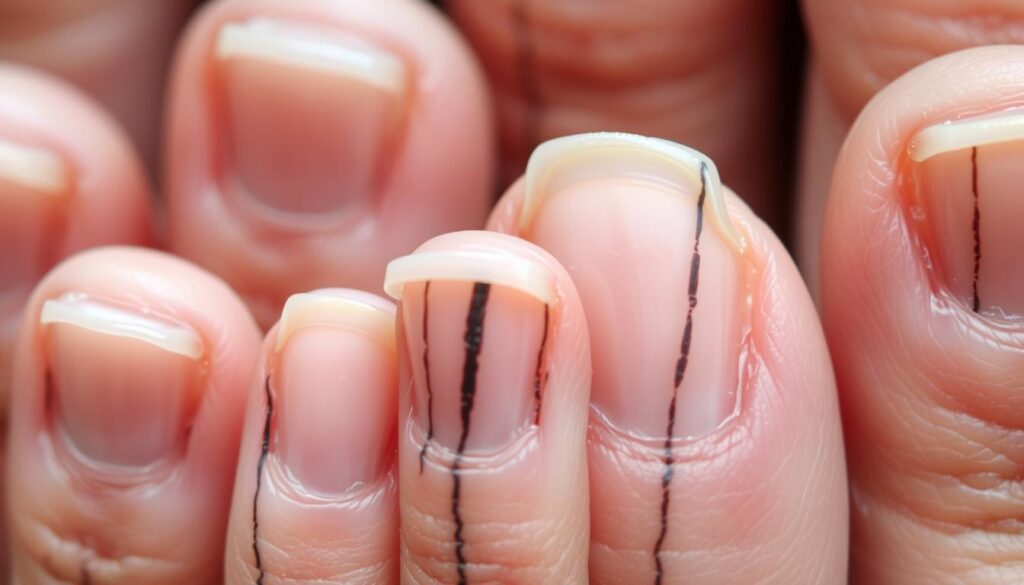
Spotting a black line on your nail can be worrying. Nail health often reflects overall wellness. Understanding these nail changes helps you take care of your health1.
Melanonychia is the medical term for dark nail pigmentation. It can stem from harmless variations or potential medical conditions1.
Black lines on nails come in various forms. They may appear as vertical stripes or cover entire nail beds. Sometimes, they show up as small hemorrhages.
Most cases are harmless. However, some might point to health issues needing medical attention2.
Your nails can reveal important health clues. Skin tone, medications, and health conditions can affect nail color. People with darker skin often develop linear melanonychia, a natural pigment variation2.
Key Takeaways
- Black lines on nails can have multiple causes
- Most nail discolorations are harmless
- Professional medical evaluation is recommended for unexplained changes
- Nail health can indicate broader health conditions
- Early detection is crucial for potential serious issues
Understanding Black Line on Nail: Types and Characteristics
Fingernail lines can reveal important health clues. Melanonychia, a type of nail discoloration, offers insights into your body’s internal state. Recognizing these changes helps you know when to seek medical advice.
Exploring Melanonychia Variations
Melanonychia is a complex nail condition with dark pigmentation. It appears in several forms:
- Longitudinal melanonychia (vertical lines)
- Total melanonychia (entire nail bed discoloration)
- Transverse melanonychia (horizontal lines)
Physical Characteristics and Appearance
Black lines on nails range from deep brown to gray stripes. Their look varies based on underlying causes.
Subungual melanoma affects 0.7% to 3.5% of malignant melanoma cases worldwide3. Watch for these warning signs:
- Widening of the pigmented stripe
- Darkening color intensity
- Unexpected pain or bleeding
- Pigmentation extending to cuticle area
Natural vs. Medical Concerns
Nail discoloration isn’t always worrying. People with darker skin often have natural melanonychia3. About 15% of individuals with endocarditis develop vertical black lines3.
Brown-black nail lines could signal various conditions, including:
- Trauma
- Infections
- Drug reactions
- Endocrine disorders
Experts recommend consulting a dermatologist if you notice persistent changes in your nail appearance3.
Medical Causes and Risk Factors of Nail Discoloration
Black lines on nails can signal various medical conditions affecting nail health. Some populations experience higher rates of nail discoloration due to racial variations. Nail care is crucial for understanding these potential health indicators4.
Several medical factors contribute to brown stripes on nails. These include systemic conditions, hormonal changes, and nutritional deficiencies. Chronic medications, including chemotherapy drugs, can also cause nail discoloration45.
- Systemic conditions like HIV and endocarditis4
- Hormonal changes during pregnancy5
- Nutritional deficiencies in protein, vitamin D, and vitamin B125
- Chronic medications including chemotherapy drugs4
Racial melanonychia affects different populations uniquely. It impacts 77-100% of Black individuals, 10-20% of Asian descent, and only 1% of white individuals4.
| Cause Category | Potential Impact |
|---|---|
| Medications | Discoloration within 3-8 weeks of treatment4 |
| Nutritional Deficiencies | Potential nail structure changes5 |
| Systemic Conditions | Multi-nail pigmentation4 |
Many causes of nail changes are harmless. However, some might indicate serious conditions. Nail melanoma, especially on the big toe or thumb, needs immediate medical attention4.
Your nails can be windows to your overall health – pay attention to changes.
Conclusion
Black lines on nails can signal various conditions. They range from harmless pigmentation to potential health warnings6. Nail health is a crucial indicator of overall wellness7.
Persistent or changing black lines require professional medical consultation. A doctor can perform exams and recommend additional tests6. Treatments vary based on the underlying cause7.
Good nail care involves protecting nails from injury and ensuring proper nutrition. Practice good hygiene and monitor nail abnormalities regularly6. Seek timely medical advice to prevent complications7.
Not all black lines are serious, but understanding their significance is crucial. Your proactive approach to nail care supports your general well-being. Stay informed and make smart health choices for your nails.
FAQ
What are black lines on nails?
Black lines on nails are dark stripes or discolorations called melanonychia. They appear vertically or horizontally on the nail bed. These lines can range from black to deep brown or gray.
Various factors cause melanonychia. These include natural pigmentation, injuries, medications, or underlying health conditions.
Are black lines on nails always a sign of a serious medical condition?
Not always. Black lines can be normal, especially for people with darker skin tones. However, they might indicate serious health issues like subungual melanoma.
Monitor any changes in your nails. Consult a doctor if you notice pain, bleeding, or other unusual symptoms.
What are the different types of melanonychia?
Melanonychia has three main types:
– Longitudinal melanonychia: Vertical lines running down the nail
– Total melanonychia: Discoloration of the entire nail bed
– Transverse melanonychia: Horizontal lines across the nail
What medical conditions can cause black lines on nails?
Several medical conditions can lead to nail discoloration. These include HIV, endocarditis, psoriasis, and fungal infections.
Subungual melanoma can also cause black lines. Some medications, like chemotherapy drugs, may have this side effect.
When should I see a doctor about black lines on my nails?
Seek medical attention if you notice widening or darkening of the black line. Also, watch for pain, bleeding, or extension of pigmentation to the cuticle area.
Multiple affected nails or unusual changes in nail appearance are reasons to see a doctor. Don’t ignore these signs.
How are black lines on nails diagnosed?
Diagnosis typically involves a physical examination and review of your medical history. A dermatoscopic examination may be performed.
In some cases, a nail biopsy might be needed. This helps rule out serious conditions like melanoma.
Can black lines on nails be prevented?
While not always preventable, you can maintain nail health. Avoid nail trauma and practice good nail hygiene.
Protect your nails from excessive moisture. Eat a balanced diet and monitor any changes in nail appearance.
Regular medical check-ups can help catch any issues early. Take care of your nails for overall health.
Source Links
- Black Line on Nail: Causes, Treatment, and More – https://www.verywellhealth.com/black-line-on-nail-7553110
- Black line on the nail: Causes, treatments, and pictures – https://www.medicalnewstoday.com/articles/320687
- Spotting a Black Line on Nails and What it Signifies – VIMS – https://vims.ac.in/vims-hospital/spotting-a-black-line-on-nails-and-what-it-signifies/
- 14 Surprising Reasons Why a Black Line Can Appear on Your Nails – https://www.health.com/black-line-on-nail-melanonychia-8716335
- What to Know About Melanonychia – https://www.webmd.com/skin-problems-and-treatments/what-to-know-melanonychia
- Dark Lines on Nails: What Do They Mean? – Find A Black Doctor – https://www.findablackdoctor.com/dark-lines-on-nails-what-do-they-mean/
- Complete Guide On Black Lines On Your Nails – https://www.linkedin.com/pulse/complete-guide-black-lines-your-nails-ron-naser

