
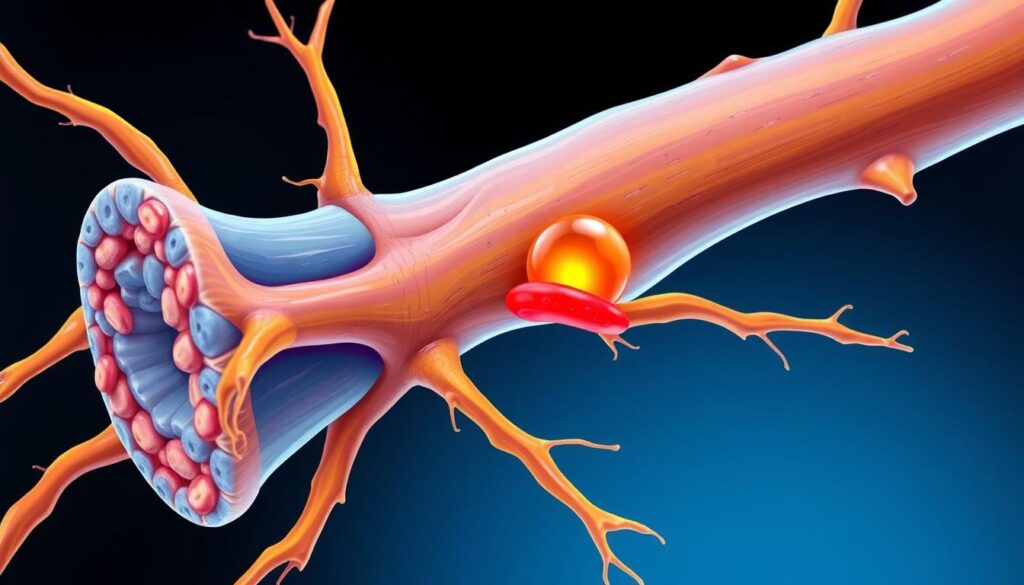
Peripheral neuropathy affects millions worldwide. It causes nerve damage, leading to numbness, tingling, and muscle weakness1. Understanding this condition is vital for managing it effectively.
Diabetes is a major cause of nerve damage. Over half of diabetics develop some form of neuropathy1. This condition can greatly impact your daily life2.
Many factors can lead to nerve damage. These include autoimmune diseases, infections, and toxin exposure1. Lyme disease, shingles, and HIV can also trigger this condition1.
Certain lifestyle choices increase your risk. Alcohol misuse, low vitamin levels, and repetitive motions contribute to peripheral neuropathy1. Recognizing symptoms early is key to managing this challenging condition3.
Key Takeaways
- Peripheral neuropathy affects nerve function outside the brain and spinal cord
- Diabetes is a primary cause of nerve damage
- Symptoms include numbness, tingling, and muscle weakness
- Multiple factors can contribute to nerve problems
- Early detection and management are crucial
What is Peripheral Neuropathy and Its Symptoms?
Peripheral neuropathy is a complex nerve disorder affecting millions worldwide. It disrupts communication between your brain, spinal cord, and body’s nerve network4. Over 100 types exist, making symptom understanding crucial for effective management4.
Understanding the Nervous System Breakdown
Damaged peripheral nerves can cause various uncomfortable symptoms. These range from mild tingling to severe neuropathic pain4. Paresthesia often feels like pins and needles in your extremities.
Common Symptoms to Recognize
- Muscle weakness and cramps4
- Numbness in hands and feet4
- Burning sensations or neuralgia5
- Loss of sensation in body parts4
- Potential muscle and bone loss4
Impact on Daily Life
Peripheral neuropathy can disrupt your daily activities significantly. Simple tasks like walking or buttoning a shirt might become challenging. Neuropathic pain’s unpredictable nature can create emotional and physical stress5.
“Understanding your symptoms is the first step toward effective management and improved quality of life.”
Lifestyle choices play a critical role in managing peripheral neuropathy. Regular exercise and a healthy diet can help reduce symptoms4. Avoiding alcohol and addressing vitamin deficiencies are also beneficial.
| Symptom Category | Potential Effects |
|---|---|
| Sensory Nerve Damage | Numbness, tingling, pain sensitivity |
| Motor Nerve Damage | Muscle weakness, coordination problems |
| Autonomic Nerve Damage | Blood pressure issues, digestive problems |
Early recognition and proactive management can improve your experience with peripheral neuropathy5. Don’t hesitate to seek medical advice if you notice any symptoms.
Causes of Peripheral Neuropathy You Should Know
Knowing what causes peripheral neuropathy can help you manage this tough condition. Various factors can harm nerves, from health issues to environmental risks.
Diabetes: The Primary Culprit
Diabetic neuropathy is the main cause of nerve damage. About 60 to 70 percent of diabetics face some form of nerve harm67.
High blood sugar can slowly hurt nerve tissues. This can lead to major health problems7.
Infections and Specific Health Conditions
Some infections can directly attack nerve tissues. Viruses like herpes simplex and bacteria causing Lyme disease can damage nerves6.
Autoimmune conditions such as Guillain-Barré syndrome may also squeeze nerves7. Other rare disorders can have similar effects.
Toxic Exposures and Medication Risks
Toxic substances can greatly harm nerve health. Industrial chemicals, solvents, and bug killers can cause serious nerve damage6.
Some medicines may increase the risk of nerve problems. These include chemo drugs, seizure meds, and even cholesterol-lowering statins6.
| Cause Category | Specific Triggers | Potential Impact |
|---|---|---|
| Medical Conditions | Diabetes, Autoimmune Diseases | High nerve damage risk |
| Infections | Lyme Disease, Herpes | Direct nerve tissue attack |
| Environmental Factors | Chemical Exposure, Toxins | Progressive nerve deterioration |
Knowing these causes helps you work with doctors to manage peripheral neuropathy. You can create good plans to deal with this condition.
Solutions and Treatment Options for Peripheral Neuropathy
Nerve damage can be tough, but many treatments can help manage neuropathic pain. Knowing your options empowers you to take charge of your health. Effective strategies can provide relief for those with neuralgia.
Medical treatments are key in addressing peripheral neuropathy. Doctors may prescribe medications like pregabalin, duloxetine, or gabapentin for pain management. Some patients find relief through specialized treatments like Transcutaneous Electronic Nerve Stimulation (TENS)8.
Lifestyle changes can greatly improve nerve health. Quitting smoking, maintaining a healthy weight, and exercising can help control underlying conditions. These habits may reduce the impact of neuropathy-causing conditions like diabetes9.
Alternative therapies might offer additional relief. Acupuncture, benfotiamine supplements, and alpha-lipoic acid are options to consider. Research on their effectiveness is ongoing, so discuss these with your doctor9.
Topical solutions like capsaicin cream can help block pain signals. Remember, managing nerve damage requires a personalized approach. Work closely with healthcare pros to develop the best strategy for you10.
FAQ
What exactly is peripheral neuropathy?
Peripheral neuropathy damages nerves outside your brain and spinal cord. It disrupts communication between your central nervous system and body. Symptoms include numbness, tingling, and pain, often starting in hands and feet.
This nerve damage can affect sensory, motor, and autonomic nerves. It potentially impacts various bodily functions.
What are the most common causes of peripheral neuropathy?
Diabetes is the leading cause, affecting over half of diabetic patients. Other causes include autoimmune diseases, infections, certain cancers, and inherited disorders.
Exposure to toxins and some medications can also trigger it. Sometimes, the underlying cause remains unknown.
What symptoms should I watch out for?
Key symptoms include numbness, tingling sensations, sharp pain, and muscle weakness. You might experience temperature sensitivity and difficulty with balance.
Symptoms often start in feet and hands. They can spread upward, affecting walking, grasping objects, and maintaining independence.
How is peripheral neuropathy diagnosed?
Diagnosis involves a medical history review, physical examination, and various tests. Your doctor might conduct neurological exams and blood tests to check for underlying conditions.
Nerve function tests like electromyography (EMG) may be used. Nerve conduction studies can assess the extent of nerve damage.
What treatment options are available?
Treatment focuses on managing underlying conditions and relieving symptoms. Options include lifestyle changes, pain medications, antidepressants, and anti-seizure drugs.
For diabetic patients, strict blood sugar control is crucial. Physical therapy can help maintain muscle strength.
Alternative approaches like acupuncture and alpha-lipoic acid supplements may provide additional relief.
Can peripheral neuropathy be prevented?
While not all cases are preventable, you can reduce your risk. Maintain a healthy lifestyle and manage chronic conditions like diabetes.
Eat a balanced diet rich in B vitamins. Exercise regularly and avoid toxins. Limit alcohol consumption and protect yourself from nerve-damaging injuries.
How serious is peripheral neuropathy?
The severity varies depending on the cause and affected nerves. Untreated neuropathy can lead to infections, muscle weakness, and loss of sensation.
In severe cases, it impacts quality of life and daily activities. Early diagnosis and proper management are crucial to prevent further nerve damage.
Are there any home remedies that can help manage symptoms?
Several home remedies can provide relief. These include warm baths, gentle massage, and using a bed cradle for sensitive feet.
Wearing soft, comfortable socks and practicing careful foot care can help. For diabetic patients, regular foot inspections are crucial to prevent complications.
Source Links
- Peripheral neuropathy – Symptoms and causes – https://www.mayoclinic.org/diseases-conditions/peripheral-neuropathy/symptoms-causes/syc-20352061
- Peripheral Neuropathy – https://www.ninds.nih.gov/health-information/disorders/peripheral-neuropathy
- Peripheral Neuropathy: What It Is, Symptoms & Treatment – https://my.clevelandclinic.org/health/diseases/14737-peripheral-neuropathy
- Peripheral Neuropathy – https://www.hopkinsmedicine.org/health/conditions-and-diseases/peripheral-neuropathy
- Peripheral neuropathy – https://www.nhs.uk/conditions/peripheral-neuropathy/
- Peripheral Neuropathy: Symptoms, Causes, and More – https://www.healthline.com/health/peripheral-neuropathy
- Peripheral neuropathy – https://www.nhsinform.scot/illnesses-and-conditions/brain-nerves-and-spinal-cord/peripheral-neuropathy/
- Treatments for Peripheral Neuropathy | the Foundation for PN – https://www.foundationforpn.org/treatments/
- Peripheral neuropathy – Treatment – https://www.nhs.uk/conditions/peripheral-neuropathy/treatment/
- Peripheral neuropathy: Symptoms and treatment – https://www.medicalnewstoday.com/articles/147963

