
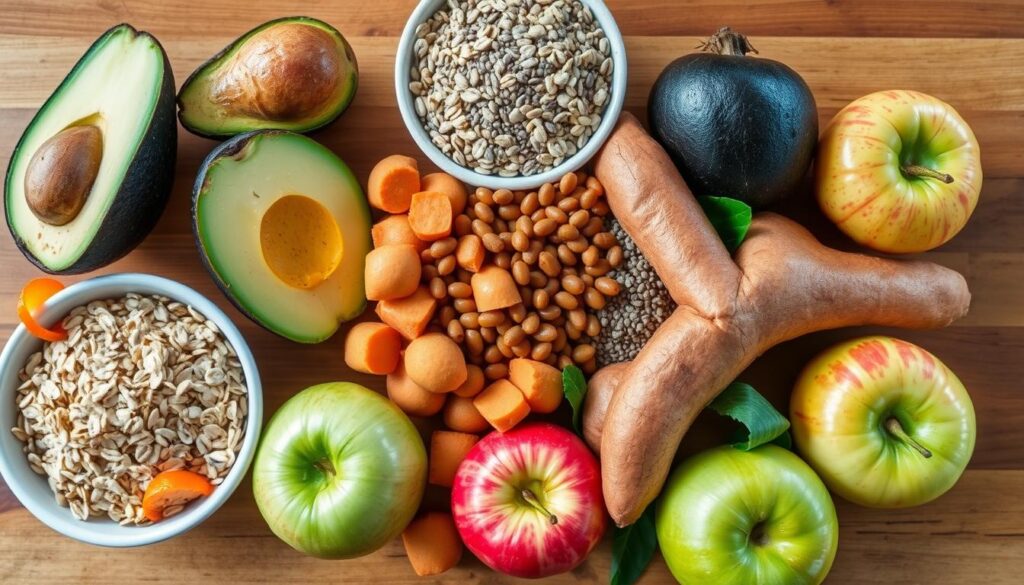
Soluble fiber is a powerful nutrient that supports overall health and wellness. Many people don’t get enough of these essential foods. With the right knowledge, you can improve your nutritional intake1.
Adults in the U.S. typically consume about 15 grams of dietary fiber daily. This is less than recommended. The American Heart Association suggests 25 to 30 grams per day from food sources1.
Finding soluble fiber sources is easy. Legumes, fruits, and vegetables are full of this vital nutrient. Nature offers many foods rich in soluble fiber2.
Black beans and sweet potatoes are great examples. These foods can greatly improve your digestive health.
Key Takeaways
- Soluble fiber is essential for overall health and wellness
- Most Americans don’t consume enough daily fiber
- Foods like beans, fruits, and vegetables are excellent soluble fiber sources
- Aim for 25-30 grams of total dietary fiber daily
- Diverse food choices can help meet fiber intake goals
Understanding Soluble Fiber and Its Health Benefits
Soluble fiber is a powerful nutrient that can transform your health. It dissolves in water, creating a gel-like substance in your digestive system3. This makes it essential for a balanced diet.
What Sets Soluble Fiber Apart
Soluble fiber stands out due to its health-boosting properties. It plays a crucial role in managing heart health and blood sugar regulation3. Your body benefits from its ability to lower cholesterol and support digestive health.
- Lower cholesterol levels
- Regulate blood sugar
- Support digestive health
Key Health Benefits of Soluble Fiber
Adding soluble fiber to your diet offers many health advantages. Research shows it can help reduce heart disease risk and prevent constipation3.
It also lowers cholesterol levels and manages blood sugar for diabetics3. Soluble fiber supports healthy weight management too3.
- Reduce the risk of heart disease3
- Prevent constipation3
- Lower cholesterol levels3
- Manage blood sugar for diabetics3
- Support healthy weight management3
Daily Recommended Intake Guidelines
Knowing how much soluble fiber you need is key to maximizing its benefits. Daily recommendations vary by age and gender3:
| Age Group | Women | Men |
|---|---|---|
| 50 and younger | 25 grams | 38 grams |
| Over 50 | 21 grams | 30 grams |
Only about 5% of Americans consume the recommended fiber levels4. To boost your intake, add whole grains, fruits, vegetables, and legumes to your meals3.
“Your diet is a bank account. Good food choices are good investments.” – Bethenny Frankel
Pro tip: Increase fiber intake gradually and drink plenty of water to avoid digestive discomfort3.
Foods High in Soluble Fiber
Soluble fiber-rich foods can boost your health and transform your diet. Knowing which foods have the most fiber is key. Dietary experts suggest several options to improve your nutrition.
- Legumes: Black beans, split peas, and kidney beans
- Vegetables: Brussels sprouts, sweet potatoes, and carrots
- Fruits: Avocados, pears, apples, and raspberries5
- Whole grains: Oats and barley
- Seeds: Chia seeds with impressive fiber content5
Interesting fact: Raspberries pack 8.0 grams of fiber per cup. They’re a great choice for high soluble fiber recipes5.
Fiber is not just about quantity, but quality and diversity in your diet.
Try these fiber-boosting combos:
- Oatmeal with raspberries and almonds
- Bean and vegetable salad
- Chia seed smoothies
| Food Item | Fiber Content (per serving) |
|---|---|
| Split Peas (boiled) | 16.0 grams |
| Green Peas (boiled) | 9.0 grams |
| Chia Seeds | 10.0 grams per ounce |
Daily fiber needs vary by age and calorie intake6. Most Americans don’t eat enough fiber. Adding these foods can greatly improve your diet6.
Conclusion
Boosting your soluble fiber intake can significantly improve your health7. It aids digestion and may lower risks of chronic diseases7. Dietary fiber research shows impressive health benefits beyond basic nutrition.
Planning a fiber-rich diet is crucial. Most Americans only eat half the recommended fiber amount8. Experts suggest 20 to 35 grams of fiber daily9.
Men under 50 should aim for 38 grams. Women in this age group should target 25 grams9.
Smart food choices help meet these goals. Add legumes, oats, fruits, and veggies high in soluble fiber7. These support heart health and regulate blood sugar.
Gradual changes and regular consumption are vital. They help you fully enjoy soluble fiber’s benefits9.
Your health journey is ongoing. Focus on whole foods and fiber’s importance. This builds lasting habits for long-term wellness.
Start small and stay consistent. Watch how good nutrition transforms your overall health.
FAQ
What is soluble fiber and how is it different from insoluble fiber?
Soluble fiber dissolves in water, forming a gel-like substance in your digestive tract. It helps lower cholesterol, regulate blood sugar, and supports digestive health. Soluble fiber is found in beans, fruits, and oats.
Unlike insoluble fiber, which adds bulk to stool, soluble fiber plays a crucial role in overall wellness.
How much soluble fiber should I consume daily?
Adults should aim for 25 to 38 grams of total fiber daily. About 6 to 8 grams should come from soluble fiber. Increase your intake gradually and drink plenty of water to prevent digestive discomfort.
What are the top foods high in soluble fiber?
Top sources of soluble fiber include black beans, lima beans, and kidney beans. Brussels sprouts, sweet potatoes, broccoli, and avocados are also excellent choices. Fruits like pears, figs, and apples are rich in soluble fiber.
Oats and barley are great options too. Include a variety of these foods in your diet.
What are the health benefits of consuming soluble fiber?
Soluble fiber offers many health benefits. It lowers cholesterol levels, improves blood sugar control, and supports digestive health. It also aids in weight management and reduces the risk of heart disease.
Soluble fiber improves gut function and contributes to overall well-being.
How can I easily increase my soluble fiber intake?
Add more fruits, vegetables, legumes, and whole grains to your diet. Try adding beans to salads and snacking on fresh fruits. Choose whole grain bread and cereals, and include more vegetables in your meals.
Remember to increase your intake slowly and stay hydrated.
Can soluble fiber help with weight management?
Yes, soluble fiber supports weight management by helping you feel full longer. It slows digestion and may reduce overall calorie intake. Foods high in soluble fiber are filling and can help control appetite.
Are there any side effects of increasing soluble fiber intake?
Some people may experience temporary digestive discomfort when increasing fiber intake. This can include bloating or gas. To minimize these effects, increase your fiber consumption gradually.
Drink plenty of water and spread fiber-rich foods throughout the day.
Source Links
- Increasing Fiber Intake – https://www.ucsfhealth.org/education/increasing-fiber-intake
- 20 Foods High in Soluble Fiber for Your Gut Health – https://www.healthline.com/nutrition/foods-high-in-soluble-fiber
- How to add more fiber to your diet – https://www.mayoclinic.org/healthy-lifestyle/nutrition-and-healthy-eating/in-depth/fiber/art-20043983
- Health benefits of dietary fibers vary – https://www.nih.gov/news-events/nih-research-matters/health-benefits-dietary-fibers-vary
- How much fiber is found in common foods? – https://www.mayoclinic.org/healthy-lifestyle/nutrition-and-healthy-eating/in-depth/high-fiber-foods/art-20050948
- Soluble vs. Insoluble Fiber: What’s the Difference? – https://www.healthline.com/health/soluble-vs-insoluble-fiber
- Dietary fiber: Why do we need it? – https://www.medicalnewstoday.com/articles/146935
- Fiber: Bulk of Life – Oklahoma State University – https://extension.okstate.edu/fact-sheets/fiber-bulk-of-life.html
- High Fiber Diet – Jackson Siegelbaum Gastroenterology – https://www.gicare.com/diets/high-fiber-diet/

