
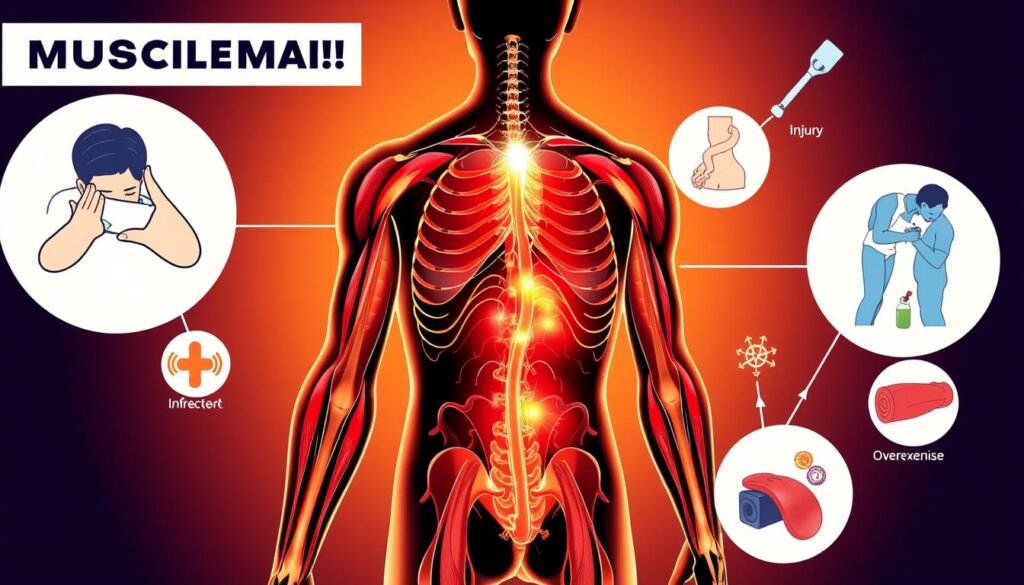
Muscle pain, or myalgia, is a common experience that affects almost everyone1. It can impact athletes, office workers, and those with medical conditions. Understanding muscle soreness helps manage and prevent discomfort effectively1.
Muscles can ache for various reasons, from intense workouts to health issues. The pain can range from mild to severe, affecting daily activities. Some medical conditions like infections and thyroid problems can trigger muscle pain1.
It’s crucial to listen to your body’s signals when experiencing persistent muscle discomfort. Seek medical help if pain doesn’t improve after a few days of home treatment1. Symptoms like rashes or swelling could indicate a more serious problem1.
Key Takeaways
- Muscle pain is extremely common and can have multiple causes
- Home treatments like rest and over-the-counter pain relievers can help manage muscle aches
- Persistent muscle pain may require medical evaluation
- Prevention includes proper stretching and regular exercise
- Some medical conditions can contribute to muscle discomfort
Understanding Muscle Pain and Its Common Causes
Muscle pain can affect anyone, impacting daily activities and well-being. It ranges from mild soreness to intense discomfort2. Knowing the causes helps manage and prevent muscle-related issues effectively.
Types of Muscle Pain Symptoms
Muscle pain shows up in different ways:
- Muscle fatigue that leaves you feeling exhausted
- Muscle cramps causing sudden, sharp discomfort
- Muscle stiffness restricting your movement
- Delayed onset muscle soreness (DOMS) developing after intense exercise3
Most Frequent Causes of Myalgia
Muscle pain can come from many sources. Physical activities, stress, and minor injuries often cause localized muscle discomfort4.
Overexertion during exercise or demanding work can lead to muscle strain. This can trigger various pain symptoms2.
Medical Conditions Leading to Muscle Discomfort
Several medical conditions can trigger widespread muscle pain:
- Fibromyalgia causing extensive muscle tenderness4
- Autoimmune diseases like lupus and multiple sclerosis3
- Infections such as influenza and Lyme disease2
- Chronic conditions like hypothyroidism3
“Understanding your body’s signals is the first step in managing muscle pain effectively.”
Finding the root cause of your muscle discomfort is key. Some muscle pain goes away with rest and self-care.
However, persistent or severe symptoms need a doctor’s evaluation4.
Effective Treatment Methods for Muscle Pain
Muscle pain can be tough to handle. But knowing the right treatments can help manage post-workout discomfort. Gentle approaches often work best for easing muscle pain.
Here are key strategies to relieve muscle pain:
- Apply indirect ice wrapped in a thin towel for immediate relief5
- Use over-the-counter pain medications sparingly5
- Practice gentle exercise like walking or swimming6
Try these comprehensive treatment approaches for muscle pain:
- Rest and recover, especially after intense workouts7
- Practice breathing exercises to manage pain and reduce tension6
- Stay hydrated to prevent muscle aches7
Pain management is not just physical—it’s also about mental well-being and relaxation techniques.
For ongoing muscle pain, see a doctor. A comprehensive medical examination can find underlying causes7.
| Treatment Method | Benefits |
|---|---|
| Ice Therapy | Reduces inflammation, provides immediate relief |
| Gentle Exercise | Improves circulation, blocks pain signals |
| Relaxation Techniques | Manages stress, reduces muscle tension |
Preventing muscle pain is as important as treating it. Start workouts slowly and warm up properly. Listen to your body’s signals5.
Conclusion
Muscle pain affects many people, with 47% experiencing musculoskeletal discomfort8. Managing muscle pain is vital for overall health and life quality. Effective strategies exist to reduce and prevent myalgia.
Your approach to muscle pain should be thorough. Sedentary lifestyle, poor social interactions, and stress can contribute to muscle discomfort8. Regular exercise, proper nutrition, and stress management can greatly improve muscle health.
Research shows that proactive muscle pain management can reduce long-term issues. Women are more likely to experience musculoskeletal pain than men8. Pay attention to your body’s signals.
If you have persistent or severe muscle pain, consult a healthcare professional. Early detection of underlying conditions can prevent further complications. It can also improve your overall musculoskeletal health9.
Muscle pain doesn’t have to rule your life. Understand your body and adopt healthy habits. Seek medical advice when needed. You can effectively manage and minimize muscle discomfort.
Your proactive approach is key to an active, pain-free lifestyle. Take charge of your muscle health today. You’ll be glad you did.
FAQ
What is myalgia?
Myalgia is muscle pain that can happen almost anywhere in your body. It’s common and has many causes. These range from overuse to medical conditions like fibromyalgia or infections.
What are the most common causes of muscle pain?
Common causes include physical activity, stress, and muscle overuse. Minor injuries, exercise strain, and medical conditions can also cause muscle pain. Infections, autoimmune disorders, and certain medications may trigger discomfort too.
How can I treat muscle pain at home?
Rest and apply ice or heat to ease muscle pain. Take over-the-counter pain relievers like ibuprofen. Gentle stretching and staying hydrated can help too.
Try stress-reducing activities such as yoga. These methods can relieve mild to moderate muscle soreness.
When should I see a doctor about muscle pain?
See a doctor if you have persistent, severe, or unexplained muscle pain. Seek help if pain comes with fever or swelling. Get checked if pain occurs after an injury or infection.
Can exercise cause muscle pain?
Yes, exercise can cause muscle pain, especially Delayed Onset Muscle Soreness (DOMS). DOMS typically happens 24-48 hours after intense or new physical activity. It’s a normal response to muscle stress during exercise.
How can I prevent muscle pain during exercise?
Warm up and cool down properly to prevent muscle pain. Stay hydrated and maintain good muscle tone through regular activity. Use correct exercise techniques to avoid strain.
Slowly increase your workout intensity. This helps prevent overexertion and reduces the risk of muscle pain.
What’s the difference between muscle pain and muscle soreness?
Muscle soreness is usually temporary discomfort after physical activity. It typically goes away in a few days. Muscle pain can be more intense and last longer.
Pain might point to an injury or health issue. If pain persists, it’s best to see a doctor.
Can stress cause muscle pain?
Yes, stress can cause muscle tension and pain. It often leads to aches in the neck, shoulders, and back. Ongoing stress may result in chronic muscle discomfort.
Try stress-reduction techniques to ease these symptoms. They can help relax your muscles and reduce pain.
Source Links
- What Causes Muscle Pain? – https://www.healthline.com/health/muscle-aches
- Muscle pain Causes – https://www.mayoclinic.org/symptoms/muscle-pain/basics/causes/sym-20050866
- Muscle Pain – Causes, Symptoms and Treatment – http://www.medparkhospital.com/en-US/disease-and-treatment/muscle-pain
- Muscle aches Information | Mount Sinai – https://www.mountsinai.org/health-library/symptoms/muscle-aches
- Managing Sore Muscles and Aches and Pains – https://www.webmd.com/fitness-exercise/features/art-sore-muscles-joint-pain
- 10 ways to reduce pain – https://www.nhs.uk/live-well/pain/10-ways-to-ease-pain/
- Muscle aches: Causes, home remedies, and prevention – https://www.medicalnewstoday.com/articles/322869
- Management of Musculoskeletal Pain: An Update with Emphasis on Chronic Musculoskeletal Pain – https://pmc.ncbi.nlm.nih.gov/articles/PMC8119532/
- What Is Myalgia? – https://www.verywellhealth.com/myalgia-overview-4584594

